Yea, Though I Walk…

“Yea, though I walk through the valley of the shadow of death…” (Psalm 23:4a KJV)

Photo by Pixabay on Pexels.com

The world is waking up to a global pandemic as I write this. Over 100,000 cases worldwide have been diagnosed; thousands have died. Projections are dire, with the possibility of millions of people who will need to be quarantined or hospitalized, and several thousands more dead before the year is out. Panic has already set in– people are hoarding cleaning supplies, stealing medicines and masks from hospitals, demanding testing long before they show any symptoms, and spreading rumors and false information about how the disease is spread or ways to prevent its spread.

In the midst of chaos, fear-mongering, and panic, the Bible provides both comfort and practical wisdom to face times of struggle and crisis. Psalm 23, often used to comfort people in times of grief, actually says a lot more about life than death. We have no need to panic– even though we find ourselves in unknown, unfamiliar, and threatening situations.

Photo by Francesco Ungaro on Pexels.com

“Yea, though I walk through the valley of the shadow of death…”

  • Yea, though–Not “if”, or even “when” I walk through tough times, but “though.” Death is inevitable and unpredictable, and the shadow of death, the threat of our mortality, will fall on us, often when we least expect it. Even without a traumatic event, like a pandemic, we all must travel this valley path at some point. A crisis like COVID-19 is unsettling, but death and disease wasn’t invented last year, and whatever steps we take to prevent or treat COVID-19 will not stop death or its shadow from touching our lives. Nor will panic and fear, denial, or wishful thinking make death’s shadow dissipate. It is wise to face the reality of this crisis with truth and the proper perspective.
  • I–Not “we.” We are surrounded by others who may share much of our fear, our grief, or our confusion at a time like this. But, when we walk through this valley, it is deeply personal, and our reactions, perspectives, beliefs, and emotions will be uniquely experienced. One of the most difficult things about times of crisis is the isolation we may feel when others cannot enter into our thoughts and hearts and painful emotions. Especially when they are dealing with similar fears and pain. Not only is this valley dark and low, it is often narrow. Even so, God is still present and powerful. We can turn to others for advice, comfort, or even excuses. But no one else can walk the road beneath our feet; no one else can choose whether we will focus on the shadows we see or the light beyond the shadows.
  • Walk through— There is a great temptation to try to hurry through any crisis– to look for the shortcut– the immediate cure; the escape hatch; the high ground; the detour. God’s love doesn’t give us the promise of ease and escape. God does not ask us to sprint through this part of our life’s journey. But God gives us the grace and power to keep walking– this valley is not the destination, but part of the longer race. This leg of the journey is difficult; there will be darkness, rocks and walls closing in on us; we may feel the cold finger of death, disease, and loss. Some days our walk may feel more like a crawl–but take heart and keep moving through.
  • The Valley of the Shadow of Death–Death is stark, uncompromising, cold, and overwhelming. Its shadow looms huge and oppressive. But the valley is not death; the shadow is NOT death; and even the reality of death is not bigger or more powerful or more eternal than God. COVID-19 will bring death to many thousands or millions of people, and it will bring sickness, fear, pain, grief, and distress to many more. But it cannot kill God– it cannot dim His great love for each person who suffers; it cannot catch God off guard and unprepared. We may question God’s timing and purpose. We may face hardship, loss, and confusion in the days and months ahead. But we will not face anything– even COVID-19– that can weaken God’s sovereignty. The same hand that raised Lazarus from the dead; the same power that rolled the stone away at Easter; the same Shepherd that led David all the days of his life–the One who holds galaxies in his hand and has numbered every hair on your head–He walks through this valley with us!

Photo by Umberto Shaw on Pexels.com

As God gives us wisdom, let us seek positive ways to reach out to those in crisis. Pray! Pray often, and fervently for those who are sick, and those who work in healthcare. Pray for wisdom, that our nations, regions, and communities will respond proactively and compassionately. And pray for opportunities to demonstrate and share God’s grace and mercy.

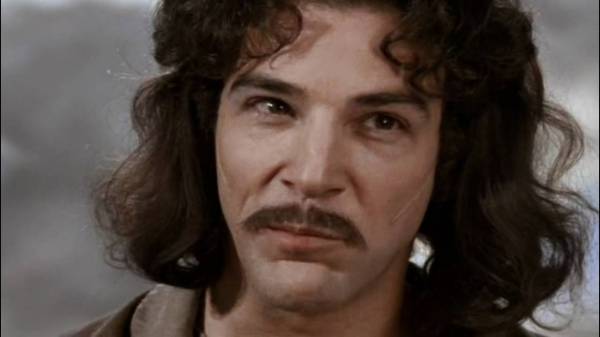
Photo by Elina Krima on Pexels.com

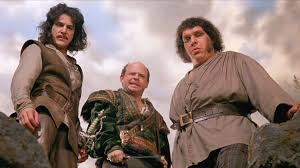
The Three-and-a-Half Miracles of Inigo Montoya

**Spoiler alert** If you have not seen this movie, or read the book, I will be disclosing large portions of the plot in the paragraphs below.

I love the movie, The Princess Bride. Though it is not a “spiritual” tale, and not meant to be a Christian allegory, I find a lot of Biblical truth in this story. In my last post, I looked at the skeptic, Vizzini, whose exaggerated claims of intellect and trust in his own brilliance lead to his downfall.

Today, I want to look at one of his sidekicks– Inigo Montoya. Inigo is a reluctant mercenary. He works for Vizzini “just to pay the bills.” His only real ambition is to find his father’s killer and demand vengeance. This has been his guiding ambition for over 20 years, and he is committed to killing his father’s murderer in a duel– if only he can find the elusive villain!

Photo by mali maeder on Pexels.com

Inigo knows three things– he knows the villain roams free and has never been brought to justice; he carries the scars from his own failed sword fight with the man, so he knows his skill and ruthlessness; and he knows the man has six fingers on his right hand. He doesn’t know the man’s name or rank, where he lives, what he does for a living, if he still lives, if he has a family– he really doesn’t know how or where to look for him, and he has no plan beyond challenging the man to a rematch to avenge his father.

I cannot condone Inigo’s thirst for vengeance https://www.biblegateway.com/passage/?search=Romans+12%3A19&version=ESV, nor his half-baked plan to achieve his goal. But Inigo’s great love for his father and his belief in justice make him a likable character. Unlike Vizzini, Inigo seems concerned for the princess’s welfare and fate, and reluctant to be involved in something that could lead to her harm (or even death). Once he meets the “man in black” who comes to rescue the princess, he treats him with honor and admires his courage and skill, even as he is pledged to try to stop him. He allows his foe to catch his breath, prepare for battle, and even shares his sad tale in the hopes that the man in black can help him find his Nemesis.

Inigo isn’t a very good villain; he is too honorable, too ready to help others he meets along the way. But he attracts miracles along his journey, and I’d like to look at three-and-a-half miracles today.

Miracles come in different types. Some are miracles of preservation; some are miracles of healing; some of transformation.

Photo by Daisa TJ on Pexels.com

Inigo’s first “miracle” is actually a series of miracles of preservation. Three times, Inigo is involved in sword battles, and three times he is preserved. At age eleven, he watches as his father is ruthlessly slaughtered by the villainous six-fingered man. Inigo tries to fight for his father’s honor, but is defeated. The six-fingered man leaves him scarred and humiliated, but considers Inigo nothing more than a “brat,” and considers that he has “taught him a lesson,” so he lets him live. It doesn’t seem like a miracle, but Inigo is given a chance to grow up, when he easily could have been killed. He uses this opportunity to become a great swordsman, so he can find his father’s killer and challenge him to a rematch! When Inigo challenges the mysterious man in black, he is formidable in battle, yet he loses. He is winded, scratched, and disarmed by the stranger, and expects to be killed. Yet, again, he is spared– this time out of respect. The stranger renders him unconscious, but does not kill him. Inigo recovers and finally gets the chance for vengeance against his nemesis, Count Rugen. He challenges the Count to a duel. But the Count cheats, and Inigo is gravely wounded before the battle even begins. Miraculously, he finds the strength of body and will to continue the fight. Struggling against the loss of blood, the taunts of his enemy, and his own sense of failure, Inigo continues to fight, gaining strength and momentum, until he wins–bringing justice to his father, and defeating his enemy.

The second miracle is one of guidance. Inigo needs help to reach his goal of finding and confronting Count Rugen. He needs the help of the very man he fought earlier– the mysterious man in black. But the tables have turned. The man in black has been taken captive and tortured. Inigo must find and rescue him. In desperation, he prays for guidance. He enlists God’s help in locating the man who can help him. But his prayer seems to go unanswered. He stumbles around in the woods, lost and defeated. Finally, he leans against an old tree–and in doing so, he triggers the secret door leading to the torture chamber where the man in black lies, left for dead.

The third miracle is one of revival and restoration. The man in black seems to be dead, so Inigo and his friend, Fezzik, take the body to a man named Miracle Max, to be brought back to life. Of course, this is a fairy tale (though a fractured one). We don’t expect to find miracle workers in the middle of a forest. But we often pray for miracles in hospital wards, courtrooms, and rescue shelters. God sends miracles– but he often does so through the skills and willingness of others. In this case, Miracle Max delivers a crushing blow– he does not have the power to bring someone back from the dead. However, the man is black is NOT dead; he is only “mostly” dead. Miracle Max concocts a restorative potion, delivered in a chocolate-coated pill. The man in black makes a halting, but timely, recovery, allowing Inigo to track down the evil Count and bring him to justice. (It also allows the man in black to finish his quest, rescue the Princess and defeat her wicked fiance.)

Photo by Suliman Sallehi on Pexels.com

After three miracles, Inigo finishes his quest and faces a surprising new problem. His whole life has centered around revenge. Now that he has achieved his goal, he has no future; he has lost his sense of purpose. And this is where the “half” miracle happens. Inigo’s character is noble, even if his obsession with vengeance has been unhealthy. Along the way, he has befriended Fezzik, and rescued a man who was deemed to be an enemy. He has fought bravely and with honor, and has not been corrupted by money, power, or violence. His new friend, the man in black, offers him the chance to start over– as the Dread Pirate Roberts! (Lest this sound truly “dreadful”, it has already been explained that the name and reputation are what brings terror into the hearts of the other pirates..once again, this is a fairy tale, where pirates can be heroes.)

Inigo Montoya is a flawed character– he is a drunkard, a mercenary, living with years of failure and haunted by his thirst for revenge. He is not wicked in the same way as Count Rugen or the evil Prince Humperdink, but he is lost, confused, angry, bitter, and unable to save himself. He is a sympathetic character because he is a lot like many of us. But Inigo’s life is transformed by miracles– mostly unsought–giving him the opportunity to start a new life, make new friends, and explore new opportunities.

Photo by Min An on Pexels.com

What unsought, and even unacknowledged, miracles have come into your life? How many times has God preserved your life, guided you in unexpected directions, provided healing or renewal to your physical, emotional, or spiritual being, and given you unexpected new opportunities?

God doesn’t always give us an instant or dramatic miracle– even when we pray for one. Sometimes, he allows us to collapse against a tree, or be scarred by our enemies, or spend twenty years chasing a quest only to find ourselves unfulfilled at the end of it.

But God IS in the business of miracles– and unlike Miracle Max, he doesn’t charge a fee. God’s ways are not our ways https://www.biblegateway.com/passage/?search=Isaiah+55%3A8-9&version=ESV , but His ways are always working for our eventual and ultimate good https://www.biblegateway.com/passage/?search=Romans+8%3A28&version=ESV— if we learn to trust. The big difference between Inigo and his unfortunate employer, Vizzini https://pursuingprayer.blog/2020/02/17/inconceivable/, is that Inigo trusted in something bigger than his own exaggerated intellect. He sought to help others and be helped by them, instead of merely using them.

Photo by Johan De Jager on Pexels.com

May our lives be filled with miracles today– great or small–and may we see them and celebrate their true source!

Inconceivable?

One of my favorite movies is “The Princess Bride.” Based on a modern “fractured” fairy tale by William Goldman, it tells the story of a young couple whose “fairy tale” romance is complicated by his death, her kidnapping on the eve of her wedding to an evil prince, and rodents of unusual size…

One of the kidnappers is a Sicilian mercenary named Vizzini. Vizzini brags about his intellect, and claims to know more than anyone. He also claims that his plot to kidnap Princess Buttercup is perfect to the last detail. But when a mysterious stranger begins following them, and foils each of Vizzini’s efforts to shake him, Vizzini grows more and more rattled. His brilliant plan turns out to be less than perfect. In fact, the mysterious stranger (who turns out to be Princess Buttercup’s long-lost true love) succeeds in rescuing the princess and defeating Vizzini in a battle of wits.

As each of Vizzini’s efforts fails, he declares it is “inconceivable” that the stranger should win. Even in the face of clear evidence, Vizzini finds it unbelievable that his plan should have failed–and failed again! Finally, one of the other kidnappers turns to Vizzini and says, “You keep using this word; I do not think it means what you think it means”.

I often hear people scoff at faith in God– “it doesn’t make sense.” “There’s no proof that God exists.” “How can you believe all those old myths–Noah and the Ark; Moses and the Red Sea; David and Goliath–they’re impossible in ‘real life’.” “It’s inconceivable!” “Stop saying all that stuff about God!” “Stop saying you’ll pray for me.” “Prayer is nothing more than wishful thinking.”

Photo by 3Motional Studio on Pexels.com

And it can be difficult to have faith, sometimes. We don’t ‘see’ what God is doing in our lives and circumstances.” We don’t understand the bigger picture. We don’t believe that God sees or hears us in the middle of our struggles. But God tells us time and time again that nothing is impossible for Him; that He knows all that happens, and that He works all things together for the good of those who follow Him (Romans 8:28). God is able to do “exceedingly, abundantly, above all that we ask or think..”(Ephesians 3:20)

Those stories in the Bible; those “unbelievable” stories we hear or read about miraculous healings and lives transformed…we can choose to ignore them, or scoff at them. We can, like Vizzini, claim that they are “inconceivable,” or try to explain them away while trusting our own knowledge and experiences to get us through life. We can ignore the wise counsel of others, ignore our conscience, and laugh in the face of danger. But in the end, we are human. We are fallible. We are not all-knowing or all-powerful. And we are not immune to sin and its poisonous consequences. The only chance of escape is to be rescued by someone who is “immune” to sin– our Savior, Jesus the Lamb of God.

Photo by Pixabay on Pexels.com

It may seem “inconceivable” that God would part the Red Sea, or save Noah in the Ark; it may seem beyond belief that Jesus would be born as a human, live among people who denied Him, die on the cross and be resurrected on the third day, so that He could take away the power of sin and death for anyone who will trust Him. But it is precisely this Good News that has transformed the lives of millions of people throughout the centuries since he came.

Photo by Matheus Bertelli on Pexels.com

It may seem “inconceivable” that God would listen to our “little” prayers and care about our every need– but He does! His Love may be beyond our ability to comprehend or explain– His power extends beyond our wildest imagination. But if we have faith– even as small as a mustard seed (Matthew 17:20)– we can experience God’s Love, Power, Grace, and Salvation in miraculous ways.

20/20 Vision, Blind Faith, and Prayer

As we approach the arrival of a new year, there is a lot of talk about vision–20/20 vision, that is. For the past few years, I’ve heard of companies, community groups, even churches using the year 2020 as a target date for planning, and using the phrase “2020 Vision” in their mission statements, fund-raising drives, and talking points.

Photo by Christina Morillo on Pexels.com

The phrase comes from 20/20 vision, considered clear or “good” vision. Someone with 20/20 vision has no need of corrective lenses or surgery to improve their reading, or correct their sight. Figuratively, 20/20 vision suggests good planning or foresight. So it is desirable to plan with clear “vision” and forethought, rather than jumping into a project, or from one unmet goal to another.

But, while it’s clever to borrow the idea of 20/20 vision and tie it to the coming year, it doesn’t guarantee that our future plans will be wise or successful just because the calendar says 2020. In the same way, just because we have 20/20 vision, it doesn’t mean that we can see everything around us perfectly. We will see clearly those things on which we focus– those things that are right in front of us and not obstructed. Even with “good” vision, we cannot see things that are hidden from sight or things that are outside our scope of vision.

Photo by malcolm garret on Pexels.com

Even the old phrase, “Hindsight is 20/20 vision,” doesn’t mean that we will always gain clarity with time. Sometimes we understand past experiences in a different light after time has passed. But sometimes, we are still left wondering and asking about events from our past; no wiser or less damaged by setbacks or failures, and no better prepared for future trials and pains.

If vision, even good vision and planning, is no guarantee of future success, perhaps it would be better to trust to “blind faith.” After all, doesn’t the Bible say, “walk by faith, not by sight?” Except the Bible doesn’t exactly say that. Instead it says:

So we are always confident, knowing that while we are at home in the body we are absent from the Lord. For we walk by faith, not by sight. We are confident, yes, well pleased rather to be absent from the body and to be present with the Lord.

2 Corinthians 5:6-8 (NKJV via http://www.biblegateway.com)

This verse often gets taken out of context and twisted to suggest that “faith” is opposed to “sight,” and therefore faith must be “blind” to reason, experience, or reality. Many good articles and sermons have been written to clarify the concept (see one example here:
https://www.biblestudytools.com/blogs/theologically-driven/walk-by-faith-a-misused-verse.html). Faith is not blind–or should not be blind. Rather, it utilizes the ability and practice of seeing what is hidden or indistinct in the present. If our faith is based on empty myth, rumor, conjecture, or cloud dreams, it is not faith at all–it is nothing more than a mirage. Faith is seeing beyond the obvious, the blatantly visible, and trusting more than just what we can immediately see. We don’t walk through life ignoring reality, or dancing across a superhighway full of speeding cars. But we see our circumstances as having hidden elements; our lives have unseen depths, and are lived on both physical and metaphysical spheres. There is more to life than meets the eye– and while faith may not always show us a clear picture of what lies beyond our sight, it causes us to know that something beyond our “20/20 vision” exists and matters.

Photo by Daniel Spase on Pexels.com

The great old hymn, “It Is Well With My Soul,” speaks to this as well. No matter what our circumstances look like, we can have confidence that “It is well, it is well, with my soul!” “And Lord, haste the day when my faith shall be sight..” We look forward, even as we look around, and look back to the finished work of Jesus our Savior. We see the present, but we walk in the knowledge that there is more than what our eyes behold.

Faith doesn’t negate the need to use our senses and common sense to navigate life. And using planning and vision for the future doesn’t negate the need for faith. Rather, they work together. And they work together best in prayer.

When we pray, we are exercising our faith– speaking to the One we do not see, though we know Him and trust Him. And we bring to Him our plans and visions and hopes and dreams. We lay them in His Hands, trusting that where our vision is “good,” He will empower and bless us; where our own vision is lacking, His Spirit will help us to refocus and see enough of what lies beyond to keep walking forward.

Photo by Harrison Haines on Pexels.com

As we walk into a new year, may we have more than just 2020 vision– may we have faith and hope in the One who has perfect vision!

I Don’t Know…

I spent a good portion of my adult life working in positions where my value rested in my ability to impart knowledge and answer questions. As a teacher, my job was to guide students into a base of knowledge about the English language (and especially spoken communication) so that they would be prepared to adequately speak, read, write, explain, defend, and use it. I was expected to know enough about grammar, spelling, connotations of words, nonverbal communication, sound logic (and fallacies to avoid), presentation, tone of voice, etc., to enable students to improve their communication and use language more effectively in their careers, academic endeavors, business dealings, and even in personal relationships. If they had questions about word choices, written or spoken directions, propaganda techniques, advertising tricks, euphemisms, or a hundred other topics, I was expected to have an answer– and one that would shape their ability to succeed.
When I made the transition to working in a public library, my job was to have answers– which books were at the appropriate reading level for various elementary students; where could someone find information about manatees; who wrote the Captain Underpants books (Dav Pilkey); did our library loan out encyclopedia volumes or sets of early reader books; could our library borrow a rare book from another library; what was the capital of Uganda (Kampala); did we have books that might help a child coping with the loss of a pet, or a parent struggling with toilet-training their toddler; where could someone find … the list was endless and extraordinarily varied. My job was to have an answer– or know where to find it.

Photo by Pixabay on Pexels.com


At no time was it expected that I would simply answer “I don’t know.” Even if I didn’t know in the moment, I was expected to search until I found an answer that was sufficient and satisfactory. However, in each case, I found situations where my “answer,” while satisfactory to me, and even to everyone else I had dealt with, was not enough to satisfy the person in front of me. Sometimes, I had misunderstood the question and given an answer to what I heard or assumed I had heard. I needed to listen some more, or ask for clarification before I could answer the question correctly. Sometimes, the other person was looking for an answer that didn’t exist– either they wanted confirmation of a falsehood they believed to be true, or they wanted a single, absolute answer to a question that was complex and open-ended. In rare cases, there were questions for which I could find no satisfactory answer– it doesn’t mean that there was none, but I had not found it, nor had I found someone else who could find it in the time allowed. I might find an answer that was not satisfactory, or I might find seven possible answers, but not one that stood out from the others, or I would find nothing but dead ends.


The Apostle Peter tells each follower of Christ:

15 But in your hearts revere Christ as Lord. Always be prepared to give an answer to everyone who asks you to give the reason for the hope that you have. But do this with gentleness and respect, 16 keeping a clear conscience, so that those who speak maliciously against your good behavior in Christ may be ashamed of their slander.

1 Peter 3:15 & 16 (NIV via biblegateway.com)–emphasis added
Photo by bruce mars on Pexels.com

This does not mean that we must completely satisfy everyone who asks– the curious neighbor who knows nothing of the Bible and has dozens of confusing questions, or the nay-saying agnostic with a single “gotcha” question. Nor must we fight and fuss and pound the Bible until we “win” every theological and metaphysical argument–because we won’t! There are many things about the Bible, about Spiritual matters, etc., for which we will not have absolute or definitive answers–and neither will they! (That’s why they ask, sometimes.) And those things that satisfy our longings, our questions, our doubts– sometimes don’t meet the needs of the one who is asking, not because the answers are deficient, but because we are all different in our needs, and understanding, and experiences.

Photo by Vera Arsic on Pexels.com

Some people will listen to us merely to scoff and try to make us lose heart or make us look foolish. Others are afraid that our answer will make them feel lost or guilty. Some people have been hurt by others who have used the Bible as a cudgel or a whip– bringing shame, judgment, and contention wherever they go. We must not expect that our answers, our arguments, even our favorite scripture verses– that WE are enough to satisfy the questions, the doubts, and the spiritual needs of everyone we meet.

Photo by Akshar Dave on Pexels.com

What we should always have is an answer for the hope that is in us– why have we chosen to believe? Why do we choose to trust when we do not know all the answers? And our answers should be given with gentleness and respect– not arrogance and snide judgment. I don’t have hope because I know answers to tough questions. In order to have that kind of hope, I would need to know all the answers to all the questions– even those I haven’t asked or imagined! I don’t know about the future– I can’t explain why God allows evil (there are compelling arguments for some reasons, but no absolute answer that stops the question)–I don’t know how God’s Spirit moves, or why He drew me to Himself. I cannot “prove” God to someone who is determined to deny Him– not because God doesn’t exist, but because He will not force anyone to accept Him in this life, and especially not because I said a few words based on my limited understanding. My job is not to explain God–only God is big enough and wise enough to do that– but to reflect His character in a changed nature, and to explain what God has done in my life to effect that change. My hope is in the ONE I choose to trust– the ONE who does have the answers! God has not promised to answer all our “what ifs” or our “whys”– but He has promised to answer all our needs, and to BE the answer in every situation, no matter how daunting.

Jacob Meets His Match–Part two

In the last post, we looked at how Jacob worked for 20 years for his corrupt father-in-law. Jacob has changed from the scheming young man who cheated his brother, lied to his father, and was sent away for his own safety. But that’s not the end of the story…

After 20 years of keeping Laban’s flocks, establishing his family, playing referee to his squabbling wives, and dealing with Laban’s greedy and capricious nature, Jacob is ready to leave. But we have a couple of curious incidents yet to explore in this relationship. In Genesis, chapter 30 https://www.biblegateway.com/passage/?search=Genesis+30%3A25-43&version=NIV we are given a detailed plan by Jacob to develop and increase his flocks. Jacob outlines part of his plan to Laban, and Laban agrees. Jacob’s flocks will be speckled and spotted, while Laban’s will be “pure.” On the surface, it looks like Laban is getting the better end of the bargain, and, as Jacob points out, there will be no way he can “cheat” by claiming Laban’s animals as his. But Jacob’s plan has a couple of twists and turns.

Photo by Quang Nguyen Vinh on Pexels.com

As Jacob follows his plan, he ends up with the strongest and best of the flocks, while Laban’s flocks are weaker. Once again, Jacob uses a clever scheme to advance at the expense of someone close to him. At the beginning of chapter 31, we see the result– Laban and his sons are angry and resentful– they feel they have been cheated, and plan to retaliate. Jacob leaves in the middle of the night with his wives, children, and livestock, planning to return to his father in Canaan. Jacob explains to his wives that his “plan” was inspired by a dream in which God told him what to do to increase his flocks and then told him to return home. https://www.biblegateway.com/passage/?search=Genesis+31%3A4-13&version=NIV

But is Jacob telling the truth? Has he really changed, or is this just another case of Jacob using his wits to get what he wants?

The Bible doesn’t give us direct confirmation, but indirectly, the story seems to back up Jacob’s statements. Though the Bible says that Jacob “deceived” his father-in-law by sneaking away in the night, and not telling him that he was going, it never says that he deceived Laban by separating the flock as he did, or by preparing to return to Canaan. Furthermore, when Laban pursues Jacob, God warns him in a dream to say nothing to Jacob (advice he quotes, but doesn’t actually take)! Laban also confessed (back in chapter 30) that, via divination, he has learned that he was blessed on account of Jacob.

Why am I taking time to dissect this relationship between Jacob and Laban a second time? What else can we learn from this story?

I think there is a great lesson about deception, and how it often backfires. But just as powerful, I think there is a lesson about how God looks beyond our actions to see our heart.

Photo by Pixabay on Pexels.com

Laban was not only Jacob’s father-in-law– he was also Jacob’s uncle. They shared similar character traits– both were ambitious, clever, and driven to take advantage of any “edge” that might be to their advantage. God did not “choose” Jacob because of any of this– but neither did he condemn him for any of it. Instead, God appeared to Jacob, and Jacob responded in awe, worship, and obedience. God didn’t change Jacob’s nature; his drive to succeed, his innovation, his ambition. But he did change Jacob’s heart–Jacob didn’t leave his uncle in ruins, in spite of the treatment he and his family (Laban’s own daughters and grandchildren!) had received. Jacob used his cleverness to build a strong flock, but he also used it to prove to his uncle that he was not the liar or thief he had been labeled back in Canaan. Jacob listened to God in formulating his plans– both his clever plan to build the flock, and the plan to return home.

Laban, on the other hand, had seen the hand of God at work blessing him on account of Jacob. Years before, he had seen the hand of God leading his sister, Rebekah to be Isaac’s wife. He had seen how God had blessed his daughters. He even saw that his ill-treatment of Jacob, Leah, and Rachel led to a loss of God’s blessing. But at no time is there any evidence that Laban ever acknowledged God, worshiped Him, thanked Him, or obeyed Him. https://www.biblegateway.com/passage/?search=Genesis+31%3A14-55&version=NIV

Photo by Pixabay on Pexels.com

In their final encounter, Laban accuses Jacob of theft and duplicity– Jacob confesses that he fears Laban, but then, he gives him a blistering rebuke. Laban’s response is a feeble argument that all Jacob has belongs (or should belong) to him– Laban! “All you see is MINE” (emphasis added). He also claims (even after God tells him to say nothing to Jacob) that he has the power to hurt Jacob. Laban is a controlling user– a bully and a manipulator. Laban is a powerful man who is ruthless in using that power to get what he wants. But all that power is not enough to challenge God– the same God who blessed Laban because of Jacob; the same God who warned him not to act against Jacob. The real power does not belong to Laban or to Jacob. Jacob has been learning this lesson–Laban never will. The most he learns is that Jacob will no longer be under his control and submit to his corrupt authority.

Perhaps you have been in a relationship with someone who is controlling and manipulative. Perhaps they have convinced you that they have all the power to keep you enslaved to their manipulation. There are two essential truths you need to remember:

  • God sees you. He sees the injustices done to you– and your response to them. He sees your heart– even when it is breaking under the weight of oppression. He asks that you trust HIS power and HIS timing as you are going through this deep valley. Abusers thrive on clever lies– that you can’t make it without them; that no one else will help you, love you, believe you…; that their actions are in your best interest…even going so far as saying that they are making sacrifices for you and that you “owe” them. Don’t let their lies overwhelm God’s truth–
  • God desires you to submit to HIM. Even when the road is tough and we don’t understand circumstances, God is making a way for you, just as He did for Jacob. God allowed Jacob to grow his flocks in spite of Laban’s crooked ways– He allowed Jacob to be both the agent of Laban’s success and the instrument of Laban’s downfall. Submission to God does NOT mean abject submission to an abuser or a manipulator. If God has shown you a way of escape (even running away without warning) or shown you a way to flourish under harsh circumstances– listen and obey!

And keep praying to the “God of Jacob!”

Jacob Meets His Match–Part One

The Biblical patriarch, Jacob, is known for many things– He was the son of Isaac and Rebekah, and grandson of Abraham. He was the brother of Esau. He cheated and/or schemed his way into taking both the blessing and birthright that belonged to his older brother. For this, he was sent away to live with his Uncle Laban, and told to choose a wife from among his extended family.

Jacob’s life took a dramatic turn when he left his small (but slightly dysfunctional) family behind to begin this new chapter. Growing up, Jacob had been the quiet one, the one who stayed around the house. This was no longer an option. Jacob faced a long journey, and years of work to establish his own family and career. On the way to Paddan Aram and the house of Laban, Jacob had his first encounter with God– the vision of “Jacob’s Ladder” at the place he would call “Bethel.” There, God confirmed his promise to establish Jacob, increase his family, and bless all people through him. No longer was Jacob a second son with only his wits to help him succeed (or cause trouble)– God had promised to be with him and watch over him wherever he may go! https://www.biblegateway.com/passage/?search=Genesis+28%3A10-22&version=NKJV

With that promise and the hope of finding a welcome, Jacob arrived at the well where his uncles flocks were watered. Jacob would take over the work of herding and watering the many flocks of Laban. He worked for the first month without wages–setting a dangerous pattern. After the first month, Laban “generously” offered to pay Jacob, and even let Jacob set the terms! Jacob demanded no monetary wages; he wanted only to marry his beautiful cousin, Rachel, with whom he was deeply in love.

Photo by Vera Arsic on Pexels.com

Seven years pass– Jacob has worked for almost nothing but the food he has eaten, and the promise of marriage with the daughter of Laban. And in a scene that seems strangely familiar, Jacob is presented with a feast, and his promised blessing– his wife. But Laban tricks him, substituting one daughter for another. Instead of Rachel, Jacob is bound to her sister, Leah.

When Jacob confronts his new father-in-law, he is given an excuse– tradition says the older daughter must be married first. Laban had seven years to explain this to Jacob, seven years to “break the bad news”, seven years to offer Jacob an alternative. Yet Laban chose to deceive his nephew and use his love for Rachel to get seven years of cheap labor. Worse, he chose to string Jacob (and Rachel) along for another seven years. The Bible gives us a clue as to one ulterior motive of Laban– Leah had “weak” or “delicate” eyes. It is possible that she had been rejected by other men or deemed ineligible for marriage. Without a prospective husband, Leah will be dependent on her father for life. But married to Jacob, Leah becomes one less responsibility for Laban. https://www.biblegateway.com/passage/?search=Genesis+29%3A14-30&version=NIV

Photo by Ivandrei Pretorius on Pexels.com

Laban gambles his daughters’ fate on Jacob’s character. Jacob could have cast Leah aside easily and forced her to return to her father’s house a ruined woman. He could have treated her as a servant, rather than a wife– he could have beaten her or “given” her to someone else. And Jacob could have decided Rachel was not worth another seven years of labor, or that he could not trust Laban to keep his word. He could have walked away. He could have taken his anger and frustration out on Leah or on the flocks. He could have returned to his father and started another family quarrel.

But this Jacob is not the same as the one who left Canaan. He serves another seven years, marries Rachel, and then works yet another six years for flocks to call his own. All the time working for a man who is greedy, deceitful, capricious, unjust, selfish, and oppressive. He doesn’t complain, doesn’t rebel, and doesn’t cheat, lie, sabotage or steal from this horrible boss and indifferent father-in-law. Instead, he shows that he has been transformed from the young Jacob who caused so much trouble for his brother and father back home.

Photo by Alexandria Baldridge on Pexels.com

May we choose to submit today to the God of Jacob, and remember that His promise to Jacob extends to all who trust Him– He will not leave us; He will see us and be with us wherever we go!

The Birds of the Air

Yesterday, I was working in the Toddler Room at church.  The children had been playing and singing, when suddenly, our attention was caught by something happening outside our window.  Hundreds of birds were gathering in the front lawn and in the parking lot of the church, resting and re-organizing for the next leg of their long migration.  Birds were swooping in, landing, hopping about, lining up, changing places with other birds, circling in low flight, rearranging, and chattering before the entire flock took off and headed south.  The children gathered by the window in fascination for a few minutes, before returning to their play.

afterglow art backlit birds
Photo by luizclas on Pexels.com

I was reminded of the passage in Matthew 6:

25 “Therefore I tell you, do not worry about your life, what you will eat or drink; or about your body, what you will wear. Is not life more than food, and the body more than clothes? 26 Look at the birds of the air; they do not sow or reap or store away in barns, and yet your heavenly Father feeds them. Are you not much more valuable than they? 27 Can any one of you by worrying add a single hour to your life?

Ironically, yesterday was the first day of “falling back” from daylight savings time to “normal” time– literally trying to add a single hour to our lives by changing our clocks!

close up photography of wristwatch
Photo by Mat Brown on Pexels.com

The birds were not worried about clocks, or falling leaves.  They were not nervously searching about for seeds or worms or bread crumbs to eat.  They didn’t compare feathers or try to ostracize birds who were “different” in size or coloring or age.  Each year, the birds fly hundreds of miles, over lakes and fields and cities, to get to their “winter” home.  They repeat the process each spring to get to their “summer” home.  God has created them with a special GPS that not only gets them where they need to go, but helps them find food and resting places along the way– including the lawn and parking lot of our church!  And this is only one of thousands of flocks of birds.  They arrived, rested, regrouped, and left.  They didn’t collide with another incoming flock; they didn’t arrive upset or confused about the repaving that occurred this summer.  They didn’t need reservations or recalculations, credit or debit cards, cell phones with wi-fi hotspots, or pilots’ licenses.  God did not forget about them, abandon them, or set them up for failure.

The birds still have to face the long journey– they must gather food each day; rest each night; they must brave the very real dangers along the way.  Not every bird will reach its destination.  Some will be injured or become food for predators; some will succumb to bad weather or old age.  Some will even be blown off course or become separated from the rest of the flock.

flock of birds flying above sky during sunset
Photo by Irina Kostenich on Pexels.com

God doesn’t promise that we will never face danger, or that we will never have to struggle.  What He does promise is that we can trust Him to always be present and that He will provide all that is sufficient for us to follow Him.  There is nothing we can do to add an hour to our life– and nothing we can do to erase, amend, or alter His Love for us!

Praying in the Present

I don’t know about anyone else reading this, but I need a reminder every so often about living in the present (including keeping my prayer life centered in the present).  It is very tempting sometimes to wallow in the past or dream of the future.  There’s nothing wrong with learning from past mistakes or making future goals, but we are not to waste our time or our energies pursuing what isn’t, while ignoring what is happening around us.

TheLordsPrayer

If we look closely at the Lord’s Prayer, we see how centered it is in the present.  There are a couple of forward-looking phrases (Thy kingdom come…lead us not into temptation…For ever and ever..) but most of the prayer is for the present and foreseeable future.

I need to be reminded, through Christ’s example and through scripture, that God wants me to trust Him for my daily needs and follow one step at a time.  If I find myself spending more time asking God for things far out in my future, or continually bringing up things from my past, it may mean (though not always) that I am not fully trusting in the sufficiency of His Grace for today.

God has already seen my past– and loves me unconditionally.  His Grace will not be rescinded each time I face a reminder of my past; He will not change His mind if someone else carries a grudge against me.

God has also seen my future.  He knows my needs, my concerns, my desires.  He wants me to bring my whole heart to Him in prayer–a heart that is ready to trust His provision and plan, even when I don’t know the details.

Think what would happen if every parent-child conversation involved the following themes:

blur broken ceramic clay
Photo by Fancycrave.com on Pexels.com

  1. “Mom, do you remember the time I tipped over your plants when I was five, and you yelled at me.  I just want to tell you I’m so sorry I did that.  I know you said you’ve forgiven me, but I need to ask you again.”  “Dad, I know you were disappointed when I got into a fight with my brother back when I was eight, but I hope you can see how I’ve learned a lot since then.  Please don’t hold that against me today.”
  2. “Hey, Dad, I really want to drive when I turn 16.  Can I ask you for a purple sports car when I turn 16?  I want to be a good driver, and I just know that you want me to be a good driver.  I think a purple sports car would make me a great driver in another seven years.”  “Mom, will you promise to babysit my kids after I have kids?  I just know my kids will want to have a close relationship with you, so will you just promise to be close to my kids when I grow up and have them?”

action asphalt automobile automotive
Photo by Taras Makarenko on Pexels.com

There’s nothing essentially wrong with the actual requests– but when we focus on the past or the future at the expense of the present, we miss learning what God has for us TODAY.  We also risk seeing God only for what He gives and what He has done, and not for Who He Is!

Let’s enjoy time with God today (and every day) as it unfolds.

pexels-photo-546657.jpeg


But I Don’t Understand…

I’m getting a double whammy this week–two Bible study groups; one studying Daniel and the other Job.  Some of you will groan just reading the first sentence.  Along with the book of Revelations, these are two of the most difficult and misunderstood books in the Bible.  And for good reason.  The book of Daniel doesn’t just contain the favorite stories of Daniel in the Lions’ Den and Shadrach, Meshach, and Abednego, it also contains prophetic visions that seem to foreshadow two distinct sets of events– one set that happened in the time between Daniel’s life and the birth of Christ, and another set of events yet to come.

lion sleeping beside rock
Photo by Aldo Picaso on Pexels.com

The book of Job is puzzling– there are no good clues as to when it took place, or exactly where, or even if it is real or a parable.  There is a curious interchange between God and Satan that is unlike any other passage in scripture.  Finally, it is filled with difficult dialogues from Job and his friends, as they try to make sense of his suffering as God stays silent.  When God finally speaks, He doesn’t directly answer Job’s questions or his friends’ misleading statements.

grayscale photography of man praying on sidewalk with food in front
Photo by sergio omassi on Pexels.com

What happens when I don’t understand what God is doing (or seemingly NOT doing) in my life or the lives of others?  What happens when the world doesn’t make sense, and the Bible doesn’t seem to shed any light?  What happens when I pray, but God seems silent?

I think the answer has a lot to do with where I am in my relationship with Christ:

  • I can panic, lose faith, or become angry and insolent.  If I don’t know God or don’t trust him; if I doubt his goodness or wisdom or power, I may run from his word and his presence.
  • I can lean on my own understanding.  I can substitute my own limited wisdom for God’s, and try to “explain away” all the things I don’t quite understand.  I may ignore the Bible passages I don’t understand, in favor of doubling down on the ones I think I know.  I can insist on my own interpretations of difficult or disturbing passages, even if someone points out inconsistencies in my logic, or context clues that disagree with my view.

arrogant

  • I can lean on someone else’s understanding, listening to their views without question or without reading and praying through it myself.  If someone else has an answer, shouldn’t that be enough?  Even if I still don’t fully understand, at least I have an answer…
  • I can ignore the question–after all, do I really need to know about God?  Isn’t it enough that He exists and He is good?  If I say it loud enough and often enough, won’t that make the questions go away?

adult beautiful casual cute
Photo by Pixabay on Pexels.com

It seems that there is a better way– God never promises us easy answers or complete answers to all the questions in this life.  We can be angry or grateful for that truth, but most of all we must accept it.  God will answer many of our questions–maybe not in the time and manner we expect.  And some of them we won’t understand this side of heaven.  But the Bible is clear in calling us to pursue answers, and be honest when we don’t understand.  God may not give us a simple answer, but He promises to give us wisdom– wisdom to seek, and wisdom to wait; wisdom to trust, and wisdom to keep knocking.
Ask, Seek, Knock, Wrestle, Search, Pray, Plead, Study, and Learn.

pexels-photo-935944.jpeg

Blog at WordPress.com.

Up ↑