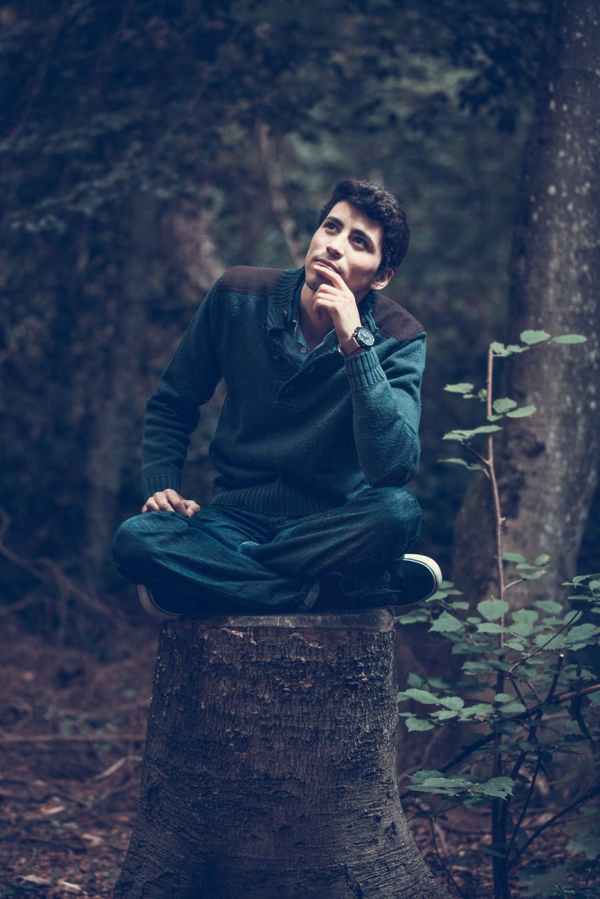
Meaningless?

I denied myself nothing my eyes desired;

    I refused my heart no pleasure.

My heart took delight in all my labor,

    and this was the reward for all my toil.

 Yet when I surveyed all that my hands had done

    and what I had toiled to achieve,

everything was meaningless, a chasing after the wind;

    nothing was gained under the sun.

Ecclesiastes 2:10-11 (NIV via biblegateway.com)

The persistent theme of Ecclesiastes is that everything done “under the sun” is meaningless–wisdom, riches, hard work, morality, pleasure–it all ends in death and futility. In the end, the author (presumed to be Solomon, the wisest king who ever lived) concludes that the whole “duty” or purpose of mankind is to fear God and keep His commandments, because God will judge every deed and hidden thought.

Sometimes, it can be difficult to pray when life seems “meaningless.” I was reminded recently of a time when my life seemed pointless and pathetic. I was nearing 40, single and childless. I had a good job, and enough to live comfortably, but I wasn’t a “success” by many people’s standards. I owned a car, but it was getting old. I did not own a home, and I hadn’t taken a vacation in years (although I had traveled for work, and counted that as something). I had a cat. I was a single, frumpy, middle-aged cat lady. And when I prayed, I often asked, “Why, God?” And when I read Ecclesiastes, I got depressed.

But Solomon is writing about life from a distinctive point of view. He sets out to find a purpose for life “under the sun.” When I was looking at my life from that perspective, everything DID seem meaningless. It was meaningless for me to save up for a house if I had no one to leave it to; meaningless to pursue higher career goals or travel, when I had no one to share it with.

A very wise co-worker noticed my depression and dissatisfaction. She pointed out that purpose, happiness, and satisfaction came from God, but that I had to choose my perspective. God had given me life, and purpose– a job, shelter, comfort, family and friends. I could grump and grouse about what I didn’t have, or the meaning I couldn’t find– OR I could trust that God would reveal meaning and purpose as I kept pursuing Him.

Instead of asking, “Why, God?”, I began asking other questions. “What do You want me to continue doing?” “How can I serve You right where I am?” “Who can I bless and encourage, today?” And even, “How can I use these experiences and feelings to honor You?” My prayers included fewer gripes and regrets. I stopped asking “what if?” and started asking, “what next?”

God stepped in and offered me the opportunity to change my circumstances. It didn’t happen right away, but after a few years, I became a wife, a stepmother, and a grandmother. I left my job–I made even less money, and I had to learn new skills and deal with new challenges, but I also learned more trust in God’s wisdom and timing. What also happened was that I gained a renewed sense of purpose and a new focus. I wasn’t doing things “under the sun,” but “under the Son!” Somehow, I had forgotten to look for my meaning and purpose in being a child of God and had turned my eyes inward.

It seems like a bone-headed mistake in retrospect, but, then again, even Solomon wasted some of his life looking for meaning and purpose in all the wrong places! And those years were not meaningless or wasted. I learned patience, perspective, compassion, and wisdom to pass on to others who may be in similar circumstances.

Recently, my husband and I decided to close up our shop. We have to reevaluate our circumstances– will we have to sell our store? Our home? What will happen as we near retirement? I will have to look for another job, and I will probably have to learn yet another set of skills. And our family dynamics have changed a lot, too. My mom passed away last year, and my mother-in-aw has had some health issues. Our son’s family is dealing with divorce, so we don’t get to see the grandchildren as often as we used to. But I’m ready to ask, “What next!” My purpose and meaning don’t come from my circumstances. God’s plans are bigger and better than mine, and I can trust that He has a purpose in every circumstance I face.

“Father, today, may I focus on the meaning and purpose that can only come from seeking You. You are the author of purpose, of wisdom, and of wholeness. And as You reveal Yourself to me, help me to reflect and share Your wisdom and character to others. Amen”

The Sweetest Frame…

I have several friends who are really great at photography– some have made it their profession. One of the hallmarks of a great photograph is “framing.” I’m not talking about choosing a frame for a printed photograph, but choosing natural elements that draw the eye to a focal point. It include perspective, focus, lighting, and even composition– which elements make it into the picture, and which ones are excluded. After all, photos, by their very nature, only show part of the whole reality. Even a panoramic picture cannot show everything at once, and the photographer chooses where s/he wants to place the focus and framing.

We have a tendency to “frame” our lives in a similar way. We focus on only part of the whole reality of life. We choose to “frame” our present situations, our past memories, and our future hopes– even when they are out of focus! We can do this in both positive and negative ways. At one point in my life, I felt I had found “the perfect job” as a youth services librarian at a local public library. It was pleasant work that made use of my skills, talents, and interests. It included a mixture of social interaction and self-directed projects. I loved the job, my co-workers, our patrons, the work environment–it was a pleasure and an honor to work there.

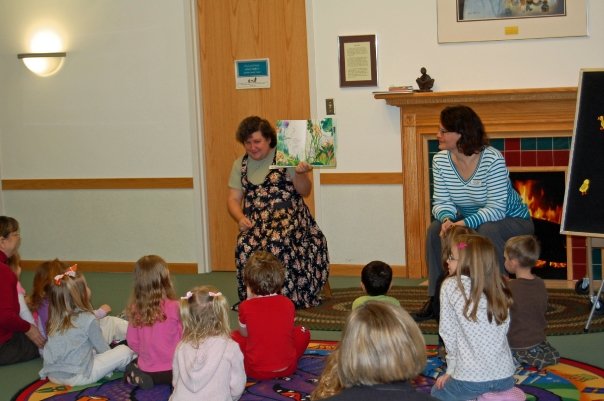
Library Story Time

But I was viewing my job (and myself in that job) through a frame. There was more happening in the wider picture of my life and development. After more than a dozen years there, things had changed. I still loved the work, and while some co-workers retired or moved, and the staff changed a bit, the work environment was still mostly peaceful and friendly. I still found the job challenging and rewarding, and I had gotten to know people in the community over the years who truly felt like family. But, as my role changed, so did some of the relationships. As new leadership came, so did new directions and new priorities. And I had become “comfortable”– and somewhat complacent as well.

In time, it became clear that my “perfect” job was not only not perfect, but becoming a source of frustration, stress, and unhappiness. And there were other things happening that demanded my focus. I was preparing to become a wife and move to a new community. My mother’s health was deteriorating, demanding more of my time and energy. My future husband wanted to open a shop– someone would have to work there, and we couldn’t afford to hire anyone, even part-time. That meant working a second job at the shop while trying to maintain my efforts at the library.

As the “frame” of my life shifted, I felt confused, even angry, with God. Why would He allow something so good to turn sour? Why did I feel like I was losing myself? Didn’t He want me to be happy and fulfilled? Didn’t He want me to use my talents to help others?

Now, after a few years’ perspective, I can see some of the “rest” of the picture. I had begun to see myself through the lens of my job, and I was depending on that vision, rather than focusing on what God was doing in, around, and through my life. There was nothing “wrong” with my job, per se, but God needed me to be willing to let go and move in new directions. Now I am preparing for another change, as we have decided to close our shop, and I will look for the next step– a new job, new opportunities, new challenges.

My nation just went through a contentious election. Many people are upset at the outcome, while others are relieved. But just as it happened with my job, I need to be careful NOT to depend on politics and governments to be “saviors.” No political party or platform or policy can “fix” sin and brokenness. The “system” isn’t the root of the problem. As individuals, we need to submit ourselves to the authority of those in government, but only AFTER we submit to the authority of God. HE is the King of Kings, the Lord of Lords, and His power exceeds that of Presidents, Cabinets, Congresses. Our nation must prepare for new challenges, as well as new opportunities.

I write all this, knowing that there are people going through much more traumatic “shifts” in their lives– the changing of a government administration, with its unknown power and potential can be worrying; the loss of a job, and a change of career is a disappointment. But it is not the same as the loss of a spouse or child, the sudden loss of a home to fire, or an unexpected diagnosis of cancer or other health issue. But the principle is not so different. God’s ways are eternal. Sometimes, we see the uncertainty and trauma in front of us, or surrounding us, and it becomes a frame for all of our thinking and emotions. But the “picture” is much bigger than just our immediate situation. God calls us to trust Him in all circumstances, knowing that His love for us is not just for this life, but for all eternity. Whatever we (or our loved ones) go through here is but a snapshot– one of millions that God will put together in a Glorious and Perfect collage.

Moreover, God gives us the privilege of listening to us when we call out to Him. We need not be afraid to ask, “Why this?” or “Why now?” or even “Why me?” But when we ask, we need to be willing to shift our focus, and remember where our Hope is Built– On Christ the Solid Rock. Even the sweetest “frame”– our career, our relationships, our identity, our politics, our happiness in this life– cannot compare with His faithfulness and eternal Sovereignty.

Finding Beauty in the Broken

The other day, a local artist stopped by our shop. He commented on the giant mirrors we have lining the north wall of the store. I explained that when we first moved in, the mirrors were left over from a dance studio that had once inhabited the space. They left the mirrors and the barres on the opposite wall. We liked them and left them in place. The mirrors bring in a lot of extra light, and they make our space look bigger than it actually is. The barres make convenient spaces to hang linens and other items for display.

The artist nodded. I went on to explain that we hated the thought of someone removing the mirrors (four panels that run about 7 feet in height and stretch about 30 feet along the wall) because of the risk that they would be shattered and ruined. Then, the artist told his story. One of his early studios was in a small garage lined with large mirrors. Like us, he liked that the mirrors made the small space feel lighter and larger. The extra light was also helpful in creating his art. But when he moved to another studio, the panels were removed, and they broke into several pieces. Instead of throwing them out, however, he glued them into a new pattern on the walls of his now larger studio. He used the broken mirrors to create light and beauty– different from before, but with new meaning and renewed purpose.

And it reminded me of what Jesus does for us. We were created to reflect the light of God’s love, to bring light into a dark world. But often, we feel shattered and useless. Sometimes, God is trying to move us into a different space; different circumstances; a different outlook. From our perspective, it looks like failure. We might even try to glue ourselves back into the same old pattern, but without success. And often, we expect God to see us as just so many shattered pieces, ready to be swept up and thrown out. Or something so broken that we no longer have the power to reflect His light.

But God is an artist. He delights in rescuing those of us who are broken. God redeems our purpose and our worth, giving us new and abundant life. He finds beauty in the broken, and a message in our mess. The prophet Jeremiah speaks to this through the artistic metaphor of the Potter and the clay. (see Jeremiah chapter 18) God molds us and shapes us; He has the power and authority to reshape us for new beauty and usefulness. God was speaking to Jeremiah about the nation of Israel. They had broken their covenant with God, and He was about to punish them. But God still had plans for their renewal and their future– including their ultimate redemption at the hands of His Son! God doesn’t give up on us. Of course, God’s message through Jeremiah is not only about renewal, but about submitting to His design and purpose for us. We cannot reshape ourselves– whether clay pots or shattered mirrors. Only God has the power to shape our purpose.

But more than that, God can reshape our outlook, so that WE too can see the beauty around us, in spite of the brokenness. We see people differently; we see situations differently. We see possibilities where we used to see only problems. We see hope, where there used to be despair. And we are empowered to reflect that hope to those around us. Even though we have been broken, we can still fulfill our God-given purpose of reflecting light and love and beauty.

God has been preparing me for a big move lately. After several years, David and I will be closing our shop at the end of this year. Someday, another renter or owner may remove the lovely mirrors that line our north wall. And part of my heart feels broken at the thought of “moving on” and starting a new chapter. But my artist neighbor reminded me that there is often great beauty in the broken– if we have the eyes to see it. God isn’t finished with me– I will find a meaningful way to serve and share and reflect His love. It may be in a different way or a different place. And our shop will go on to be used for another purpose at some point. And even if the lovely mirrors are no longer in place, the north wall will have beauty and purpose for someone else.

Leaning…

(Note: this is an edited and updated post from a couple of years ago.)

“What a fellowship; what a joy divine,
Leaning on the Everlasting Arms…”

Bethel Church, Penn Twp., Michigan

Years ago, growing up in a small community, and attending a tiny rural church in southwestern Michigan, we sang this song often at church. As a child, I liked the tune, but had little idea what the song meant. In fact, when I was very small, before I could read, I misunderstood the lyrics– I thought the congregation was singing “wienies” on the everlasting arms. I made my grandmother laugh when she heard my interpretation! She helpfully corrected me. So I knew the basics. I knew the word fellowship– that was what we called the pot-luck meals and social times we had in the church basement. I knew that Joy was like happiness, only better. I knew that “divine” referred to God and Heaven, and Holy things. But I also knew that leaning was frowned upon– I was told to stand up straight, sit up straight, and never lean back on the two hind legs of the chair in class. How could there by fellowship, and divine joy in leaning? And what were the Everlasting Arms? It sounded like the name of a hotel. It was a long time before I began to understand the joy of leaning, or even falling into the “everlasting” arms of the Savior.

As I have lived, I have grown to understand and cherish these words. There IS a fellowship and a joy divine in learning to lean on the Everlasting Arms of Jesus; to experience the strength and peace that passes my own understanding when I trust fully in Him, instead of in my own plans, whims, dreams, or wishes. There is no shame in leaning on God– in fact, if we don’t learn to lean on the solid wisdom and faithfulness of God, we will slouch into bad habits, “fall” into false teaching, or simply collapse in our own limitations and weaknesses, much like a chair leaning on just two legs! And this fellowship is not only with my Creator, Sustainer, and Savior; it is with all the brothers and sisters around the world who have learned to trust Him, too. I can travel to foreign countries, with different languages and customs, and still feel the kinship and “belonging” with other Christians. It is deeper and more mysterious than just the recognition that we are fellow human beings. It goes even deeper than the love for others who are loved by God. It is the recognition that God’s Holy Spirit surrounds us, flows in and through us, strengthens us, and unites us IN HIM. We are fellow travelers; fellow workers; fellow members of a universal family– one that is more inclusive than nationality, race, ethnicity, language, ideology, or denomination. We can (and do) lean on the ONE who is eternally trustworthy, eternally faithful to walk beside us, empower us, comfort and heal us, and lead us home. And we can lean on each other, knowing that our mutual strength comes from Him.

I love worship services, and I’m thankful that we have an active church where people worship; where the Bible is taught and revered; where families and individuals are welcomed and loved. But I sometimes miss the old “prayer meetings” in the church where I grew up. Every Wednesday night, while the children were (supposedly quietly) playing games, singing songs, and listening to the great stories of the Bible, a faithful (and sometimes rag-tag) group of adults were upstairs in a huddle. Some pulled up chairs and sat in a circle; others knelt the whole time. They prayed for nearly an hour–prayers of thanksgiving and prayers of urgent needs; prayers expressing worship, and prayers expressing inadequacies and failures; prayers for the children downstairs, for other members of the church family; prayers for the community, the country, and the world. As I became a teenager and a young adult, I was privileged to join in. I watched wise, older men and women express their confidence in God’s provision, and pour out their hearts for their children and grandchildren. I listened to young adults asking for wisdom and guidance as they raised families and witnessed to co-workers. I felt the joy and grief and true “fellowship” that came when several hearts turned as one to God.

I have since attended many “prayer meetings”– some planned, some spur-of-the-moment; some held in churches; others held in homes or dorm rooms, even on street corners or grocery stores; some lasting only a few minutes; others lasting hours. I am blessed to be able to attend a weekly “prayer meeting” on Wednesday mornings at my local church. There is something mystical about communal prayer– listening and sharing in prayer with others. The prayers of God’s people are compared to incense– and communal prayer is like a delicately-balanced blend of fragrances, infusing the very room with blessing, and even a touch of Glory. (For more about how prayer is likened to incense, see https://the-end-time.org/2017/06/13/how-is-incense-like-prayer/) It is yet another miracle of the power of prayer, that we can combine hearts and voices to honor God; to lift up very human concerns to the One powerful enough to hold each one in the palm of His hand. It should not replace personal prayer and Bible Study, or communal worship services, but it is a wonderful practice for any Christian to “come alongside” in prayer with fellow believers. It is also humbling to think about how such a seemingly small act can have far-reaching consequences.

God “inhabits” the praises of His people (Psalm 22:3). When we show up and participate in communal worship and prayer, we get a greater sense of God’s presence, His power, His Glory, His Love, and His eternal purpose. What a Fellowship! What a Joy, Divine!

What If?

As I am writing this, people in my country are voting or preparing to vote in a Presidential election.  Many of them are voting in fear, confusion, or anger, and asking, “What if my candidate/cause/political party doesn’t ‘win’ today?”  “What if I voted for the ‘wrong’ policies or people?”  “What does the future hold?”

These are not uncommon or unrealistic questions, but they are questions that can waste our time and sap our energy in hypothetical posturing.  The writer of Ecclesiastes says:

alone beach calm dawn

Ecclesiastes 11:1-6 King James Version (KJV)

11 Cast thy bread upon the waters: for thou shalt find it after many days. Give a portion to seven, and also to eight; for thou knowest not what evil shall be upon the earth. If the clouds be full of rain, they empty themselves upon the earth: and if the tree fall toward the south, or toward the north, in the place where the tree falleth, there it shall be. He that observeth the wind shall not sow; and he that regardeth the clouds shall not reap. As thou knowest not what is the way of the spirit, nor how the bones do grow in the womb of her that is with child: even so thou knowest not the works of God who maketh all. In the morning sow thy seed, and in the evening withhold not thine hand: for thou knowest not whether shall prosper, either this or that, or whether they both shall be alike good. 

woman wearing grey long sleeved top photography

It is not wrong to wonder about the future, but we cannot be sure that our actions will always produce the results we long for– especially when we have little control over other people’s actions and consequences.  The first two verses of this passage warn us not to “put all of our eggs in one basket”.  As free citizens in a democratic republic, we shouldn’t put our trust in any one political party, platform, or politician.  Nor should we live in a social or political “echo chamber”, listening only to the views and ideas with which we feel most comfortable, or least challenged.  However, we should look at the long-term consequences of proposals and the reasons behind them before we promote change just for the sake of it.

The third verse reminds us that some changes and events are beyond our knowledge or control.  It’s not that our vote “doesn’t make a difference” or that we’re on “the wrong side of history”– it may mean that history has taken a detour surrounding a certain issue.  It may mean that God is allowing for something we have not imagined (as He did in the days of Habakkuk). Get some great “Insight” into the Book of Habakkuk here.

aerial photo of buildings and roads

But there is more wisdom to come in verses 4-6.  Waiting for certainty of outcome, or being distracted by our circumstances or every “wind of change” can lead us to miss the very real opportunities for present action.  God has given us everything we need (see 2 Peter 1:3-5) for godly living and godly decision-making.  That doesn’t mean that our decisions will always reflect popular “wisdom”; it doesn’t even mean that our decisions will be the same as all other fellow believers and followers of Christ.  It DOES mean that we can make our decisions without fear.  God knows us– He understands your heart and mind better than anyone; He knows why people who agree on spiritual matters may not agree on politics.  But more than that, God KNOWS the future!  He knows all the things that we merely guess at.  So we should act in the present with the best information we have, and leave the rest to the God who knows best.

girl wearing blue denim dress shirt

Modern politics relies heavily on conjecture– polls, predictions, pledges, projections, plans, and campaign promises.  But God is still sovereign over all nations, governments, and peoples.  Instead of asking, “What if..” we should be asking of God, “What now?!”   And we need to be ready to listen and obey!  Let’s pray today for the wisdom to listen more, act with confidence, and trust our future to the one who has already seen it!

Nothing to Fear But Fear Itself

When I taught public speaking in a local public high school several years ago, we had an entire unit on “stage fright.” Studies showed that the fear of public speaking ranked right alongside the fear of death! But why? Why are we afraid to speak in front of a group? Especially a group of our peers?

It turns out that stage fright has two perfectly logical and definable causes: first is the desire to do well/be successful/be understood, appreciated, and accepted. But this natural desire collides with the realistic possibility that we will make a mistake, or that something will happen to keep us from being understood (like a problem with microphones, or interruptions), or that our message will not be accepted or appreciated. Neither of these thoughts, individually, is unreasonable. But the more we exaggerate them, the less our brain can process the duality. We cannot guarantee that all will go perfectly, nor can we assume that all will go horribly wrong. But the more we worry about all the things that MIGHT go wrong, the more we create stress. Ironically, the stress and fear we generate often leads to mistakes we otherwise might NOT have made!

Part of combating fear, then, is to acknowledge that we want to do well– our best, in fact– in spite of whatever circumstances we might face. Instead of exaggerating what MIGHT go wrong, we must put more energy into what we can control, practice, and mitigate. We also have to stay realistic about what we are likely to achieve in our efforts. This is especially true in a situation where we face an unknown or potentially hostile audience. Our goal is to do the best we can with what we have, not worry about achieving the impossible or controlling what is beyond our ability to control.

I was thinking about this recently as I watched several political candidates in debates, town halls, interviews, and even in their TV ads. Many of them show fear, and even a bit of panic over questions from interviewers, reactions from audiences, and attacks from their opponents. It can be nerve-wracking to face “gotcha” questions from an interviewer– questions that ask you to defend or explain things you said years ago or actions you took under different circumstances. But it can also be an opportunity to clarify a position, show growth and how to learn from past mistakes, or create healthy discussions.

The same holds for Christians who face a hostile or unknown audience for the Gospel. We can be very fearful of sharing the Good News if we allow ourselves to fall into worry and negative thinking. We can face “gotcha” questions from opponents– “Why does a ‘Good’ God allow Evil and suffering in the world?” “Why does God send people to Hell?” “What about good people who die without hearing the Gospel?” “I know you. You’re not perfect. Who are you to judge me?”

But the truth is that God hasn’t asked us to have all the answers to “gotcha” questions. He hasn’t asked us to produce “mic-drop” moments in which we stun our opponents into humiliation. But we ARE to be ready, willing, and able to defend– and let’s be clear about this– OUR hope in the Gospel. It is not our job to force everyone around us to accept a particular doctrine, or set of beliefs. It is not our job to make others change their minds or hearts. It IS our job to testify to the Goodness that God has shown to us– even while acknowledging that we continue to suffer in this life– not to explain away God’s actions or other people’s experiences. We don’t have to be out there winning arguments. We just have to be prepared to Speak UP!

The Apostle Peter seems not to have suffered from “stage fright.” He always spoke out– and sometimes regretted it later! But he gives us this wise advice in his first epistle:

 If with heart and soul you’re doing good, do you think you can be stopped? Even if you suffer for it, you’re still better off. Don’t give the opposition a second thought. Through thick and thin, keep your hearts at attention, in adoration before Christ, your Master. Be ready to speak up and tell anyone who asks why you’re living the way you are, and always with the utmost courtesy. Keep a clear conscience before God so that when people throw mud at you, none of it will stick. They’ll end up realizing that they’re the ones who need a bath. It’s better to suffer for doing good, if that’s what God wants, than to be punished for doing bad. That’s what Christ did definitively: suffered because of others’ sins, the Righteous One for the unrighteous ones. He went through it all—was put to death and then made alive—to bring us to God. 1 Peter 3:14-18 (The Message)

Peter doesn’t give us a false promise that everyone will like us or accept our message. In fact, he makes it clear that even Jesus was rejected and suffered at the hands of those who heard the truth from His own lips! Our goal is not to force someone else to accept the truth– but to testify to the truth as we know it, understand it, and live it out. We are not the ones who will judge who goes to Heaven or Hell. We are not the ones who wrote the Law. But we speak of these things because we hold them to be eternal, vital truths. Our job is to let Christ speak through us– not just in our words, but in our Christlike attitude and actions.

We don’t have to fear the crowds– though they may pose very real dangers. We don’t have to fear even those who oppose or oppress us. If we are following our Savior, the only thing in this world to fear…is fear itself.

“Lord, today, I ask for a heart of joy and boldness as I prepare to have an answer for those who would question my Faith and Hope in You. Help me to remember how much You love them, even if they are not willing to accept my words or actions. May I speak to them as You would– with unwavering truth, and unwavering compassion. Thank you for the reminder that you have not given me a ‘spirit of fear, but of power and of love and of a sound mind.’ (2 Timothy 1:7 New King James Version) Keep my mind focused on You and immune to fear. In Jesus’ name, AMEN!”

Praying For Justice

There are a lot of unjust things in this world. And there are a lot of things that seem unjust to us, even when we know they will happen; even when we know they are part of God’s will.

Death seems unjust. So does disease. Poverty seems unjust. Natural disasters seem unjust. Yet they are the just consequence of sin. All have sinned; all must die. Sin causes an imbalance in God’s world– therefore, nature acts in ways that cause disasters and disease. Poverty stems from many sources– greed, laziness, theft– and while some of them may be caused by our own sin, many of the causes stem from the sin of others. And justice is usually beyond our ability to exact.

It is deep in the human heart to cry out for “justice.” But most of the time, we only want what we think is fair or proper from our own outlook. And we want it “NOW!” We want things to be simple and convenient. We want to be justified. We want to be “right” and to be “rewarded” for being so.

Jesus told an interesting parable in the book of Luke. It concerns a widow who was denied justice by a corrupt judge. Even though her case had merit, he would not hear it. He was not interested in giving her justice. But she persisted. She finally annoyed him so much that he gave her what was rightfully hers.

18 And he told them a parable to the effect that they ought always to pray and not lose heart. He said, “In a certain city there was a judge who neither feared God nor respected man. And there was a widow in that city who kept coming to him and saying, ‘Give me justice against my adversary.’ For a while he refused, but afterward he said to himself, ‘Though I neither fear God nor respect man, yet because this widow keeps bothering me, I will give her justice, so that she will not beat me down by her continual coming.’” And the Lord said, “Hear what the unrighteous judge says. And will not God give justice to his elect, who cry to him day and night? Will he delay long over them? I tell you, he will give justice to them speedily. Nevertheless, when the Son of Man comes, will he find faith on earth?”
Luke 18: 1-8 (ESV)

Jesus does not mean to imply that God is like the unjust judge. God does not close His ears to our cries for justice; But He also does not see our situation from our point of view. God WILL allow our loved ones to die. He may hear our prayers for temporary healing, but He will not prevent us from all grief or loss. And we may have to live through disease, poverty, and other circumstances that seem unfair or unjust– at least for a while.

Jesus is reminding his disciples (and US!) that God not only hears our prayers, but He cares about our needs, and He hates injustice even more than we do. God will not just act reluctantly to bring about justice for one widow. God will end the sting of death, the corruption of sin, and the need to cry out for justice once and for all. And even in this life, He can and often will give us miraculous answers to our problems with injustice. But there is a caution at the end of this parable. Do we have faith? I don’t mean the kind of faith that hopes and wishes that everyone in a particular situation will “get what is coming to them.” Nor is He talking about a faith that says, “God helps those who help themselves.” Rather, Jesus is talking about a faith that lifts up a situation to Him, knowing that He– and He alone– WILL keep His promises in His time and in His fashion. The kind of faith that can rest secure in knowing that “HE WILL DO IT!”

Are you trusting for justice today? Are you still waiting? Don’t stop praying. But more importantly, don’t stop believing!

“Now I Lay Me Down To Sleep…”

When I was still a young child, and a new believer in Christ, I learned this bedtime prayer:


“Now I lay me down to sleep.
I pray the LORD my soul to keep.
If I should die before I wake;
I pray the LORD my soul to take.”

I didn’t use this bedtime prayer every night; my parents taught me to say more personal prayers, whether at bedtime or throughout the day. In fact, I found this prayer to be somewhat morbid– praying about death before lying down for sleep. Still, it was an easy prayer to learn, with its rhyme scheme and easy rhythm.

As an adult, I look at this prayer from a very different perspective. I learned it from books, which had included it from revisions of earlier books, including old Mother Goose rhymes. The prayer (or a version of it) dates back to the 17th century https://www.dailyeffectiveprayer.org/now-i-lay-me-down-to-sleep-prayer/, and I imagine the thought of dying in the night was far more persistent than it is now for most children. This prayer offered comfort, not just about one’s own death, but the sudden death of a baby brother or sister, or the death of a neighbor, or one’s parent. Death, which often came in the night, was not to be feared, because God was bigger than both the night and the grave.

But as a adult, I also appreciate the simple trust that is expressed in such a short prayer. I often find myself at night fretting and praying about details and issues that I have tried to rationalize or “fix” in my own power. This prayer puts things in perspective– I pray the LORD my soul to keep. Basically, I lay everything, including my very soul, into God’s hands. Thus, I CAN “lay me down to sleep,” rather than stay up reciting a litany of little worries about which I can do nothing, or have already done what I could.

“If I should die before I wake…” The older I get, the more this line resonates. Not that I believe I am at death’s door, or anything, but death is less of a “monster under the bed” sort of concept than it was as a child. Death is a reality, and yet I can trust God to “take” my soul, snatching it out of the grave and raising me to eternal life with Him. Not because I know better than I did as a five-year-old, or because I have done “good” things over the past half-century and more– but because God said so in His Word, and I can trust Him to do what He says. Just like I learned to do when I was five!

Anywhere…

Anywhere! Anywhere!
Fear I cannot know;
Anywhere with Jesus I can safely go!

I was reading in the Psalms the other day, and I fell on one of my favorites, Psalm 139:

 O Lord, you have searched me and known me!
You know when I sit down and when I rise up;
    you discern my thoughts from afar.
You search out my path and my lying down
    and are acquainted with all my ways.
Even before a word is on my tongue,
    behold, O Lord, you know it altogether.
You hem me in, behind and before,
    and lay your hand upon me.
Such knowledge is too wonderful for me;
    it is high; I cannot attain it.

Where shall I go from your Spirit?
    Or where shall I flee from your presence?
If I ascend to heaven, you are there!
    If I make my bed in Sheol, you are there!
If I take the wings of the morning
    and dwell in the uttermost parts of the sea,
10 even there your hand shall lead me,
    and your right hand shall hold me.
11 If I say, “Surely the darkness shall cover me,
    and the light about me be night,”
12 even the darkness is not dark to you;
    the night is bright as the day,
    for darkness is as light with you.

Psalm 139: 1-12 (ESV)

This portion of the Psalm speaks of God’s Omnipresence. But often, when I read it, I read it from a negative viewpoint. It speaks of hiding from the Lord…it is impossible to escape the Lord’s presence and His omnipotence. I cannot hide my thoughts or deeds or feelings from God’s all-seeing, all-knowing presence. And this is a good thing in the end. But what about when I am not trying to escape from God, but some other threat– guilt, pain, heartbreak, or even death?

God’s omnipresence is also a metaphysical reality in a very positive sense. I cannot stray outside of God’s presence. He will not remove it from me; He will not hide from me. He will never send me into ANY situation where He is NOT already there, and where He will NOT be with me.

I know this. But I needed a reminder today. God will be with me on my best days, and on my worst. He will be with me in sickness or depression, or celebration and strength. He will be with me whether I am “alone” or surrounded by strangers. He will be with me in the darkness where I can’t see anything, as well as in the blinding bright lights of an operating room, or the eerie haze of a foggy morning.

Wherever I am, God is figuratively holding my hand; He is hemming me in all around. I am protected and supported by His Almighty Right Hand. When I am tempted to doubt– He is there! When I am distracted by the din of other voices– He is there! When I have turned my back on Him– He is STILL there; waiting for me to turn back!

I don’t know where I will have to go today. It may be to the grocery store; it may be halfway across the world…I may be called to do unexpected things, to go in an unexpected direction, to turn a frightening corner or face an unknown foe. But I can go anywhere with confidence– not in MY wisdom or abilities or strength– God is WITH me. God goes BEFORE me and BEHIND me. God is OVER me and UNDER me, and all AROUND me.

Recently, there was a news story about a submarine with passengers who were going to visit the wreck of the Titanic. Tragically, the submarine failed and their lives were lost. Just like the passengers over 100 years earlier, they were far from any human help. But God was there. I don’t know if any of the passengers were believers, but if they were, they could face their last earthly hours in confidence and peace that passes human understanding– God was there. Even though their bodies were not saved from this tragedy, their spirits were never out of God’s reach; their hearts were never lost to God’s loving gaze.

May we rest in that assurance today. There is no place on Earth– or in or over or under the Earth!– where God does not watch over us. The going may not be pleasant. It may be dangerous or even deadly. But we– our soul; our spirit– can go anywhere without fear. We can face the transition from life to death with calm assurance. We can face the empty threats of Death and the Grave without flinching. We can face our fears, and defeat them, when we trust that God’s presence in constant and completely sufficient.

Prayers of Protection

My husband and I just returned from a week-long vacation. We had a very nice time, just getting away for awhile, relaxing, doing some fishing, and enjoying nature. We like to travel, and we like to take the “back roads” and scenic routes. Even so, we pray for God’s protection as we travel.

Praying for “travel mercies” or safety as we travel is not a magical formula. We were not expecting that God would somehow grant us a problem-free trip. Prayer doesn’t change the possibility that we could be involved in an accident, or our car might break down, or we might be subject to bad weather or natural disaster (on that note, we are praying for those impacted by Hurricane Helene– both residents and travelers). Rather, praying for safety in our travels is an acknowledgement that God knows what the future holds, and we do not. God is able to protect us from harm in a miraculous way, if He so chooses. But He is also able to bring us THROUGH tough times and even disasters. Prayer reminds us that we are not the sole authors of our own circumstances.

Nor does prayer negate our obligation to practice safety–we obey the traffic laws, check to make sure the car is in good condition, we wear seatbelts, and pay attention to driving conditions. Prayer simply reminds us that we are not the sole authors of our circumstances. We expect certain outcomes, but God knows both the expected and the unexpected outcomes; we proclaim our trust in Him, no matter what.

So what happened on our vacation? Was it all smooth sailing (or driving in our case)? Not quite. Yet I believe that God answered our prayers and showed His faithfulness. We took our Jeep and drove almost 500 miles away from home without any major incident. We did have to “pump up” one of our tires, and we experienced some rough driving when we went “off road” due to a wrong turn we took. (We ended up on a designated trail for off-road vehicles, thinking it was a short-cut to a rocky beach!) And, just as we were entering our home town at the end of our trip, we witnessed (but were not involved) in a bad crash involving a vehicle fleeing from the police.

I believe that God was with us–not just because we had a good trip with minimal troubles, but because He has promised to never leave us! I know faithful Christians who have died in terrible car accidents. Two years before I was born, my mother and grandmother almost died in an auto accident. God was still with them! Someone once asked me to think about all the “close calls” and even unknown dangers that none of us can see–We have no idea how many times over we “should” have died or “might” have faced grave dangers. In fact, on another vacation a few years ago, we were within 30 miles of home when we hit a deer. No one was hurt, but it could have been a disaster. The accident that injured my mother was along a route that she drove every day. In fact, most accidents happen within 25 miles of home. How easy to pray for protection for a long trip into the unknown and forget to pray when we are traveling to church on Sunday or to the movies on Friday night! Yet God may have protected us from death a hundred times over in our lives without our knowledge. It is only when we see the frightening possibilities that we acknowledge the miracles of His protection in our lives.

It can be difficult to see the hand of God when a miracle doesn’t happen. When “good” people die or suffer extreme pain as the result of a freak accident. We want life to “make sense.” We want our plans to, well, go as planned. And it can be too easy to claim credit when things DO work out just the way we expected. God did not let bad things happen to other people because He didn’t love them. And He didn’t let David and I have a great vacation because He somehow loves us MORE than others, or because we are somehow “better” or “more deserving” of a good vacation.

God answers prayers of protection– not because He has to, and not always in the way we expect Him to–God’s ways are NOT our ways. But we can trust Him, and continue to pray for protection and mercy as we travel through each new day. He IS Faithful. He WILL not leave us to face the unknown alone.

Blog at WordPress.com.

Up ↑