“Seeing” Answered Prayer

God always hears our prayers. He always has an answer. But it isn’t always the answer we expect. Sometimes, God answers, “No,” or “Not yet.” Sometimes, He answers in ways that seem confusing and mysterious, and even ironic.

I remember as a young teen praying for a woman in the community who had lymphoma. In treating her condition, the doctors, trying a new experimental treatment, did permanent damage to certain muscles, leading to a progressively debilitating condition. She died a slow and painful death, unrelated to her original condition. Where was God? How could He listen to our prayers and give such a cold, cruel answer?

But God sees a bigger picture than we do. This precious woman had incredible faith and grit. She had spent years working diligently to help others and teach God’s Word. She continued her work, even in the midst of her health struggles almost to the end of her life. What might have caused some people to turn their backs on God made her more dependent on His Grace. She faced her pain and weakness with grit, strength, and hope in God’s eternal healing. God’s answer wasn’t to rescue her from the suffering, but to be present in it with her. And her example lives on to this day.

Some people would read about this and be dismissive. What a cop-out! What a delusion! But there is much more to her story than her own condition or even her response. One of the men in our church really struggled with God’s seeming indifference. He wrestled with his own faith for many months while watching her get weaker and weaker. But through his struggle, he grew in his conviction that God was present in every situation. He was inspired to do short-term mission work, partly as a result of this growth. Knowing that God would be with him, he threw himself into loving people from a different culture–different climate, different language, different work ethic– and helped build churches and other facilities for those in need. Many people were helped, inspired, and encouraged because of his dependence on God– a dependence enhanced by facing his own questions and doubts.

Family members and community members, watching her struggles, were inspired to pick up where she left off– working and teaching and reaching out to others with zeal and joy–following her marvelous example. Today, some of her family members are leaders in their churches, raising the next generations of witnesses to God’s mercy and power. Doctors, having failed in her treatment, learned from it– a difficult lesson for all, but a lesson, nonetheless. Her joyful attitude (before and during her struggles) inspired me to direct the Vacation Bible School program at our church for a few years, and to teach Sunday School when I moved to a new location. And those are just a few of the ways I have “seen” God’s answers to our prayers. God did not give our friend the physical healing we wanted. But her struggles– and her response of faith and perseverance–inspired a ripple effect far beyond her own pain and disappointment. And she has received the ultimate healing! Her pain, intense and unjust as it was, was only temporary. Her life, her legacy, her joy– they all live on!

How often do we look at a situation and think we know what is “best?” How often do we feel that God’s answers are “wrong?” Wrong timing, wrong outcome, full of hardship or pain– how can this be God’s “perfect” will for us? There was nothing about this woman’s situation that was comfortable; no reason to see a good outcome for her or her immediate family. She died. She experienced pain, with no earthly justice. Her suffering was undeserved and unmitigated. She refused to sue the hospital or the doctors– she wanted them to be able to continue to learn from her experience so they could help others NOT to suffer in the future. But her life was shortened and made grueling in the process, and she received no payout, no financial compensation, no symbolic reparation for her sacrifice. We received no “miraculous” answer to our prayers. It seemed at the time that the more we prayed for healing, the worse her condition became. We continued to pray anyway, knowing that God DID hear us, and God’s ways were not our ways– they are always better. Even when His ways seem like silence.

This all happened several decades ago, and many of the “answers” from our urgent prayers are still hidden from our eyes. Many of our questions remain unanswered. But God’s will is still active, even in these tragic circumstances. Someday in Heaven, it may be revealed to us exactly how God used this woman’s life and struggles to bring about blessings to hundreds of other people– causing them to grow strong through her weakness, drawing them to His healing and wisdom in a world of pain and confusion.

I have lost many friends to cancer. I pray for each one, and the outcomes are never exactly the same. Some go into remission, only to have the cancer return three or four years later. Others get amazing healing– surgeons are astonished and perplexed by the rapid or miraculous disappearance of cancer cells. Some go into fast decline and die almost immediately after their diagnoses. And each situation impacts people in different ways, showing God’s power and presence for those who are willing to look for them. Prayer isn’t a magic formula for immediate and total healing. Prayer is lifting up a situation that is beyond our control or understanding and trusting that God has a perfect plan beyond what we can see or understand. Cancer cannot take God by surprise. Death cannot outwit or overpower God. We live in a world where Evil can overwhelm us; our bodies can betray us; our future can be lost in the fog of uncertainty and suffering. But God is present– not only IN our suffering, but ABOVE and BEYOND our suffering.

We don’t pray for our friends and loved ones to suffer. We want them to be healed, to be free of pain and grief; to be at ease and blessed with abundance. This is normal; it is good. God wants to bless us. It doesn’t bring Him joy to watch us suffer. But He also wants us to see the blessing of His presence, His wisdom, and His power. Sometimes, we can’t see that as we look around. Sometimes, we need to look up! Even from a hospital bed (see John, chapter 9). Even from the flames of suffering (see Daniel, chapter 3). Or from the belly of a whale (see Jonah, chapter 2). And we will find that God is there.

Mr. Teeter’s Song

When I was growing up, there was a man in our church named Mr. Teeter. He seemed impossibly old when I was a child– he’d been born in the 1800s! And he and his wife often looked like they were still living in the previous century. Mrs. Teeter wore dark-colored dresses that came past her calf, sturdy shoes, and a white cap over her carefully arranged, long white hair. Mr. Teeter always wore a suit to church, complete with a gray fedora. Mr. and Mrs. Teeter were both short–he was probably no taller than 5’4″, and she barely cleared five feet in height.

One of the weekly church meetings we attended was mid-week prayer meeting. Sometimes, we would start with worship and singing. Various people would call out old favorite hymns. Sometimes we had a pianist; sometimes we sang a Capella. And almost invariably, Mr. Teeter would request the same old hymn. He liked other hymns–“What a Friend We Have in Jesus,” or “He Lives! He Lives! I know He lives; He lives within my heart.” But his clear favorite was “I Love to Tell the Story.”

As a child, I found this frustrating. First of all, I liked to sing a variety of songs; this one was NOT one of my favorites, and I thought we were “wasting time” by always singing the same old songs. Secondly, because of his age, everyone deferred to Mr. Teeter, so even if other songs were called out, it was a given that his choice would probably win out.

But one evening, Mr. Teeter explained WHY he loved this old hymn so much. He said he had lived a rough life in his younger years– he drank more than he should, and he had a short temper. I was shocked. I could not imagine this tiny, wrinkled, gentle man as being anything other than how I knew him. He was dapper, soft-spoken, kind, and wise. When his wife suffered a stroke, he patiently and lovingly cared for her. He was generous and compassionate, even if I thought his musical taste was more limited than it might have been.

Instead of singing the song, he read it aloud. And after a couple of phrases, he would linger and talk about how, all these years later, he was still in love with the simple Gospel message– that Christ died for sinners, rose again and offered forgiveness and redemption to all who believed in Him. Mr. Teeter had never forgotten the joy and wonder of his Salvation. He never tired of “the old, old story” because it had changed his life in a dramatic and eternally satisfying way. Mr. Teeter died when I was still a teenager. He had cared for his wife until she died, and he was at peace when it came time to leave his life on earth. In fact, his face almost glowed as he lay in his casket. He was absent from the body, and ready to sing the “new, new song.”

There was nothing slick or intellectually challenging about Mr. Teeter’s testimony, but it was very real and powerfully moving. There was nothing musically exciting about the song he loved, but the message was eternally true, and worth singing over and over again. So many years later, whenever I hear this timeless hymn, I am reminded of how Jesus changed my life, and how grateful I am to sing His praises.

Today, as I remember Mr. Teeter and his faithful witness of God’s love and mercy, I pray that you know the simple and enduring truth of Christ’s love for you. And I pray that we would be as faithful in proclaiming the “Old, Old story of Jesus and His Love” as we go through life.

Nothing to Fear But Fear Itself

When I taught public speaking in a local public high school several years ago, we had an entire unit on “stage fright.” Studies showed that the fear of public speaking ranked right alongside the fear of death! But why? Why are we afraid to speak in front of a group? Especially a group of our peers?

It turns out that stage fright has two perfectly logical and definable causes: first is the desire to do well/be successful/be understood, appreciated, and accepted. But this natural desire collides with the realistic possibility that we will make a mistake, or that something will happen to keep us from being understood (like a problem with microphones, or interruptions), or that our message will not be accepted or appreciated. Neither of these thoughts, individually, is unreasonable. But the more we exaggerate them, the less our brain can process the duality. We cannot guarantee that all will go perfectly, nor can we assume that all will go horribly wrong. But the more we worry about all the things that MIGHT go wrong, the more we create stress. Ironically, the stress and fear we generate often leads to mistakes we otherwise might NOT have made!

Part of combating fear, then, is to acknowledge that we want to do well– our best, in fact– in spite of whatever circumstances we might face. Instead of exaggerating what MIGHT go wrong, we must put more energy into what we can control, practice, and mitigate. We also have to stay realistic about what we are likely to achieve in our efforts. This is especially true in a situation where we face an unknown or potentially hostile audience. Our goal is to do the best we can with what we have, not worry about achieving the impossible or controlling what is beyond our ability to control.

I was thinking about this recently as I watched several political candidates in debates, town halls, interviews, and even in their TV ads. Many of them show fear, and even a bit of panic over questions from interviewers, reactions from audiences, and attacks from their opponents. It can be nerve-wracking to face “gotcha” questions from an interviewer– questions that ask you to defend or explain things you said years ago or actions you took under different circumstances. But it can also be an opportunity to clarify a position, show growth and how to learn from past mistakes, or create healthy discussions.

The same holds for Christians who face a hostile or unknown audience for the Gospel. We can be very fearful of sharing the Good News if we allow ourselves to fall into worry and negative thinking. We can face “gotcha” questions from opponents– “Why does a ‘Good’ God allow Evil and suffering in the world?” “Why does God send people to Hell?” “What about good people who die without hearing the Gospel?” “I know you. You’re not perfect. Who are you to judge me?”

But the truth is that God hasn’t asked us to have all the answers to “gotcha” questions. He hasn’t asked us to produce “mic-drop” moments in which we stun our opponents into humiliation. But we ARE to be ready, willing, and able to defend– and let’s be clear about this– OUR hope in the Gospel. It is not our job to force everyone around us to accept a particular doctrine, or set of beliefs. It is not our job to make others change their minds or hearts. It IS our job to testify to the Goodness that God has shown to us– even while acknowledging that we continue to suffer in this life– not to explain away God’s actions or other people’s experiences. We don’t have to be out there winning arguments. We just have to be prepared to Speak UP!

The Apostle Peter seems not to have suffered from “stage fright.” He always spoke out– and sometimes regretted it later! But he gives us this wise advice in his first epistle:

 If with heart and soul you’re doing good, do you think you can be stopped? Even if you suffer for it, you’re still better off. Don’t give the opposition a second thought. Through thick and thin, keep your hearts at attention, in adoration before Christ, your Master. Be ready to speak up and tell anyone who asks why you’re living the way you are, and always with the utmost courtesy. Keep a clear conscience before God so that when people throw mud at you, none of it will stick. They’ll end up realizing that they’re the ones who need a bath. It’s better to suffer for doing good, if that’s what God wants, than to be punished for doing bad. That’s what Christ did definitively: suffered because of others’ sins, the Righteous One for the unrighteous ones. He went through it all—was put to death and then made alive—to bring us to God. 1 Peter 3:14-18 (The Message)

Peter doesn’t give us a false promise that everyone will like us or accept our message. In fact, he makes it clear that even Jesus was rejected and suffered at the hands of those who heard the truth from His own lips! Our goal is not to force someone else to accept the truth– but to testify to the truth as we know it, understand it, and live it out. We are not the ones who will judge who goes to Heaven or Hell. We are not the ones who wrote the Law. But we speak of these things because we hold them to be eternal, vital truths. Our job is to let Christ speak through us– not just in our words, but in our Christlike attitude and actions.

We don’t have to fear the crowds– though they may pose very real dangers. We don’t have to fear even those who oppose or oppress us. If we are following our Savior, the only thing in this world to fear…is fear itself.

“Lord, today, I ask for a heart of joy and boldness as I prepare to have an answer for those who would question my Faith and Hope in You. Help me to remember how much You love them, even if they are not willing to accept my words or actions. May I speak to them as You would– with unwavering truth, and unwavering compassion. Thank you for the reminder that you have not given me a ‘spirit of fear, but of power and of love and of a sound mind.’ (2 Timothy 1:7 New King James Version) Keep my mind focused on You and immune to fear. In Jesus’ name, AMEN!”

These Three Remain–Love!

I’ve been exploring the Apostle Paul’s first letter to the Corinthians; specifically chapter 13, verse 13. Paul states that there are three virtues that remain, after all else has passed away or been lost: Faith, Hope, and Love. And, while the other two are great and necessary, the greatest is Love.

So much has been written about Love– poets and prophets, songwriters and storytellers. most would agree that Love is the greatest virtue. But they wouldn’t all agree on what “Love” is. The Greeks have three different words for love– in fact most languages have more than one word– English has dozens of synonyms: Love, adore, desire, passion, enamored, infatuated, devoted…you get the idea. Except there are several ideas, so how do we know which kind of love remains? What kind of love endures beyond life and time and against every obstacle?

Human love is fallible; it is temporal (and sometimes even temporary). It doesn’t last forever– in spite of poetic promises and sacred vows. People “fall in love” and they fall out of love. Human love grows deeper; but it can also grow cold. It can be conditional, and manipulative; selfish, and shallow. Human love is often based on feelings that change with the seasons. We “love the whole world” when we are feeling good–we love mankind, but can’t stand our next door neighbor!

God’s love is eternal and unconditional. It never depends on His “mood.” It never depends on who we are or what we have done. God loves because it is His nature. He IS Love. He is the definition of enduring, everlasting, boundless, endless LOVE. This is the Love that endures. It is the Love that changes us from the inside out, and changes the world around us. It is this Love that infuses our Faith, that inspires our Hope, and allows us to approach a Holy God and share His Mercy and Grace with those we might otherwise deem “unlovable.”

We are living through chaotic times, filled with raw and dangerous emotions– anger, hatred, pride, despair, resentment, greed, grief, and fear. God’s love is more than just another emotion. I cannot love my enemy with human emotion– nor does God ask me to. God loves through us– it is His Love that we need to access and carry with us into the darkness. I want to bring Love into the world– and I want to be seen as a Loving person. But God asks me to Love even when it is rejected; even when I am seen as the enemy; even when I get hurt in the process. That doesn’t mean that I invite or tolerate abuse because I think it makes me more virtuous or because I think I somehow deserve it. But it does mean that I continue to pray, I continue to have Faith and Hope that God will turn even the smallest acts of Love into seeds that will return a harvest in His time and in His way.

When I look at the life of Jesus Christ, that is just what He did. He had the power to destroy the corrupt Temple system– He demonstrated just a particle of His passion when He drove the money changers out of the Temple courtyard (Matthew 21:12-13). He could have led a rebellion against the oppressive Roman Empire. (In fact, that is one reason He was rejected as the Messiah. He chose not to use His power for political or economic gain– even for the benefit of His own people.) He had the power to wipe out leprosy, or blindness, or demon possession– He could have been the most powerful man on Earth, and single-handedly put an end to poverty, injustice, and so much more. If solving those issues for His people in His lifetime would have been the most loving thing– He would have done it. But He spent His time listening to and helping individuals in need– those who had lost hope, those who needed healing, those who were carrying guilt and doubt and grief. He spent His time, not just talking about Love, but demonstrating Love– personal, unconditional, life-giving Love. Jesus spoke to crowds, yes, but most of His time was spent in small groups or one-on-one– teaching, eating, listening, caring–Loving.

Loving this way takes time– it takes effort, and it comes with risk. Jesus, loving in just this way, was misunderstood, rejected, hated, even killed. But His Love conquered death, and brought life and victory. I may not be asked to become a martyr– but will I seek to Love like Jesus? Will I pray for people I don’t know; or people who have opposed me, or rejected me? Will I continue to love those who have hurt me in the past, or rejected my help? Will I reach out in Love to people who are in rebellion against God? People who mock Him, cry out against Christians, persecute us–even kill us? Will I pray for and support those who are in danger because they are showing God’s Love in this way? Because whether I do or not– Love Remains. Will I be Faithful? Will I reach out in Hope? Will I risk Loving as Christ Loves?

We live with the same brokenness that Jesus faced during His ministry. People around us are hurting– we are hurting! But our Faith tells us that God hears our prayers. Our Hope tells us that God has a plan for the future. And our Love compels us to share the burdens of others as we wait for Christ’s return.

Jesus WILL someday “fix” the brokenness of this world. He WILL Reign and Rule for Eternity. But He asks us to live with the three virtues that ensure that we will overcome the darkness of our own world– that will cause us to shine a light in the darkness–Faith, Hope, and Love!

Why Say Grace?

When I was growing up, we always said grace before our meals. It wasn’t an afterthought; it wasn’t an affectation. It was just part of the meal. We sat down, said grace, and started eating. Sometimes, Dad did the honors; sometimes, it was Mom. And sometimes, my sister or I were asked to say it. It was usually something simple, though it wasn’t always the same. We would say grace at home, around our own table, and we would say grace at restaurants– wherever and whenever our family was together for a meal.

Today, my husband and I have the same tradition. We don’t have children in the house, but he and I take turns saying grace, and if one of the grandkids happens to visit, they know they may be asked to take a turn, as well. If David and I are eating out, we still take a quiet moment to hold hands, close our eyes, and say grace. Some times, other diners or wait staff will stare (or glare) or comment, but most of the time, they don’t even notice.

So why do we do it? Is it no more than force of habit? Are we just “holier” than other diners? Do we really think it impresses God if we say grace, or that God will be angry if we don’t say it?

No. But we believe saying grace is important. Here are some reasons why:

  • Grace is about gratitude. In our busy lives, it can be tempting to take things for granted– even things like food and family. We are BLESSED to have food to eat, and family with whom to share it. We are blessed when we go out to eat to have others cook and clean up for us. We are blessed whenever our family or neighbors can share a meal with us. God is a loving and gracious God, and grace is a time to remember our blessings.
  • Grace slows us down for just a minute to REMEMBER who we are, and who God is! All our blessings– including food and family and time to share them– come from God. Grace reminds us to be humble as well as thankful. It reminds us to see God’s hand at work in even the smallest and most mundane happenings in our lives. And it reminds us that God is faithful in all things, big and small.

  • Grace also helps us to remember to thank the people involved in our meals– the ability to buy groceries; the work it takes to prepare our food; friends and family who share our meals; neighbors who have given or traded with us for food; the cooks and wait staff that serve us at restaurants. Saying grace helps us SEE how we are interconnected; how we depend on God and on others in every area of our lives.
  • Grace gives us the opportunity to lift up our immediate worries and give them to God, instead of holding on to them. Grace is more than just a quick word about food. It is a time for us as a couple (or a family) to pray together about worries that are on our minds. Then, instead of being stressed as we eat, we can stay “in the moment” with each other, and enjoy mealtime together! It’s also a great way to share our thoughts, feelings, and concerns in a safe and informal environment. How much better mealtime is when stress and frustration are diminished, and joy and peace are given a seat at the table, instead!

Saying grace is much more than just a quaint habit from a bygone era. It is a vital part of our growth as individual Christians, and as a Christian couple. I believe it is a simple and quiet witness to others. I believe it has benefits for our digestion, our attitudes, and our emotions, as well.

Grace– not just the mealtime prayer, but the concept of Grace– is not loud or showy. It is, however, consistent, lovely, and powerful. May we say grace; may we show grace; may we live in the power of Grace today!

The Power of Pictures

When my Mom died back in February, she left a house full of memories, and also a house full of papers and empty containers, old clothes and books, and worn furniture and broken appliances. Mom was a hoarder, and it has taken months to begin sorting through all that Mom treasured. Yesterday, I was sorting through a tub of old photos. Mom took thousands of photos over the years, and we gathered up over 25 tubs of them. They are in random order, so one group of photos may be from the late sixties, while the next might have been taken just a few years ago.

It’s been both frustrating and entertaining to go through batches of photos. Seeing my face at age 6 with missing front teeth; seeing my nephew holding his newborn daughter; seeing my Dad in his work uniform; seeing long-lost relatives when they were both alive and younger than I am now! It can be jarring. I found a photo of my favorite pair of sneakers from childhood– they were bright yellow with black stripes and white treads. I loved those sneakers and I finally wore them out. But there they were, staring up at me from an old photo– brand new– and I felt the same sense of excitement I had when I was 10 years old. I also found an old photo of a cousin who recently passed away. There she was, fifty years younger at a family reunion, a young mother with two sons (another son and daughter were yet to be born!) It was a sharp stab to know how much her family is grieving right now. And yet, it was a beautiful reminder that she is NOT gone; she is raised to life, and grief will be turned to joy as we have an eternal “Family Reunion” in heaven!


Mom took a lot of wonderful pictures that mean so much to us now. But Mom also took a lot of “dud” pictures– pictures that were out of focus; pictures of old clothes, or faded flowers. Several pictures of the same thing from different angles. Pictures of people eating–their mouths wide open and gaping angrily. There are no labels telling why such pictures were taken, or what they might mean. Years later, they leave us confused and frustrated– and ready to throw them out!

They say a picture is worth a thousand words. And I have been living that lately, as I sort through old memories. But the pictures are reminding me of other memories– other “pictures” that are even more powerful.

God reveals Himself to us in so many ways– and in so many “pictures.” The Bible is full of parables, metaphors, proverbs, and histories that provide us with word pictures of His character. In Genesis, we read the story of Abraham and Isaac, which illustrates the great sacrifice God would make for our Salvation. Abraham was willing to give his son– the son God had promised– believing that God could raise him from the dead. Isaac didn’t die. He didn’t even know what was coming. But Jesus DID. God’s promises never fail. Unlike Isaac, Jesus KNEW what awaited Him at Calvary. He knew there would be no last-minute, substitute ram. HE was the lamb who would be slain. And He would rise victorious!

In Exodus, God provides another parallel; another word picture to show what He would do. He sent ten plagues on Egypt to prove His power, both to the Egyptians AND to the nation of Israel. But the tenth plague was much more than just a display of power. It was a metaphor for the Cross. In order to escape the Angel of Death, the Israelites were to use hyssop and the blood of the Passover lamb to “paint” the top and sides of their doorframes. Using the hyssop, they “whipped” blood onto the wooden doorframe, causing it to “bleed”– at the top, and on each side. The blood would drip down, creating a similar pattern to the blood on the cross–blood from the wounds on Jesus’ head and outstretched hands. There would even be a pool of blood on the ground, suggesting where His feet would be nailed to a wooden cross. It is a stark picture– a gruesome picture of pain and suffering. But it is a powerful picture that shows us how Jesus’ pain and suffering led to our Salvation. Death holds no power over the Cross! We can rest, knowing that God’s plan is for our rescue, not our destruction.

In the New Testament, Jesus used metaphors and explained how ancient stories foretold His arrival, as well as His death and resurrection. He used the story of Jonah to explain that He would be in the grave for three days. He used the prophets to remind His listeners of God’s many promises. His disciples recorded the stories. The Apostles continued to use the ancient scriptures to “show” that Jesus was the Messiah and that His life and death fulfilled the promises and prophecies.

Time after time, Jesus told parables– stories that were meant to “show” the character of His Father. And WE are also meant to reflect Our Father to the world! WE are to be pictures of God’s Love, His Grace and Mercy, His Faithfulness, and His Holiness. Whatever we do, wherever we go today, we WILL be like a photograph, showing others who we are inside– what we value, what we believe, who we trust, how we love and how we live. We can be powerful witnesses to God’s Love by the way we go about our daily activities. But we can also be “duds”– pictures of people pursuing worthless activities, or looking at the world from a dozen skewed perspectives.

I pray that my “photo” today will reflect God’s character, challenge assumptions, encourage others, and stir powerful reactions for HIS Glory!

Making God Look Good

A few years ago, I worked for a boss who told our staff that our number one job was to “make her look good”. This announcement came as a bit of a shock to all of us. It was nowhere in our employee manual, this idea that her status was more important than our work ethic, or our customer service, or our ability to work together as a team. What I’m sure she meant to convey was that everything we did reflected on her, and, by extension, all of us, our library, and our community. It should have been our priority to work, look, speak, and interact with patrons in a way that brought honor and respect to everyone in the building–including her–so that she could concentrate on making an already great library even better. But that’s not the way it was expressed or understood. And the results were unfortunate.

Photo by hadi ahmadi on Pexels.com

It WAS our job to respect her leadership, and do our best work, allowing her to guide the direction of the library’s growth and service. I’m ashamed to say that I did not do this– I fought her leadership, complained about the way she treated staff and patrons, criticized her ideas and her management style, and finally quit my job there.

I start with this story as a contrast to the story of Daniel as it is told in the Bible. Daniel’s job was to make his bosses–kings and emperors who had conquered his nation, exiled and enslaved him, and destroyed his home and culture–“look good.” He was an adviser to kings who were powerful, ruthless, vicious, and often petty, vindictive, and even edging on madness. He did not have the freedom to “quit” or to harbor pride or criticism.

Daniel’s ability to work under such circumstances sprang from his conviction that his number ONE priority was not to make his bosses look good, or even to be the best administrator or adviser he could be. His number one priority was to seek and to serve Almighty God. All the rest would fall into place if only Daniel would keep the right priorities.

The truth is, we cannot make someone else “look good”. We can try– we can sing someone else’s praises, brag about them, work hard to gain their approval, promote them and honor them, even worship them. And, in a superficial way, these things can make the other person appear important, wise, popular, or even “good.” But it can’t make someone else BE good, or important, or wise. And, often, our efforts are not really about making the other person look good. Our efforts are about making ourselves look good in another person’s eyes, or making someone else appear better than they really are.

Throughout his life, Daniel did his best to make God known. He made kings, from Nebuchadnezzar to Darius, acknowledge God’s power, His authority, His grace and mercy, and His goodness. But at the same time, Daniel could not “make” God look good– unless God was (and IS) all the things Daniel said He was. Daniel’s job was never to “make” God look good. His job was to point away from himself, and let God be God–awesome, mighty, loving, eternal, and Holy. In return, Daniel was used in amazing–even death-defying– ways that continue to astonish and teach us today.

My attitude toward my boss didn’t make her look good– or bad–her own actions and words spoke louder than anything I did or said about her. But my attitude and actions didn’t make me look good, either. They just made me look spiteful, arrogant, and uncooperative. Worse, they made my walk with Christ “look bad.” I wasn’t pointing people toward Him; I was pointing to the negative (and being negative) about a situation that was so much smaller than the God I serve. What a missed opportunity to demonstrate, as Daniel did, what obedience and faith look like. What a missed opportunity to let God’s goodness shine through me!

Today, as we pray to this same awesome, mighty, loving, eternal and Holy God, let us not waste time trying to “make God look good.” No amount of fancy rhetoric, holy elbow grease, finger-pointing, or pious posturing can make God better than He already is. Instead, let us come before Him humbly and with a contrite heart, ready to obey, honor, and worship Him with our whole being as Daniel did. Not in pride or arrogance, sounding like an advertisement for a new “super” product or exercise routine, or like an expert on spiritual living, but in awe that the God of Jacob, the God of Daniel, the God of the universe(!) wants to extend grace even to the least of us. God sees us in our troubles– exiled and oppressed, alone and in danger, surrounded by rivals, enemies, madmen, and beasts. God will provide; He will defend; He will bring justice; He will never leave us. Because God IS Good!

Keep Praying!

My prayers will not change the world. Read that again, because it is important to come to grips with certain realities, and with certain half-truths. My. Prayers. Will. Not. Change. The. World. BUT…

My prayers WILL be heard and answered.

My prayers WILL reach the throne of Heaven.

My prayers WILL make a difference!

Photo by Ian Panelo on Pexels.com

We have a great tendency to think in extremes. And the subject of prayer is no exception. Either our prayers seem powerful or they seem empty. But we live in a world of limitations, a world of boundaries. I can do small things– things that make a small difference. I can help a neighbor. I can give out of my abundance. I can exert whatever power or influence I might have. I can write or speak in an effort to persuade.

But I can’t move mountains. I can’t fix a broken soul. I can’t end wars or stop famines or control the wind and waves. And my prayers cannot FORCE God to bend to MY will; to act as I see fit, or in My timing. It is not my actions or my wishes or my words– even in prayer– that will ever change the world.

Sometimes, others will see this as failure. They will say that prayer is ineffective, or weak, or no more than wishful thinking. They see it as an abdication of power– asking God to do something instead of taking action. And that kind of faulty thinking can take root and cause me to stop praying as fervently or as faithfully as I once did. It might make me doubt God’s goodness or His willingness to hear me, or to bless others. Worse, I may see His blessing of others as a slight to my own prayers and pains. I may see my prayers as a waste of time, and I may place more value on striving and struggling and fighting over the power of Faith and Obedience.

Keep Praying!

The truth is that God is the only one who has both the power and the wisdom to save the world– and us– from all the problems we see around us. And the other truth is that HE is the one who invites us to pray as an act of communion with Him IN all his power, wisdom, mercy and love. Our “small” prayers are tied to a Great and Mighty God!

Photo by stein egil liland on Pexels.com

My prayer will not CAUSE God to change circumstances, but it WILL involve me in the process of change– it will allow me to confirm and acknowledge God’s work as it unfolds.

My prayer may not result in immediate change of my circumstances or in the face of great disasters. But it will result in a change in ME. And it will result in changes I can’t even begin to imagine– changes that may unfold over generations; changes that may multiply ten-thousand-fold! Prayer will put me in a place where God can more easily mold me and shape my character to endure and thrive and even ACT in ways that make a positive and lasting difference.

Even prayers of worship and thanksgiving, that may seem to go in only one direction– we have no idea how God uses such prayers to pour out His greatness and worthiness on those of us who are unworthy. God’s ways are mysterious and unpredictable– but they lead to unexpected miracles and unmerited blessings.

Keep Praying!

Photo by Pavel Danilyuk on Pexels.com

Keep praying in the face of doubt. Keep praying in the face of exhaustion and pain. Keep praying in the face of persecution and misunderstanding. God is listening. God is at work. And others are watching and listening, too. Your prayers may be the inspiration to someone else who is struggling. Your prayers may be the seed that is being planted in the very person who is persecuting you. Your praise may be the fuel that will start a fire elsewhere in the world!

Keep Praying!

But I Didn’t…

I could have welcomed that visitor at church this morning…
The one who looked a little lost; a little overwhelmed.

Photo by cottonbro studio on Pexels.com

I could have smiled when I paid my utility bill the other day–
When the clerk asked if she could help me, and thanked me, and sent me on my way.

I might have offered my unused coupons to that young man who was shopping–
The one with two boisterous kids in the cart, and very few groceries.
Maybe he would have been offended. But maybe it would have given him an opportunity
And a little hope.

I thought about calling an old friend and asking if we could pray together.
Maybe we could have met for tea or gone for a walk together.

Photo by cottonbro studio on Pexels.com

I had planned to clean out the closet and set aside some clothes to take to a local shelter.

I considered calling my sister, sending a card to that widower from church, or e-mailing my cousin…

I really needed to spend a little time in confession and repentance, and cleansing.
I needed to be renewed, recharged, and transformed. At least, I thought I did.
But something else claimed my thoughts, and my good intentions.
Now, I just feel worn and guilty and unworthy.

Photo by Engin Akyurt on Pexels.com

And the “thing” is– I didn’t do anything horrible. I didn’t make anyone cry, or rob a bank.
I didn’t burn dinner or break the speed limit. I didn’t break my marriage vows or embezzle a fortune.
I didn’t break the law– I didn’t even break a sweat!

I just
Didn’t.

Lord, today, I pray that you would light a fire under me. Help me to see the opportunities all around me– tiny acts of kindness, and truths that I need to hold tight. Show me people who need a listening ear, or a helping hand, or a word of encouragement. Help me to move “at the impulse of your love.” And when You direct me to be still, help me to be still and KNOW that You are a God of purpose and hope; joy and abundance. Help me to BE first–to Be obedient, to Be humble, to Be available. But then, help me to DO what you would have me do for Your Great Name. Thank you for second (and third) chances to BE and DO all that brings You honor. Amen.

Photo by Munmun Singh on Pexels.com

Pursuing Discipline

Prayer can take many forms and be many different things. I write about prayer as a pursuit– something done with purpose and with some kind of discipline. Prayer is not meant to be just another discipline in the life of a believer. “Pray without ceasing,” Paul says in 1 Thessalonians 5:17; but this is not meant as an exercise to pursue quantity of prayer over quality, or to spend every waking moment consumed with prayer to the exclusion of all else.

Photo by Karolina Grabowska on Pexels.com

However, we are called to be disciples– and that necessarily entails learning discipline. Any activity taken on without discipline can’t really be called a pursuit. It may be a hobby or an entertainment, but pursuit involves direction, dedication, and focus. And this includes our prayer life.

I want to be very careful in discussing this aspect of prayer, because I believe that there is a real danger of letting the discipline overshadow the purpose of prayer. HOW we pray is never more important than WHY we pray, or to WHOM we pray! But failing to make a plan for prayer can cheat us of the benefits of learning to pray deeply, consistently, and with greater focus.

Photo by Claire Morgan on Pexels.com

With this in mind, I want to spend some time each month talking about ways to “grow” a life of prayer. Today, I want to focus on journaling as a way to pursue prayer.

As with any discipline, the key is consistency. That’s why journaling can really help. Keeping a record every day of things to pray about, of reasons for praise, of people or issues to bring before the throne of Grace, can keep us focused. It can also help us chart God’s answers and His work in our lives and the lives of others. I keep four separate notebooks– one for each quarter of the year. But there are wonderful daily journals and notebooks that can work as well. Some come pre-printed with scripture or prayer prompts for each day. Some people use a pocket calendar or calendar app on their phone or computer. The method isn’t as important as having a planned approach.

Photo by Bich Tran on Pexels.com

I recommend having a daily focus that is consistent from week to week. For instance, on Sunday, I focus on The Church– missions, local church congregations, persecuted churches, evangelism effort, etc.. On Monday, I focus on Family and Friends. Tuesday, I pray for the Government– local, state, federal, and leaders of other nations. Wednesday is Community–community services, schools, businesses, neighbors, even roads and parks and utilities! Thursday is Global Day– things like war and drought, natural disasters and diseases. Friday, I focus on business and finances– my own, and others. Saturday is a day to pray about cultural issues, like abortion, marriage, gender issues, etc. That doesn’t mean that I don’t pray about family members on Thursday, or about a school shooting on Sunday. But it means that I pay special attention to those matters on particular days. Here are some reasons why:

  • God wants to hear from me about everything. But without a plan, I tend to pray about the same few things over and over. I pray about whatever is worrying me in the moment. And only that. God wants me to be aware of all that He is doing. He also wants to remind me that He is LORD of everything; big and small, immediate and long-term, far away or around the corner.
  • God wants me to be consistent and persistent in praying. But that doesn’t mean praying obsessively. Obsessive prayer can become nagging, doubt-ridden, desperate pleas. God listens to our prayers. And we can trust Him, even when we don’t get immediate answers or relief. We don’t stop praying, but we also don’t stop trusting Him for the next step in the journey. God is bigger than just one aspect of my life– no matter how urgent or overwhelming that aspect may seem today. My focus needs to be on God’s sovereignty, and not just my immediate circumstances.
  • God works in mysterious ways. I may not feel like praying for my Governor, or my neighbor, but it may be that my faithful prayer today is what God will use to make changes in some other aspect of my life. Praying for what I have on my list, rather than just what pops into my mind may actually remind me of something else, and help me see how God is working in an area I might have missed otherwise!
  • By practicing this discipline in prayer, I am learning discipline in other areas of my Christian walk.

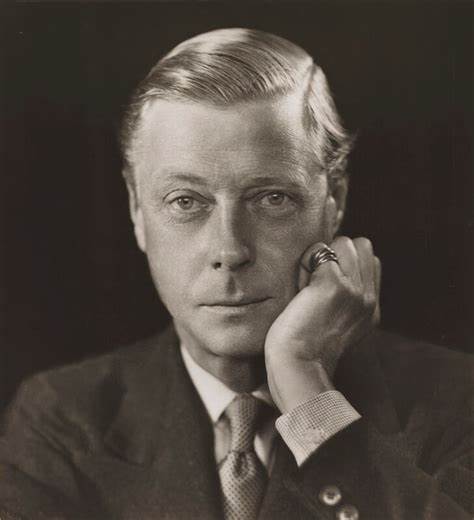
I read an interesting article on-line the other day about the late Duke of Windsor. Born as the heir to the throne of Great Britain, he was trained from an early age. His father, the King, wanted him to learn discipline and honor, so as to be prepared to assume his role. But Edward despised his father’s training. He found his father to be harsh and critical, prim and joyless. And he rebelled. He took little interest in the affairs of state, preferring to focus on his own pleasure. As his father grew older and weaker, Edward was asked to take on more royal duties. He enjoyed making appearances at parties, but despised many of the other tasks– letter writing, or visiting factories or various parts of the Commonwealth. He refused to settle down and marry, until he met Wallis Simpson, who was twice-married, and separated from her second husband. She was also an American citizen.

Edward VIII wanted to defy the laws and traditions of his own nation in order to marry. When this proved to be contentious, he decided to abdicate his throne, marry Mrs. Simpson, and live abroad. Instead, his brother became the next king (George VI), guiding his nation and the commonwealth through the difficult days of the second world war.

For many years, the myth of a king who gave up his throne to be with “the woman I love” has prevailed. But there was more to Edward’s abdication than blighted love. Edward was not incapable of ruling, but he was unfit to rule it well. His lack of dedication to his duties and citizens became evident in the very first crisis. Those who were working with him during his short reign witnessed his lack of care or concern about paperwork, and his selfish insistence on doing what he wanted to do, and not what was expected of him or of benefit to his people. He was a man without discipline and without a clear moral compass https://www.dailymail.co.uk/news/article-417388/Prince-Charmless-A-damning-portrait-Edward-VIII.html.

Photo by nappy on Pexels.com

The Bible is filled with many examples of kings throughout the history of Israel and Judah who also failed to learn discipline or restraint. Their desire to reap the benefits of their position without learning to fulfill their responsibilities led to the moral, and eventually the physical and political collapse of their nations. They did not make a habit of seeking God, or of listening to His prophets. They sneered at good advice, and defied the laws of Moses and the rules God had given for the kings. Some of them worshiped other gods; some even sacrificed their own children to foreign gods or goddesses. They failed to keep the sacred holidays; they failed to read the Word of God; they failed to pray– except as a last resort!

We often perceive prayer as a personal practice– and it is. But how we choose to develop our prayer life may be tied to how we choose to develop the rest of our lives. We don’t need to be rigid and legalistic about it. But we do need to live– and pray– with purpose, if we wish to follow the example of Jesus and grow in our walk with Him. Not only does it impact our life and growth– it impacts our witness and our influence as well. Pursuing prayer in a disciplined way may have a far-reaching impact on our life and the lives of others– even in the generations to come. For more, see the page Why I Keep a Prayer Journal

Blog at WordPress.com.

Up ↑