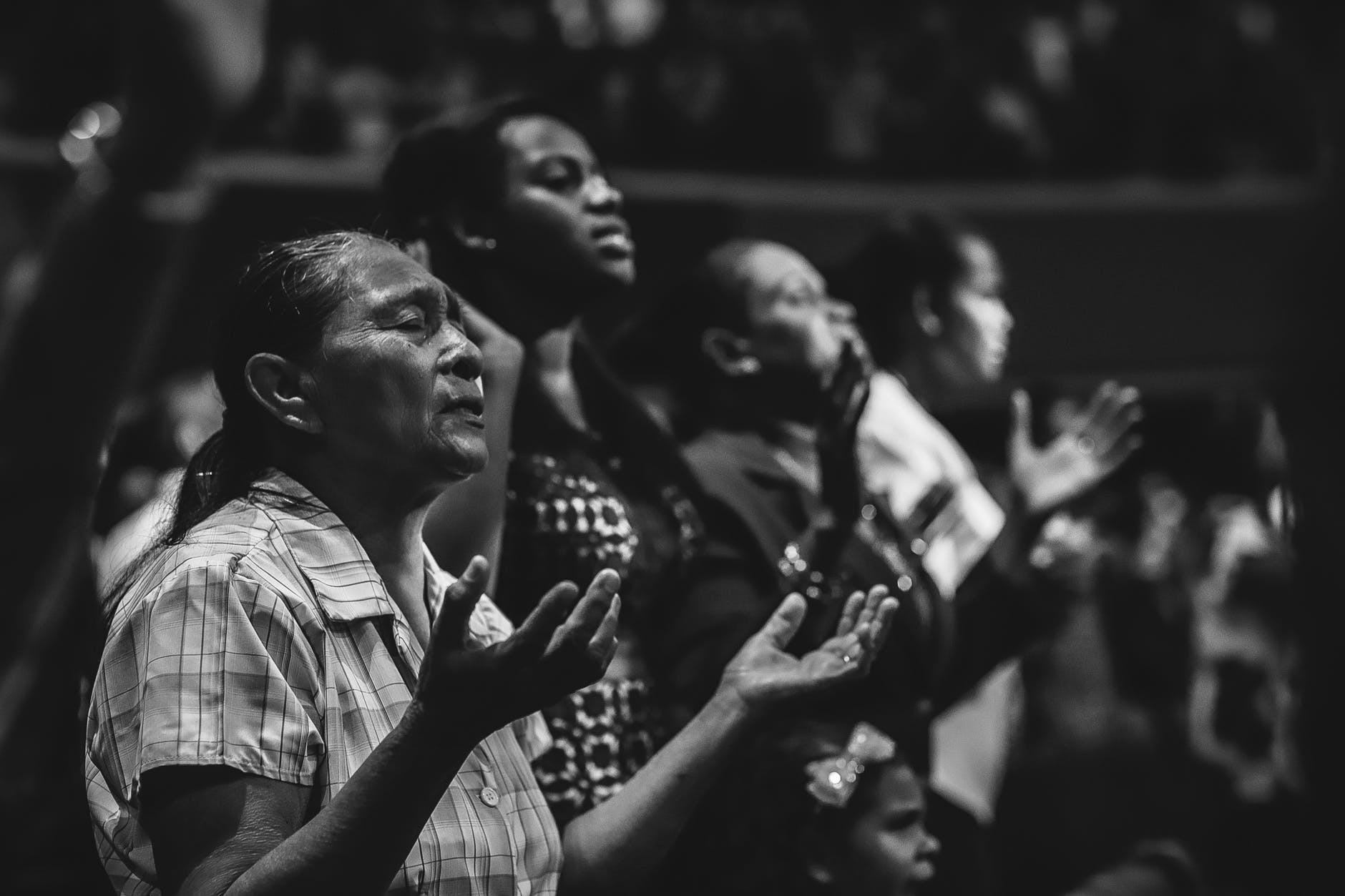
A Legacy of Faith

Psalm 112 English Standard Version (ESV)

The Righteous Will Never Be Moved

112  Praise the Lord!
Blessed is the man who fears the Lord,
    who greatly delights in his commandments!
His offspring will be mighty in the land;
    the generation of the upright will be blessed.
Wealth and riches are in his house,
    and his righteousness endures forever.
Light dawns in the darkness for the upright;
    he is gracious, merciful, and righteous.
It is well with the man who deals generously and lends;
    who conducts his affairs with justice.
For the righteous will never be moved;
    he will be remembered forever.
He is not afraid of bad news;
    his heart is firm, trusting in the Lord.
His heart is steady; he will not be afraid,
    until he looks in triumph on his adversaries.
He has distributed freely; he has given to the poor;
    his righteousness endures forever;
    his horn is exalted in honor.
10 The wicked man sees it and is angry;
    he gnashes his teeth and melts away;
    the desire of the wicked will perish!

My grandmother would have celebrated her 108th birthday today. I’m confident that she IS celebrating today– but she no longer has to count birthdays, or worry that this one might be her “last.” She passed into eternity more than 25 years ago. But she and my grandfather left a legacy of faith, hope, integrity, and prayer that lives on. It is a quiet legacy– my grandparents were not “important” people–they worked hard, lived a simple lifestyle, and never made a showy practice of their faith. But they lived it in such a way as to leave others with a glimpse of what steadfast faith looks like.
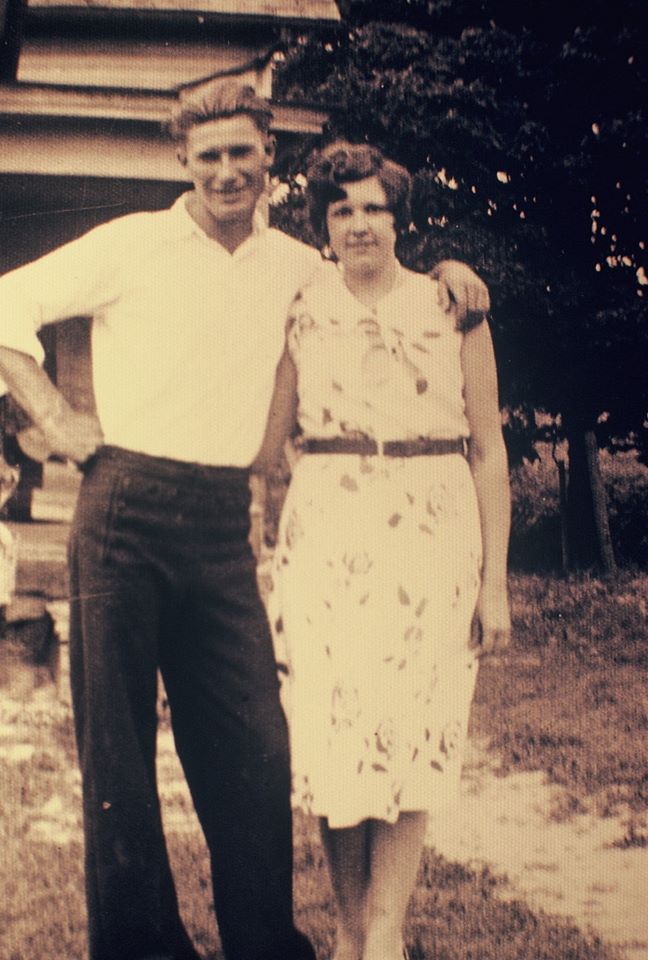
Grandma was born just a few short weeks after the sinking of the Titanic. She lived through two World Wars (one of which kept her separated from her husband, working in a factory, and raising two young girls). She lived through times of war, times of riots and uncertainty, and times of disease and pain. She knew what it was to struggle and lose. She was born before women could vote. She and my grandfather lived through the “Great Depression,” picking up whatever odd jobs they could, and sometimes not having enough for rent or food. But she also knew incredible joy and satisfaction. She knew what it was to be loved and to give love. She knew the joy of seeing a job to completion, and of using her talents and skills to help others. Most of all, she and grandad shared an incredible faith– one that had been tested many times– in God’s goodness, His provision, and His faithful protection. They lived in circumstances that would cause many to fear. But I never remember Gram being frightened–she wasn’t oblivious to bad news and difficult circumstances–but she faced them with confidence and resolve, the kind that gave hope and courage to everyone around.

My grandparents moved a lot. I mean, A LOT! They probably moved 50 times (at least) during their 62 years of marriage. Sometimes, they moved because Grandad had “itchy feet.” He liked change; he liked to have new projects to tackle; he liked to feel “free.” He loved moving into a “fixer-upper,” or renting a place with a run-down yard. But sometimes, they moved because they had to. They moved a lot– but they were never “moved” from each other, from their family, or their faith. They didn’t lose hope; they didn’t shift opinions based on their circumstances; they didn’t break promises or end friendships.

Photo by Ketut Subiyanto on Pexels.com

Psalm 112 gives a wonderful description of a “righteous” person. Not a self-righteous person, and not a perfect person (as none of us are perfect). But it is a great picture of the kind of legacy my grandparents left behind. They were generous– not just with money, but with gifts, work, time, hospitality, and words of encouragement and hope. They were rock-solid in their integrity– they went above and beyond not to cheat or lie or complain or shirk duties. In all their struggles (and in their good times) they never lost sight of God’s Goodness and Sovereignty.

My prayer today is that I would pass along such a legacy; such a witness. God is faithful, He is good, loving, and kind. He is never far from those who call on His Name, and He is able to deliver us from all our struggles. I am so grateful that, in addition to all the other blessings I take for granted, God gave me amazing grandparents. I hope He brings such people into your life today, and equips you to be such a legacy-builder, as well!
I Love to Tell the Story

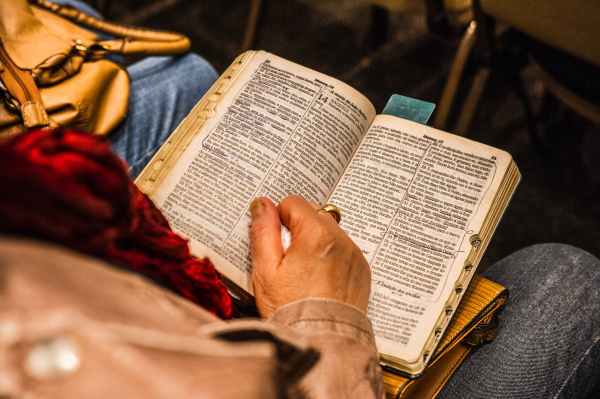
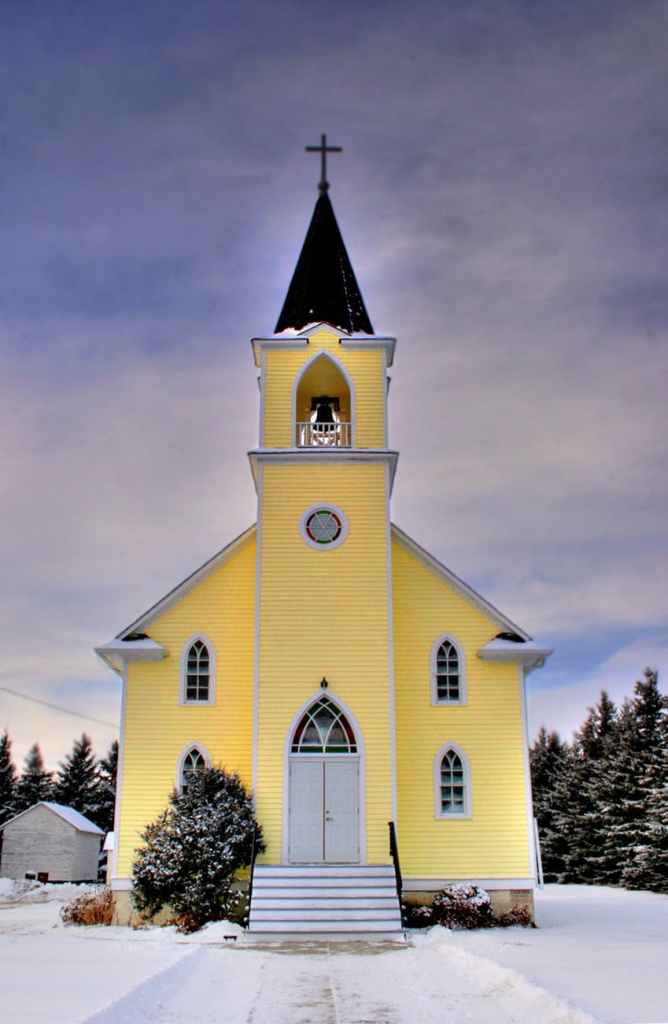
I’ve mentioned this before, but many of my childhood memories of church revolve around old hymns, sung with more gusto than musicality– joyful noises, just not always faithful to the notes. But they were faithful to the Word, and the Worship of Christ. I will always be grateful for that heritage.

Photo by Pixabay on Pexels.com

In the more informal services on Sunday nights or Wednesday nights before we settled in for prayer, the worship leader would often ask for members of the congregation to call out the number of any random hymn. We would (attempt) to sing it, often a capella, just the first verse, or maybe the first and last. It gave people a chance to sing an old favorite, or a hymn we hadn’t sung in awhile. Sometimes, a brave soul would find a “new” hymn– one no one (or almost no one) had ever heard. Occasionally, the evening church hour would revolve solely around this worship model– a hymn-sing service. It’s a dying practice, and one that deserves to be preserved. My church has done it a few times over the past years, a local chapel does it once a month, and Bible Study Fellowship in our area begins with hymn-sing every week. It’s a great way to learn old hymns, long-forgotten choruses, and treasured truths of doctrine set to music.

Photo by Luis Quintero on Pexels.com

But I digress. As a child, I liked this spontaneous activity, except for one thing. I knew that if Mr. Teeter opened the hymnal and started to clear his throat, that he would suggest the same hymn he always picked. It never seemed to vary– ever. Mr. Teeter was one of the older men of the church. He was in his seventies, short, with wisps of white hair, wise and twinkling eyes, and a big, red nose like a strawberry, which he often blew–loudly–into his pristine white handkerchief. He always came to church in a suit, complete with a hat, which had its own special spot on the hat rack in the entryway. I could not imagine him any other way. And every time he had the opportunity, he would choose to have us all sing, “I Love to Tell the Story.”

I wasn’t much impressed with the song. It seemed old-fashioned. It was simple. It had no soaring musical passages– sometimes, it even sounded whiny to my young ears. I dreaded the thought that we would sing it (yet) again. I would try to get my hand up and choose another hymn, any other hymn, before Mr. Teeter could clear his throat. I did not understand why he never seemed to want to sing other hymns– I knew he liked “Standing on the Promises,” “Blessed Assurance,” even “Leaning on the Everlasting Arms!” But, while he could be stalled for one or two other numbers, he would eventually call out the dreaded number, and we would sing at least one verse. It’s not that I hated the song, and I certainly had respect for Mr. Teeter, but I just couldn’t figure out why THIS song? Why EVERY time?

Photo by Pixabay on Pexels.com

Just a couple of years before his death, Mr. Teeter gave his salvation story in front of the church. Many of us had never known about his wild early years; his drinking or his rebellion against his family and the church. Many of us assumed he had always lived a quiet, rather pious life. He radiated the peace and wisdom of a man who walked daily with his God. And then, he told of his fascination with this old hymn. He liked the very simplicity of it–his life wasn’t based on some grand theological argument, or a complicated list of heroic actions he had achieved to win his salvation. His life–his born-again, wonderful, eternal life– was because someone had told him an old, old story, he had believed it, and that had made all the difference. That simple old story has been the same since the beginning– God made the world, mankind sinned and fell short of God’s glory, God sent His Son to pay the price of that fall, and Jesus’ death and resurrection allows anyone who believes to be adopted as a son or daughter of God. And though Mr. Teeter knew the old story inside and out, and lived it, he never tired of it. He was “hungering and thirsting” to hear it again!

Whenever I hear this song now (or suggest it), I think of Mr. Teeter singing with saints and angels, his quiet voice full of emotion, his eyes filling with tears of gratitude and worship, as he gets his request–“and when, in scenes of glory, I sing the new, new song, ’twill be the old, old story that I have loved so long. I love to tell the story; ’twill be my theme in glory to tell the old, old story of Jesus and His love!”

Why Journal?

In this blog, I try to focus on three basic aspects of prayer:

  • The purpose of prayer
  • The power of prayer and
  • The practical pursuit of prayer.

Today, I’d like to just put in a plug for journals as a very practical way to pursue a better prayer life.  For a more detailed list of ideas to get started, please see this page:  Prayer Journal

Journals are as individual as the people who create them, but the very practice of writing and keeping a journal has certain universal benefits.

  1. It develops discipline.  Prayer should be a daily practice, but having a journal can provide structure, accountability, and motivation.  Writing down requests, answers to prayer, questions I want to bring before God, even feelings or events of the day, can help establish a routine and a reason to come back to the same place (physically, emotionally, and spiritually) each day.
  2. It serves as a focus for each day’s prayers.  There are times when prayer is difficult–maybe the stresses of the day are distracting; maybe I just can’t think how to begin because there are so many thoughts running through my head or needs that I want to bring up.  If I begin with items in my journal, and add others to a list, it can be easier to bring order, focus, and steadiness.
  3. It serves as a witness and testimony.  One of the values of writing things down is that it gives me a chance to look back and review.  Sitting down every few weeks or months can reveal how many times God has answered prayers that I’ve already forgotten about.  It can also show how my ongoing prayers for certain situations may reveal changes God has made in my own heart and my own thinking, which sometimes helps me see why God didn’t “answer” my prayer when or how I imagined.

    abstract black and white blur book
    Photo by Pixabay on Pexels.com
  4. It serves as a reminder of God’s general faithfulness.  In times of doubt or pain, it can be encouraging to see and remember how God has helped or healed so many others around me.  Even if it brings up questions, like “Why did you heal that person, and not me”, in the end, there are mountains of examples of God’s care and faithfulness that allow me to see that He works “All things” together for good.  All of which can be written in and added to the journal as a further reminder!
  5. It serves as a reminder of God’s specific faithfulness.  If I look at the list of people and situations in the past and present, I am often overwhelmed at the amount of love that God has showered on me in the form of friends, family, opportunities to meet and be inspired, or share and give kindness.  In big ways and small ways, God has brought in and through my life miracles, amazement, and blessings– so very many.  It is tragic that I can so easily dismiss such blessings, or be distracted by the same worries and fears that God has brought me through in the past.  The journal sparks powerful memories of God’s enduring love for each one of us.
  6. It convicts.  As I mentioned above, it is tragic to think that I can so easily be dissuaded and discouraged by present troubles, when there is so much clear evidence of God’s faithfulness in the past.  But the journal can also show times when I have been unfaithful or lacking in faith.  This is important, not to beat myself up or become despondent, but to turn me back from such behavior and help me get back on track.

    analysis blackboard board bubble
    Photo by Pixabay on Pexels.com
  7. It inspires.  As mentioned above, each person’s journal is unique and personal.  God has given each of us passions and interests that can be brought into our prayer journal.  If I have a heart for missions, I can include prayer requests from missionaries of my acquaintance, or from web sites.  I can research cities and nations and people groups being reached by missions organizations.  If I have a passion for art, I can include drawings and sketches that flow out of my worship time.  My journal (and yours) can be filled with unique expressions of our heart for God– our deepest questions, hopes, worries, aspirations, and worship.

If you don’t already keep a prayer journal, I hope you will consider starting one.  It’s never too late or “the wrong time” to start one, and it can be as personalized as you wish– keep a notebook, a sketch pad, index cards, a electronic journal, a calendar– whatever works best for your resources, your personality, and your needs.


On The Witness Stand

Last week, I was called upon to give testimony in court as a witness to a crime.  The crime itself occurred months ago, so I was very nervous, trying to remember the sequence of events, and trying to make sure I didn’t add or leave out important details.

There is a reason the judge asks for “the truth, the whole truth, and nothing but the truth.”  It is very easy to exaggerate, to leave out details that may reflect poorly on us or on those we know, or to add commentary or opinion.  Even the way a lawyer asks a question can evoke a certain memory or reaction that is more or less than the original event warrants.

close up court courthouse hammer
Photo by Pixabay on Pexels.com

As hard as I tried, I couldn’t tell the entire “truth”–not because I lied or withheld evidence, but because I only witnessed a portion of the crime, and because I don’t have total and perfect recall.  No one does.  Three witnesses may testify and get certain details “wrong” or mix up the sequence of events, or be confused or hazy months after the event.  Even seeing the same event from a different perspective can alter one’s testimony.  One person hears a conversation clearly, but cannot see one speaker’s facial expressions or gestures.  Another sees the event close up, but cannot see what is happening “behind the scene.”  One person’s personal biases may come out in the way they give testimony, even if they are unaware of it. While I hope and believe that I told the truth as I witnessed it, my witness alone is not enough to determine the defendant’s guilt or innocence–nor should it be.

The ninth Commandment (in Exodus 20) warns about giving or “bearing” false witness.  We usually equate this with lying, but it is more than telling “a whopper.”  Bearing false witness includes spreading rumors, “sharing” questionable posts, omitting facts, and even “faking it” until you make it– pretending to be what we are not; hypocrisy, and false appearances.

man person woman face
Photo by Gratisography on Pexels.com

As a follower of Jesus, I am a full-time witness.  This is far more important even than being a witness in a court case.  I should always speak and behave as if I am “under oath.”  Not just when I know all eyes may be watching; not just when I’m with other “witnesses.”  Always.  This doesn’t mean that I aggressively volunteer my opinion and beat people over the head with commentary everywhere I go.  It doesn’t mean that I smile and say only what I think others want to hear.  It means that I speak less than I listen, but when I speak, it is truth–loving, sometimes harsh, spoken with the intent to help, heal, encourage, challenge, and bring justice.

black women casual daylight eyeglasses
Photo by Christina Morillo on Pexels.com

In prayer, it means that I repent of falsehood, pride, envy, anger, and bitterness.  It means that I acknowledge God for who He is, and myself for who I am in Him.  It means that I ask for wisdom to seek and see truth, and to see through deception and falsehood–even in my own heart and mind.  And it means that I thank God for His Truth, which is perfect and victorious.  I pray that the Truth will shine in, around, and through my life and my words, and in the lives of others.

abstract beach bright clouds
Photo by Pixabay on Pexels.com

man and woman wearing brown leather jackets
Photo by Vera Arsic on Pexels.com

Many people will point out when I get it “wrong.”  They will point to other Christ-followers, other “witnesses” whose lives may look different from mine, who speak differently, act differently, vote differently, even worship differently than me.  And I need to trust that the “whole” truth will come from each of us bearing honest and full witness to what we know and experience of God’s goodness, His power, and His love.  I don’t have the “whole” truth– but I am a witness of the one who IS the whole Truth!

Blog at WordPress.com.

Up ↑