I am passionate about pursuing a relationship with Jesus Christ. To that end, I want to share my journey in learning more about prayer. I am a former teacher and librarian. I love to read, write, share awful puns with friends, and share the joy that comes from trusting my loving Savior.
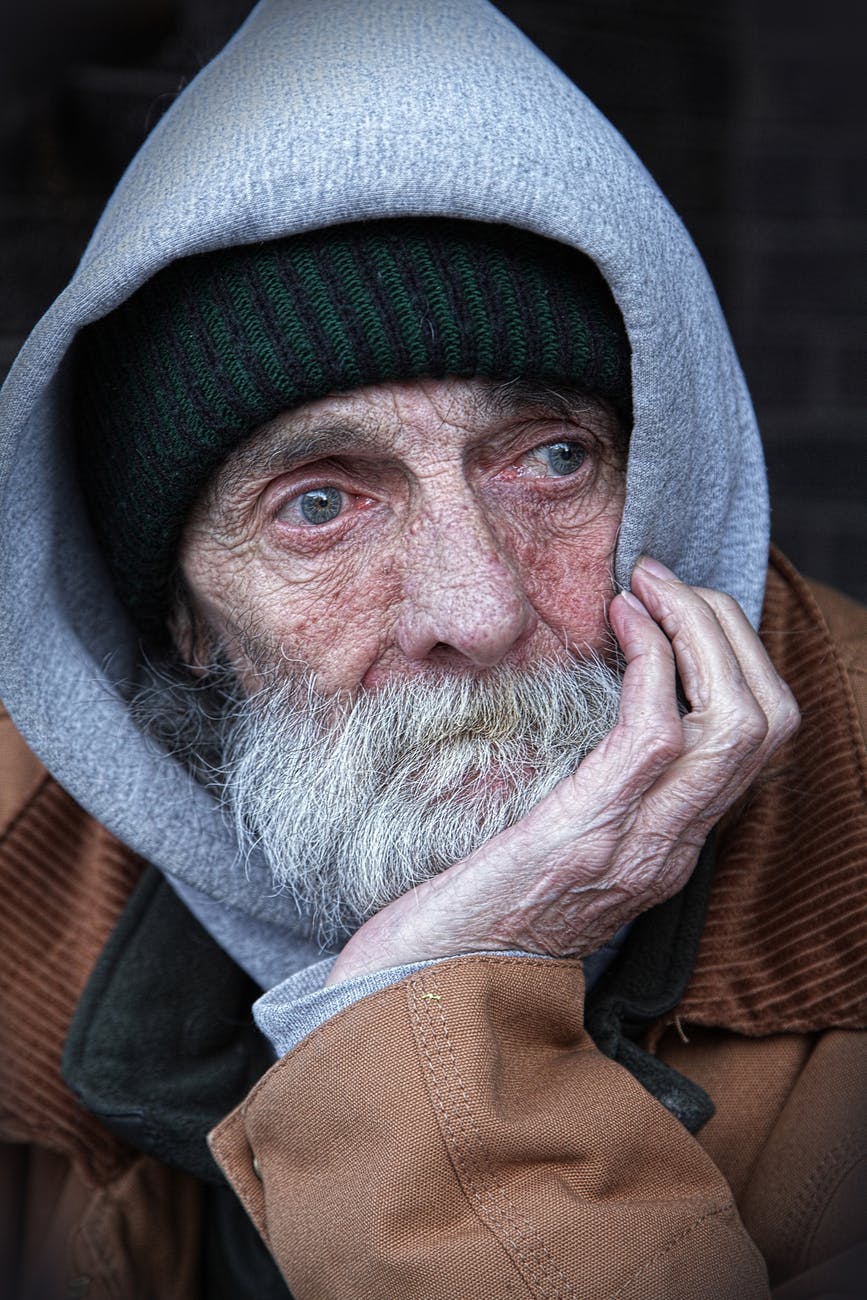
How do you pray effectively for people who are sick, suffering, or depressed? I find my first instinct is to pray for a return to “normal”–a speedy end to whatever is uncomfortable, abnormal, or unwanted. “Lord, make it end. Take it away.” I want instant healing, a dramatic turnabout in their circumstances. In other words, I want for them what I would want for me.
This is good, but is it Biblical? Yes and no. The Bible is filled with healing, and with prayer for healing. Jesus healed, and so did many of the prophets and disciples. In most cases, the healing was prefaced by prayer, and often followed up with prayers of worship and thanksgiving. But there are two things I notice that bear closer inspection:
Not everyone received instant healing; some received no healing in this lifetime. (Examples– Paul was never healed of his “thorn in the flesh”; Lazarus was raised from the dead, but he was not healed of his illness; Jacob (Israel) never lost his limp, etc.)
Most of the healing was accompanied not only by prayer, but by personal interaction. Jesus didn’t start a prayer chain for someone 100 miles away– he spoke with them, laid hands on them, and prayed with them. The prophets followed the same pattern. Healing comes from God, but it often comes with tenderness, compassion, and sharing from another person. God works through his people. That doesn’t mean that we shouldn’t share prayer requests online or pray for loved ones far away. But it does mean that our prayers are only part of the picture.
We need to avoid “disconnected” prayers– generic prayers for “good outcomes.” Instead, we need prayers that involve us in the work of healing and connecting people with each other, and with Christ.
It is risky and uncomfortable to pray this way, but when we hear about someone struggling, let’s pray for their recovery, and then, let’s pray that God would show us how we can be His hands and feet (or ears and lips) to help make the healing complete–sometimes even just a note of encouragement, or ten minutes spent visiting can glorify God and spread healing and hope. If we are not in a position to be with another person, pray that God will send someone alongside to encourage.
I know many who already do this– it’s nothing new. But we live in an age where we “know” more people than ever before, but we interact personally with very few. There are many in our “sphere” who are desperate for a little TLP– Tender, Loving Prayer. Let’s see that we’re giving it.
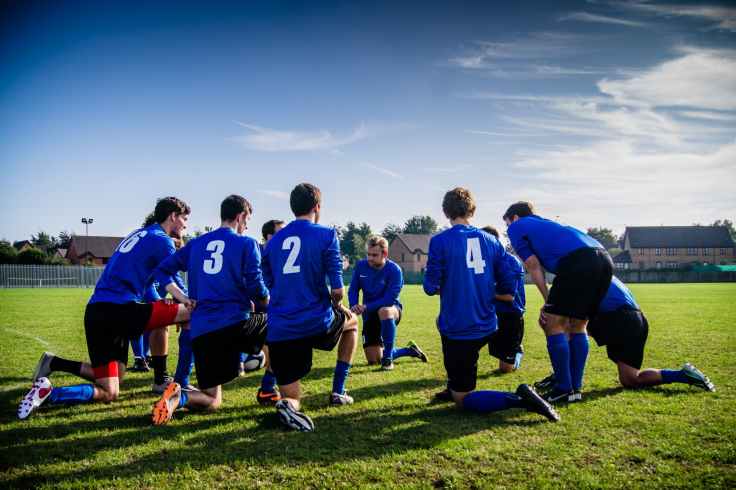
World Cup fever is at a high this week. England was stunned by Croatia in the semi-finals–Croatia will face France in the finals on Sunday. Teams have played hard all season to make it to the World Cup– most of them will go home disappointed (at least a little). Fans will have to wait until next season to see their favorite team make another attempt at winning it all.
In the meantime, the players will be in the “off-season.” Some will take well-earned vacations, and spend more time with their families. Some will spend time with doctors and physical therapists to work on injuries sustained during the regular season. Some will be working with coaches and trainers to develop in areas where they feel they need extra help. Others will cut back on their training schedule. Still others will spend time with agents trying to get traded to another team (or avoid being traded to another team).
People who study sports often say that what happens in the “off-season” can be as important to players and teams as what happens during the intense training of the regular season. Habits form, attitudes develop, team chemistry alters– any or all of these factors can change for better or for worse.
The same is true in our prayer lives. When we are facing struggles or heartaches, we pray with intensity and passion. But when things are going smoothly, sometimes we let our prayer lives “take a break.” We pray with less frequency, less intensity, and less focus. I’m guilty of this; even though I know it can happen, bad habits creep in, and suddenly, my prayer life is haphazard and lackluster. Using a journal helps, in that I have a focus for each day already written in, and a place to write in new requests, and even answers.
However, a major part of staying on course is to commit to the discipline of prayer. “Discipline” sounds boring and constrained–something I do out of obligation and not out of love. But that’s not true of all discipline. Athletes are disciplined– because they love their sport, and they want to develop and play at the best of their ability. Musicians are disciplined– because they love music, and they want to develop their art. Professional athletes and musicians often have a contractual commitment to stay in practice and develop their talents. When athletes are part of a team, or musicians are part of a band, orchestra, or chamber group, they have an additional reason to be disciplined– to play more effectively with others.
In my personal life, there are disciplines– hygiene, sleep habits, diet, and exercise, that I practice, not because I love saying, “NO” to that piece of chocolate cake or walking that extra mile, but because I want to stay healthy, clean, and active. Prayer is no different– except that it is for my spiritual health– and it is part of my relationship with God.
Instead of slacking off during the “off-season”, many athletes and musicians will use this time to step back and look at what they have learned, what they would like to do better, and how they can develop their skills. I think this offers a great opportunity in prayer, as well. After a season of grief, struggle, doubt, or testing, it is good to take some time to make some assessments. Sometimes we don’t know all the reasons for the times of testing or trial we have just faced. But that doesn’t mean that we can’t look back and see whether we have grown, or if we need to make some adjustments, or if we have developed new habits or skills (good or bad). It is a good time to “count our blessings”, “pray without ceasing”, “ask, seek, and knock”, and look at the ways God has been faithful (and hopefully ways that we have been faithful!) over the years.
Some of us are in the struggle of a busy, harsh, or painful season. Let’s not let that struggle go to waste. Some of us will be facing trials next week, or next month–spending time training in the “off-season” will make us stronger for the fight! And the best news– we already know the outcome! Let’s pray harder– pray stronger–and go for the win!
I stumbled upon a site that promotes a concerted minute of prayer for our nation. In the light of upcoming mid-term elections, recent violent outbreaks in some of our cities, and other urgent issues, there are movements afoot to unite American Christians in our prayer efforts.
The National Minute of Prayer is based on an effort carried out in England during World War II. I want to be careful in promoting this idea– I DO NOT believe that God is swayed solely by people praying to Him in large numbers or at certain times– God sees our hearts and knows our minds. He wants hearts that are sincere, humble, and attuned to His will, and He will act, not on our desires, but on His own knowledge of what is truly best for our individual lives, for our nation(s), and for our world.
Still, I think this is a good idea, even though I don’t necessarily agree with all the ideas and aspects of the blog. I don’t believe there is anything magical or super spiritual about any given minute or hour of the day, so if the chosen hour of 9 p.m. (ET/8 p.m.CT, etc.) doesn’t work for you, or you can’t commit to a single minute during the day, just commit to pray for a solid minute at least once each day. I think the value of a project like this is in the commitment and the community–even as individuals search for a closet or a quiet corner to seek God’s face, the knowledge that others are doing the same adds to our commitment and our courage.
There are dozens of websites, blogs, and videos with similar programs and suggestions. Find one and consider following or joining!
And this doesn’t just apply to a particular nation facing a particular time of crisis. Christians living in Australia, Bolivia, Cambodia, Djibouti, Estonia, Fiji, Greenland, Haiti… you get the idea– can set aside one minute every day to pray for their nation and its leaders.
Think what it would mean to the heart of God to hear His children praying in unison for healing and justice to be done around the world in our home nations! Think what would happen if we set aside just one more minute to pray for the Church universal!
In Jesus’ Sermon On the Mount (Matthew 5-7), Jesus listed what have become known as “The Beatitudes”. Each phrase begins with “Blessed are..” or “Happy are…” (depending on the translation). The blessings are specific, but they are also reserved for those who do not appear to be due for blessings– the poor in spirit, those who mourn, the meek, the persecuted, those who hunger and thirst for righteousness. Each group seems pitiable, not suited for accolades and celebration. They’ve done nothing to deserve blessing. Yet Jesus calls them “Happy” and assigns them amazing gifts and blessings– not for their hard work or achievements, but because of their emptiness; their need and their ability to receive the blessings of God.
There are wonderful sermons and analyses and studies on the Beatitudes, but in relation to prayer, I want to look at this aspect. There are no blessings in the list for the doers– the movers and shakers, the revolutionaries and the organizers and life-changers. Throughout the Sermon, Jesus spends more time on attitude than on action–Murder is an action– forbidden by the Ten Commandments– but it is based on attitudes like hatred, disdain, envy, and rage. Clearly, Jesus does not want us to be unproductive or isolated from the needs of others, but our busyness, our stress, our huffing and puffing and scurrying about, does not impress Him, nor does it bring us the kind of happiness only God can offer.
He gives the same emphasis when he discusses prayer– prayer is not about public eloquence or long strings of words or excessive emotional outbursts. In fact, effective prayer has little to do with who is praying, what words or word order or language they use, where they pray, or when they pray. It IS about how and why and TO WHOM they are praying. And the only active verb not assigned to “Our Father” is found in the phrase, “…as we forgive…”
God does not command us to pray seven times a day, or to have a prayer list a mile long, or to pray only when we are in great need. He wants us to “pray without ceasing”, not as a recurring action, but as a constant state of being aware of and responsive to His presence.
I have a niece who spent several years in dance. When she was a beginner, it was both comical and sad to watch as she and many others agonized and counted the steps out as they performed– often getting all the right steps, but a slight beat ahead of or behind the music and/or the other dancers. But what a delight to see the development of young students into graceful dancers– seeing the transition from just doing the right steps at the (approximate) right time to internalizing and coordinating the music and movement into art.
I have friends who are runners, and while I don’t run, I have watched those who do…there is a difference in the stride, the posture, and the face of someone who is “a runner” and someone who is just “running.” It’s not the action, but the attitude that makes the difference.
Prayer is a gift; a privilege; a sacred meditative conversation with our Creator, Our Father, and our King. I don’t want to just pray– I want to BE in Prayer!
The phrase comes from Tennyson in Idylls of the King, but it is reminiscent of phrases given to Joshua as he prepared to lead the Israelites across the Jordan and into the promised land.
Joshua 1:2-3 (NKJV) 2 “Moses My servant is dead. Now therefore, arise, go over this Jordan, you and all this people, to the land which I am giving to them—the children of Israel. 3 Every place that the sole of your foot will tread upon I have given you, as I said to Moses.
God tells him several times to “Be strong and courageous..” (Joshua 1:6), “Be strong and very courageous.” (Joshua 1:7), “…be strong and courageous. Do not be terrified; do not be discouraged, for the Lord your God will be with you wherever you go.” (Joshua 1:9)
When I think of being strong and courageous, I don’t usually think of ducklings! I think of hero bodybuilders or armored knights of old…people who are prepared to crush and conquer and face an army. Yet God repeats the phrase to Joshua, including at last the command to “not be terrified; do not be discouraged..”, which indicates that Joshua was close to terror and despair, rather than filled with hope and adrenaline.
And little wonder. Joshua had to be experiencing a slight sense of Déjà vu. About forty years earlier, he had been part of the group of spies sent to scout out the promised land…spies who had come back terrified and discouraged. The entire nation was ready to rebel against Moses and even God. Now, forty years later, Joshua was to try again– this time as Moses’ replacement, a new leader for a new generation already prone to complain and rebel.
Some days I feel a little like Joshua– facing walled cities, giants, and feeling totally inadequate to the task. Some days it even feels like a struggle to “arise”, let alone going forth to conquer.
And then God reminds me…”Every place that the sole of your foot will tread upon I have given you, as I said to Moses.” It’s not that God is literally leading me into the promised land as I go to the grocery store or face a difficult customer at work or walk around the neighborhood. But, figuratively, He is helping me win battles against temptation, discouragement, anger, and bitterness. He IS with me wherever I go, and He wants me to trust HIS strength and wisdom to triumph. I become “more than a conquerer” (Romans 8:37) when I stop trying to fight in my own strenth and rely on His. My strength may be minimal, my motivation questionable, and my wisdom lacking, but I can waddle confidently into battle, knowing that the victory is certain!
This is also true for my pursuit of prayer– My prayers are often flighty, inadequate, sporadic, and even grudging. I keep a prayer journal, and that can help with motivation, discipline, and even praise, but it doesn’t guarantee that I will draw perfectly near to God or follow Him with total faithfulness. The more I rely on MY efforts, the more I am fighting to replace God’s strength and wisdom with my own. God doesn’t want me on the sidelines, or sleeping in– He wants me in the game. But the outcome doesn’t depend on my ability or my performance (or my lack of feathers!)
We hold these truths to be self-evident, that all men are created equal, that they are endowed by their Creator with certain unalienable Rights, that among these are Life, Liberty and the pursuit of Happiness–Declaration of Independence, Thomas Jefferson (July 4, 1776)
We’re getting ready to celebrate our Independence Day in America. There will be parades, cookouts, parties, fireworks, and a host of other celebrations. There will be a lot of flag-waving and patriotic displays. At some gatherings, there may be readings of our Declaration of Independence. This document was drafted to outline, not just a list of reasons why they should rebel, but what they hoped to build as a result of their struggle for freedom.
Over 240 years later, this document, and what it stands for, is still relevant and calls us to a high standard– one our nation has not fully achieved. In spite of the great strides we have made and the example we have been to the rest of the world, in recent decades, we have left behind many of the very truths we aspired to hold.
First, there is a dangerous belief that “truth” is no longer self-evident, nor is it timeless. We don’t hold beliefs and truths anymore. We shift with the tide of public opinion and the shadowy promise of “being on the right side of history”– which just means being on the winning side of the current debate within our lifetime and hopefully into the next set of history books.
Second, we have spent countless hours, shedding blood, sweat, and tears over the phrase “ALL MEN”– struggling to reach the promise of equality for all humankind. We have fallen short of this vision, and twisted it into a grotesque parody of itself. Instead of working together in unity and inclusiveness, we have devolved into factions each fighting to be “more equal” than others. Instead of looking at the equal value and humanity of all our people, we point fingers at all the people who are “less worthy”, “more privileged”, “entitled”, “marginalized”, “intolerant”, “judgmental”, who “need to be silenced”, or “need to be kept in their place”…how can neighbors and fellow citizens be so vicious? One answer may be found in the very next phrase…
ARE CREATED equal, and are endowed BY THEIR CREATOR…Usually, this phrase is emphasized in the exact opposite places– the emphasis is on EQUAL and ENDOWED. We have lost the “truth” of being “UNDER GOD”. We have lost the truth of being created. We have lost the truth that our worth, our rights, our values, are not a product of our own opinions and observations.
It is easy to point to others and say, “They are ruining our country– They are not living out these truths.”
The harder lesson is to look at my own assumptions, actions, and beliefs. Do I TRULY believe that all the people around me– of every creed, gender, race, political party, nationality, educational achievement, or economic level are created equal and endowed BY THEIR CREATOR with value, and inalienable rights? If, at any point, I make assumptions about the worthiness of “those people”, assuming that God loves me more, or will have more mercy or grace toward me because of who I am or how I behave; because of the color of my skin, or where I live, or who I voted for; because of the things I know or the good deeds I have done–I am part of the problem. Christians, if we bear the name of Christ who created all mankind, and we hate those whom Christ created, the love of Christ IS NOT in us.
That doesn’t mean that we ignore sin and compromise our character, and pervert justice in the name of a comfortable facsimile of equality. But it also means that we must stop whitewashing hatred and injustice in the name of morality. Morality without love cannot heal our nation. Nor can rewriting our history. Nor can declaring our Independence.
The Declaration of Independence is not a stand-alone document. It had no authority on its own. If our founders had lost the Revolutionary War; if they had abandoned their vision of a government “of the people, by the people, for the people”; if their descendants had failed to bring a divided nation back into unity; if our parents and grandparents had not struggled and fought to make our nation live up to its principles; and if our generations fail to come together and work toward that same vision– Independence will not be something to celebrate, but something to detest.
While it is called the Declaration of Independence, it is a spirit of dependence– on God, on His truth, and on the goodwill of our fellow Americans, that keeps this document alive and full of promise.
A few months ago, I went to the theater to see the movie “Paul, the Apostle of Christ.” It was an excellent movie, not the least because I found so much of it relevant to what is happening in the world today. The movie was centered around Paul’s time in prison in Rome; the upheaval and persecution facing the early church, and the looming certainty that Paul would be martyred and his words and leadership sorely missed. The church in Rome was facing division– some were militantly opposed to the corruption in Rome under Nero, and wanted to form a rebellion. Others wanted to flee Rome in hope of supporting outlying churches, starting new churches, or just finding a safer haven. Still others were losing hope and wanted to give up or hide.
The movie also covered (in a series of flashbacks) scenes of Paul’s earlier life. I don’t want to spoil the movie for anyone who hasn’t seen it, but this part of Paul’s life is covered in the Bible, so I will stick to the facts presented there, rather than the drama from the screen…
Saul of Tarsus was both a Jew and a Roman citizen by birth. He had studied God’s word intensely his whole life, and became a Pharisee. He had studied under some of the greatest scholars of his age–in today’s world, he would have been one of the greatest legal minds of our time– a superstar in the arena of law, philosophy, and logic. Of all the people in Jerusalem and throughout the Jewish world, Paul KNEW right from wrong. He KNEW the words of God, the laws of God, the traditions of God’s people. The result of all that knowledge was an obsession with wiping out those people (Jews, especially, but also Gentiles) who followed Jesus of Nazareth and “The Way.” Saul was a man filled with righteous anger, and a zeal to have everyone conform to what was “right.” He was a man of power and influence– a man to be feared and respected. In his letters, we can still see some of that intensity and the way he has of arguing both sides to their logical ends. But something happened to Saul..something that changed his entire future, including his name.
Paul, the Apostle of Christ, was still a Jew and a Roman citizen. He was the same man who had studied vigorously and knew the laws of Moses and God’s words through the centuries written by prophets and historians and psalmists. But the Paul we see in scripture, while still bearing the intensity of his youth, is a man of gratitude and peace. Here is a man who works steadily with his hands for honest but meager wages compared to what he might have made as a Pharisee. He is a man who boldly faces down even Peter and James in Jerusalem, but who nevertheless takes orders from a council made up of former fishermen and tradesmen. Paul undergoes flogging, arrests, prison, cold, hardship, physical pain, poverty, and disgrace with the kind of stoic acceptance, and even joy, that makes him a great hero of the early church. Never once does he return to the anger that drove him to persecute others who did not agree with him. Instead, he is willing to be the victim of persecution at the hands of those he used to serve.
I was scrolling through Facebook the other night, and I chanced upon posts from two women I know. Both are about the same age, both mothers of five children, and both are practicing Christians. The first woman was posting about two recent difficulties faced by her family, and how God had been faithful and gracious in spite of a huge loss and a tense situation that could have turned into another tragedy. She spoke of God’s answers to prayer, and how their family was reminded of God’s goodness as people came alongside at just the right moment, and the loss was not as great as it might have been. I was inspired and encouraged by the way she saw God’s love, and gave credit to all who had helped them.
The second woman spoke in vicious tones about how she would not associate with certain Christians who hold political and social views she sees as hateful. She cursed fellow followers of Christ for being “anti-Jesus,” and condemned several of her early teachers and pastors. I read her remarks with great sadness, because I remember her as a younger woman, eagerly memorizing scripture and being a loving and encouraging example to others. I also read her remarks with pain, because I think she includes me in the “hateful” group based solely on the type of church I attend.
It is not my place to say that one woman is a “better” Christian than the other– on another day, their FB posts might cause me to think very differently. And God sees more than just what we post on FB or say in passing conversation–He knows our every thought and motive. So I want to be careful–these women, though similar in some superficial ways, lead very different lives and have very different experiences of following God. But I saw in their posts two ways of “seeing” Christ.
When Saul of Tarsus, in his anger and zeal, traveled toward Damascus intending to kill people he may have never met, he was already a crusader for Jehovah– ready to mete out justice against anyone who didn’t meet his standards. He KNEW all about God. He knew what it took to be righteous.
But when he actually encountered Christ– he was knocked off his horse, blinded and overwhelmed by a vision. And when Christ spoke to him, “Saul, Saul, why do you persecute me?” (Acts 9:4), Saul didn’t recognize the voice of the very God he so proudly served. Saul remained blinded for three days, but his vision was never the same again.
As Paul, he became a man of prayer– his letters are filled with prayers for the well-being and spiritual growth of those he misses and longs to see. They overflow with doxologies and prayers of worship for the Savior he loves and serves with gladness. He can’t stop talking about God’s goodness– to him, to Israel throughout the centuries, and to the Gentiles who now have access to the throne of Grace. He still has harsh things to say to some of the followers who “don’t get it.” To those who want to compromise with sin or go back to legalism. But he pleads with them; he doesn’t throw stones.
It can be very frustrating in today’s world and in our society to see Christians who have very different ideas about worship styles, ways of interacting with others, even ways of living out the words of Christ. Sometimes, it seems that fellow Christians are blind to the needs of the poor, or the sins of their friends, or the hypocrisy in their lifestyle. I think scripture gives us a clear directive:
Why do you see the speck that is in your brother’s eye, but do not notice the log that is in your own eye? Or how can you say to your brother, ‘Let me take the speck out of your eye,’ when there is the log in your own eye? Hypocrite! First get rid of the log in your own eye; then you will see well enough to deal with the speck in your friend’s eye.
Matthew 7:3-5 (English Standard Version)
We should not rush to condemnation, name-calling, and finger-pointing. Instead, we should do a “vision” test and see if we are looking and acting in love or in self-righteous hypocrisy.
God doesn’t want us to be blinded by the light of our own knowledge and self-righteousness. Instead, He wants us to walk in the light of His Word–His Word made flesh! May we live in the light of Paul’s example of prayer, loving correction, and running the good race.
Prayer encompasses many things–it is a conversation, a discipline, and a journey. It involves talking to God about every aspect of one’s life, and listening for guidance and assurance from Him in return. It involves seeing Him for who He is and giving praise accordingly.
Often, we take this journey without ever making a plan. We commit to praying at mealtime (grace) or in times of crisis or stress (thoughts and prayers), but we pray without seeing it as a journey of faith.
That’s one reason I started keeping a prayer journal, and why I recommend it to others. I don’t write down what I say for grace, or how long I prayed yesterday compared with today. But I do write out various requests that come up each day. I also write down specific people or situations to lift up ahead of time–like charting a journey–so I have an idea “where I’m headed” in prayer for the day. Each day, I pray for a city, nation, or region of the world–that’s one type of “destination” for my prayers. I also have a list of people who are celebrating birthdays or anniversaries. Not only does this help give a focus to my prayers for this day, but it gives me insight from “where I’ve been” to help me in “where I’m going”.
This doesn’t mean that I don’t pray spontaneous and impulsive prayers. But it means that I have an outlook and a purpose that goes beyond the immediate and personal. God wants to have an intimate and personal time with me in prayer, but God is not exclusive in His love…He wants me to see others, to love others, and to include others in my thoughts, actions, and prayers. Each day, I am challenged to look beyond to see what God has done and is doing around me. And each day, I am challenged (and blessed) to participate in God’s work as I pray intentionally, and follow the “map” for this journey.
My husband and I are licensed amateur radio operators. This weekend, we participated in an exercise/contest known as “Field Day.” Every year for Field Day, tens of thousands of radio operators across North America spend twenty-four hours trying to make as many radio “contacts” as they can, in conditions that mimic being “in the field” or off-grid. Many groups, clubs, and even individuals will set up in camp sites, open fields, county fairgrounds, barns, sheds, and other locations. Some will use their radios on generators, batteries, solar power, or the lowest power settings available. Some will have campfires and cookouts; others will order in pizza, but all of them will be seeking to make radio contact with people from all over the continent.
To make an official “contact,” certain key elements have to be exchanged. Every licensed amateur operator has a “call sign”– a unique identification code. There is also a “report”, telling how many radio stations are being used by the group, and what kind of conditions and power supplies are being utilized. Finally, there is a section code, telling where the station is located. Most codes are similar to the two-letter state codes used for mailing letters, GA for Georgia, CT for Connecticut, BC for British Columbia. All three elements must be sent, received, and understood by both operators to qualify for a “contact”. In other words, if I am listening, and I hear an operator in Texas give his call sign, his report code and his section code, it doesn’t count unless I know he has heard my information, and he knows I have his. Only if both parties have exchanged and verified all information can the contact be “logged” and counted.
Communicating via radio is an amazing experience, even in this age of cell phones, and Skpye, and social media utilizing satellites. Knowing that your voice is being carried by the thin air and transmitted to someone across miles using simple machines that use less power than a desk fan or a microwave oven is mind-blowing. But on Field Day, it is even more miraculous to listen as thousands of voices are carried simultaneously. The radio hums and crackles with the static of ten thousand tongues all trying to get their message out–“Here I am!” “Can you hear me?” “Did you get my message?” “Where are you?” “Who are you?” Letters and numbers and codes all mingle and form a messy barrage of sound. Voices, beeps, pops, whistles, and more assault your ears, before you can tune into just one understandable voice. There is a thrill in hearing that lone voice calling out their message..they could be anyone from any number of places. You get ready to respond, and then you hear it—static of a hundred other stations trying to get through. All those radio waves carrying the hopes and messages of a hundred or a thousand others just like you, wanting to make contact; wanting to be heard and understood.
Sometimes, miraculously, you get through on your first try– you send your call sign, and the other operator repeats it back, telling you it’s ok to send the rest of your message and receive his/hers. The two of you exchange the three elements, sign off, and you can tune to another frequency and try to make another contact. Most of the time, though, you spend several minutes calling out your ID, hoping to be acknowledged, only to listen as others get to make their contact, waiting your turn. Even more frustrating, as you wait, sometimes the atmospheric conditions change and the voices all fade out into a low buzz of static– the contact opportunity is lost. Conditions may change in another minute– or an hour– or not at all. I may hear from someone in Alaska, or Vermont, but I won’t be able to count them as a contact this year.
Field Day is exciting; sometimes frustrating, sometimes exhilarating. There is a thrill to making a contact and finding out that you’re talking to someone from Alberta, Canada, or South Florida, or Rhode Island, or the San Joaquin Valley in California. It’s exciting to make a contact, and realize it’s someone you know from a neighboring county! We have a logbook program on our computer that “shades in” the various sections as you key in a contact, so our map becomes colorful as the contest period continues, and we tense up to see if we can fill in most of the sections– can we “get” Hawaii? Nova Scotia? Wyoming? South New Jersey? Will the weather and atmospheric conditions cooperate? Sometimes a series of thunderstorms or solar flares can break through or distort the radio waves and make it impossible to stay tuned in long enough to send and receive even a short message. Sometimes, you can make clear contacts with certain regions and not with others, even ones close by– one year, we got zero contacts with a neighboring state, while getting several other regions hundreds of miles away!
While Field Day is exciting, and it serves as a great way to test and practice with radio equipment in case of a nationwide or region-wide emergency, it is still just an event–a single 24-hour period of making contacts with complete strangers (in most cases) for a couple of minutes.
Prayer is a thousand times more amazing than Field Day for a number of reasons. Think about it:
God is ALWAYS listening–twenty-four hours, seven days a week, every moment, every year of our lives.
God is ALWAYS tuned in to our cries– there is no distortion, no static. He hears millions of cries simultaneously and with perfect clarity.
We don’t need a “call sign” or identity code. God knows each voice intimately..He doesn’t have to ask us to speak louder or more distinctly. He doesn’t hear an “accent” or lisp, or rasp in our voice. He doesn’t have to ask us to repeat our request three or four times because He didn’t understand us the first time.
We don’t need a section code– God knows where we are better than any GPS system every invented. We can’t hide from Him, and He isn’t surprised to find out where we are, or where we came from. He already knows where we are and where we’re going!
Our messages can be as personal and as lengthy as we want. God doesn’t need to “hurry up” to get to the next person’s request, and He wants to hear all our thoughts and needs.
Prayer is not an event or a contest– it’s not a practice run–it is an actual conversation with our Loving Father!
You don’t need a license, or a radio, an antenna, or a microphone to contact God!
We can pray for others anywhere, anytime, for any reason, and God already knows the details– where they are, what their needs are, and what is best in the long run. Just as He already knows us intimately, He knows the needs of everyone we’ve ever met– and everyone we haven’t met yet! Some groups will have made upwards of 500 contacts over the course of Field Day– God can make millions in the same moment, and not miss a single one!
God doesn’t want to make contact with us to fill a quota for a contest; He doesn’t want to hear from us because it’s thrilling to hear from someone new. He wants to have a relationship with us– filled with love and trust and hope and joy. He doesn’t just want a Field Day with us– He wants Eternity!
Yesterday, I expressed a goal of looking around to Thank God for his amazing creation and looking for God throughout the day. I saw mist rising from fields–fields that are lush and growing, and others that are soggy or just beginning to show tiny shoots; I saw red sorrel, and bright green leaves, beautiful flowers of many colors, a majestic sand hill crane, a bunny, plenty of birds, and dozens of excited kids!
First, I thought of the bush– it burned but was not consumed. What does this tell me about God?
God often catches our attention with displays of His power– God has the power to consume us. He is even described as a consuming fire. Yet God is not out to “burn” us– he often uses fire or struggles to refine us, to “burn off” the briers in which we have become entangled or to rid us of impurities. But, as with the bush, he longs to work through us as a refining fire, without destroying us. God’s fire within us draws attention– it startles, even frightens some–but it is a controlled fire with a Holy and life-giving purpose.
It reminds me that God is not to be taken lightly. We don’t play with the kind of fire that engulfs a large bush; neither should we “play” with God’s warnings, his promises, or his truth. Just because God uses fire, doesn’t mean that it is harmless for us to use on our own.
It also reminds me that God is present IN the fire of our trials–if we are feeling the heat, God is there with us. Just as he was found in the fiery furnace with Shadrach, Meshach, and Abednego; just as he was found by Moses in the fire, so we can often find him with us or speaking to us in times of crisis.
Second, I thought about God telling Moses to take off his shoes, because the ground he was on was Holy ground. Three thoughts:
Holy Ground is sacred– God doesn’t want us tracking in sin and filth on our shoes. Once I get home, the shoes come OFF. I don’t want to track mud and goo and who knows what all over my floors. God will not tolerate sin seeping in or sticking to our soles to enter His presence, which bring me to…
Moses was in the very presence of God. God’s voice was in the bush, but his presence was all around– even in the very ground. God wants to be so close to us that NOTHING separates us. Later in life, Moses and God were so close, that Moses glowed from having spent time with his Heavenly Father face to face. Moses had to wear a veil to cover his face when he was in the presence of people– he lifted the veil to talk to God!
The last thought blows my mind…God told Moses to take off his shoes because he didn’t need them. Shoes provide protection from all kinds of things– hot sand in the desert, scorpions, shards of glass, thistles and thorns, sharp rocks…When we are in the presence of God we don’t need protection from anything! He is our safety, our fortress, our shelter. We don’t need shoes, or safety belts, or helmets, or sunscreen to protect us from His presence! (Unless, of course, we are stumbling over His cornerstone! Kicking against the Solid Rock–even with steel-toed shoes–is not a safe prospect.)
If someone reading this is also going through the fire today, I pray that we can see God’s presence or hear His voice in the midst of it, and kick off our shoes, knowing that God’s presence makes even the desert sand or the fiery furnace Holy Ground.