Where’s the Joy?

I love puns– friends from all over the world send me the craziest puns, “punny” images, silly videos, and awful jokes.  Except for those that are patently offensive and find their humor at someone else’s expense, I really enjoy them all.

clear bubble

Someone has said that puns are the lowest form of humor, but I disagree.  In fact, I often find that puns, like humor in general, can cause us to explore a serious topic in ways we would otherwise avoid.  The image above tickled my funny bone, but it also caused me to think.  Where is my Joy?  Do I bottle it up and hide it down in my cart, or does it bubble up, iridescent and smelling of sunshine (and possibly lemons) from deep down in my heart?

I especially find myself looking for joy in the ordinary tasks of life. I really do not enjoy doing dishes, for example. But I can find joy– not the brand of dish soap, but the real thing!– even in such an ordinary chore. I can find joy as I clean the toilet, as I sort clothes for the wash, as I drive around town to do errands, and as I set aside time to pray for family and friends who are hurting and discouraged.

Prayer is a serious topic, but it shouldn’t be joyless.  Even in our troubles, we can be confident that we are loved, cherished, and precious.  In our grief and sorrow, we are not overwhelmed (though it often feels as if we are) when we have this kind of joy.  It will wash away despair, anger, doubt, and weariness, as it rises up.  We pray for so many other things– health, wisdom, forgiveness– we should also pray for Joy.  Not the false and fleeting joy of a silly pun, or the veneer of joy that lies and says that “everything is great.”  We need the kind of joy that sings through tears, laughs at storms, defies despair, and shakes the rafters! 

Many people read about Jesus and conclude that He was a great teacher, but very sober and serious. And the Bible describes Him as a “man of sorrows” and one “acquainted with grief.” (Isaiah 53:3). Yet the Gospels also show Jesus as a man who welcomed children, shared meals with His friends, entered into wedding celebrations, and told His disciples to rejoice in the midst of persecution. Jesus was not a man who took life lightly, but He was a man who felt joy in simple things. He was able to relax in the joyful knowledge that even grief and pain are temporary, and our circumstances do not define our life. And joy is also listed as a fruit of the Spirit (see Galatians 5:22-23–“But the Fruit of the Spirit is Love, Joy Peace, Patience, Kindness, Goodness, Faithfulness, Gentleness, and Self-Control. Against such things, there is no law.”

We need the quiet, blessed assurance that God is in His Heaven and even if all is not well with the world, God still has everything well in hand. Such joy, lodged deep in our heart and soul can keep us from buckling under the weight of loss, the exhaustion of stress, and the threat of chaos.  It can fill us with peace and contentment, even as we go through ordinary or even dreary days. We need a new “Dawn” of “Joy” (yes, I had to include another pun). We need to pray for joy. We need to cherish it.  And we need to pass it on.

The world could really use it!

If I Could Change the World

Several years ago, Eric Clapton recorded a song written by Tommy Sims, Gordon Kennedy, and Wayne Kirkpatrick. It was called, “(If I Could) Change the World”, and it ended up winning three Grammy awards. The chorus keeps repeating, “(if) I could change the world– I would be the sunlight in your universe. You would think my love was really something good. Baby, if I could change the world.”

The song speaks to a great longing we have to, if not change the entire world, at least change the circumstances around us. If only we could! Especially in a situation like that of the singer, who is in love with someone who doesn’t return his feelings. Oh the things he would do– He would bring down the stars, he would be king for a day, he would shine as bright as the sun! All in the hope of changing the heart of the woman he loves…Ahh, romance.

But there is a reality in this song that grieves the heart of God. Our world NEEDS to change. It is fallen, and it is on a collision course with death and destruction due to Sin. It is natural that we should want to change the world around us– it is full of danger, disappointment, death, and deception. But the only one who can truly change it (for the better) is the one who created it in the first place. We want to change the world by taking the place of God. WE want to be the sun in the center of our solar system. WE want to place the stars and planets. WE want to be the kings and queens of our days and lives.

And there are certain things over which we DO have that kind of control. WE can change our attitudes. WE can change our behaviors. WE can change some elements of our environment and our social circle. We can change jobs, hairstyles, addresses, sleep schedules, gym memberships, diets, and more.

But there are other things that we simply cannot change. We can’t change the weather– even when we talk of “climate change” we don’t speak of individuals being able to single-handedly improve (or destroy) the environment. We can’t change another person’s heart (as this song laments), or their mind. And, as Jesus reminds us, we can’t add a single hour to our lives (see Matthew 6:27)! We cannot change our genetic code to add inches to our height or subtract inches around our middle! And, while surgeons suggest that we can change our gender, it is not possible for a man or woman to change their basic DNA and assigned organs to completely “become” someone else. We cannot change the rotation of the Earth (and thank goodness! Even the slightest changes would wipe out life as we know it!) We cannot even rid the world of mosquitoes!

But our “groaning” echoes that of all nature (see Romans 8:22-23)– we long to see the world as it SHOULD BE. Something in our souls longs to see the world renewed, transformed, and perfected. And it WILL BE! God has promised to make a “new heaven and earth” (see Isaiah 65:17; 2 Peter 3:13; Revelation 21:1) And when that happens, HE will be the sunshine in our universe. We will KNOW that His Love is REALLY something Good! And while we wait, Jesus has promised to change our current situation, as well. HE can change our world! And that’s something worth singing about!

Out of the Blue

There is an English phrase for something that happens completely unexpectedly; we say that “it came out of the blue.” I thought I understood that phrase, but I got a deeper understanding this past Friday. My husband and I were in Elkhart, Indiana, just across the border from our home county in Michigan. We often drive the 20 miles or so to Elkhart for shopping, banking, eating out, and more. The weather was surprisingly warm and humid for March, with a light breeze and blue skies dotted with light gray clouds. David and I had eschewed both coats and jackets for the day– nearly unheard of for this time of year in our area.

But as we prepared to return home, we noticed that the gray clouds to the north of us had grown darker and heavier. And lower. Still, there was blue sky above us and to the south. It wasn’t raining and there was only a light breeze. We were listening to a radio talk show, which was suddenly interrupted by a high-pitched alarm. The announcer said that there was a tornado warning for our county– the one we were driving through!– and that we should be looking for rain and hail, strong winds, and possible tornadic activity.

We searched the skies– the same clouds we had seen in the north looked darker than normal, but we experienced no strong winds and no rain. About a mile later, we saw evidence that it had rained recently, but otherwise, it was calm. The sky above us was blue. Birds were singing. The air seemed fresh and calm. Still, the weather alert kept giving details. A tornado warning was in effect for the next 35 minutes for our county and the one directly east of us. But we kept driving. A couple of miles later, we saw a small patch of damage– a few twigs and dead leaves had blown across the road in one spot. The evidence of rain became clearer– there were large puddles. We drove through some of the area that had been mentioned in the alert– we skirted Edwardsburg, Diamond Lake, and Cassopolis. We saw small spots of rain and wind damage, and we came into some rain that was still falling, but it was gentle. Behind us to the south and west, the skies were blue.

When we arrived home, we looked at the recent news posts. We were shocked to see that several houses on either side of our path had been touched by hail and tornadoes just before came home, and that tornadoes were still doing damage to the east– in the town where our son lives! We watched as video footage showed the grocery store where I had shopped just days ago losing parts of its roof, while the DIY store across the street lost its entire roof and some of the west wall! Power lines were down, cars and small buildings were being lifted, twisted, and thrown back down on the ground. This was only a mile from our son’s house! And now, our cell phones weren’t working, so we couldn’t call him to see if he was ok. And our skies were blue–someone close by even posted pictures of rainbows!

It turned out our son and his home were fine– they were out of power for a few hours, but no damage to the roof or house or vehicles. Some of my cousins, who also live in that city reported on-line that they were also safe. Whew!

Long story– scary afternoon and evening– but it got me thinking. We were right at the edge of a dangerous storm path, and without the radio warning, we would have concluded that there had been no more than a rain shower around us. Had we been traveling just a few minutes earlier, we might have been taken unawares. This storm came with very little warning, and did a lot of damage, yet people were going about their daily lives– unprepared and unaware of the danger.

Tornadoes are scary because they often come like that– with little warning, and little way of predicting how strong or fast or dangerous they will be. But how many other things in life hit us “out of the blue?” A heart attack, an auto accident, a house fire–suddenly our life spins out of control. How will we react?

After the first shock, we can become lost in the immediate chaos– everything we depend on can vanish in an instant. “Out of the blue” we can lose our health, our job, our home, our relationships, our bank account, and anything else where we find our security. OR, we can rediscover our strength, our hope, and our trust in a God who is more powerful than a tornado; more solid and eternal than any building, and constantly aware of our circumstances– whether we are enjoying blue skies or looking at threatening clouds from the ruins of our family home.

I am praying for the families who were impacted by the recent storms– especially those families who lost homes or loved ones. I can’t offer the comfort of knowing why this happened, or what exactly will come next. But I can offer the hope of knowing the One who knows all things, and whose love is greater than anything else we could ever trust.

Sometimes, bad things come “out of the blue.” Bad things happen to people– not just “bad” people, or “good” people–for reasons that make no earthly sense. But such things, like tornadoes, pass away, die out, leave their mark, or move on. And if we look again, we will be able to see the “blue” sky– the good things that remain, and the hope of renewal.

Prayer In the Digital Age

Wilt thou love God, as He thee? then digest,
My soul, this wholesome meditation,
How God the Spirit, by angels waited on
In Heaven, doth make His Temple in thy breast.
The Father, having begot a Son most blest,
And still begetting (for he ne’er begun),
Hath deigned to choose thee, by adoption,
Coheir to His glory and sabbath’s endless rest;
As a robbed man which by search doth find
His stol’n stuff sold must lose or buy again,
The Son of glory came down, and was slain,
Us whom He had made, and Satan stol’n, to unbind.
‘Twas much that man was made like God before,
But that God should be made like man, much more.
John Donne, Holy Sonnets 1633, No. 11


In the Garden

1 I come to the garden alone,
While the dew is still on the roses;
And the voice I hear, falling on my ear,
The Son of God discloses.

Refrain:
And He walks with me, and He talks with me,
And He tells me I am His own,
And the joy we share as we tarry there,
None other has ever known.

2 He speaks, and the sound of His voice
Is so sweet the birds hush their singing;
And the melody that He gave to me
Within my heart is ringing. [Refrain]

3 I’d stay in the garden with Him
Tho’ the night around me be falling;
But He bids me go; thro’ the voice of woe,
His voice to me is calling. [Refrain]

Baptist Hymnal, 1991


Sanctus Real– Pray (You Tube)


Times have changed– God has not.

God does not have a Facebook or X account; he’s not in Pinterest or Snapchat.  He doesn’t post selfies or have a blog.  But he is the same God that Adam and Eve walked with in the Garden of Eden; the same God who spoke to Moses as a man speaks to his friend.  He is the same God who listened to the impassioned Psalms of King David, and the lamentations of Jeremiah.  He is the same God who has inspired awe and fear in the hearts of apostles, poets, philosophers, songwriters, and evangelists over the centuries.

When we come before God, it is tempting to see him through the lens of our own times– we want him to be one of our “peeps”, accessible, someone who will answer a text or voice mail, “like” our post or “follow” us as we babble about our hours and days and show pictures of what we had for dinner or what we looked like heading out to the concert. We want him to be about US, instead of us laying down our lives for HIM.

Media– especially social media, can help or hinder our prayer life.  We can access all kinds of helpful tools to focus our prayers, link up with prayer partners and groups, listen to inspiring music or peaceful slide shows for meditation…  But more often than not, media becomes a distraction or even a substitution for real, serious, personal communication with God.

God is not our virtual friend; he’s not our “Bruh” or “the man upstairs.”  He is the Sovereign Ruler of the Universe– every galaxy created at his command, every particle obedient to his whim.  And he has given us the privilege to come before him as his adopted and beloved children to lay our hearts before him and receive his wisdom, forgiveness, strength, and joy.  “Liking” your friends’ posts with Bible verses, sending a thumbs up or an emoji when someone puts up a picture of Jesus on their wall–if that’s the sum total of what you call worship, God has another name for it– Idolatry.

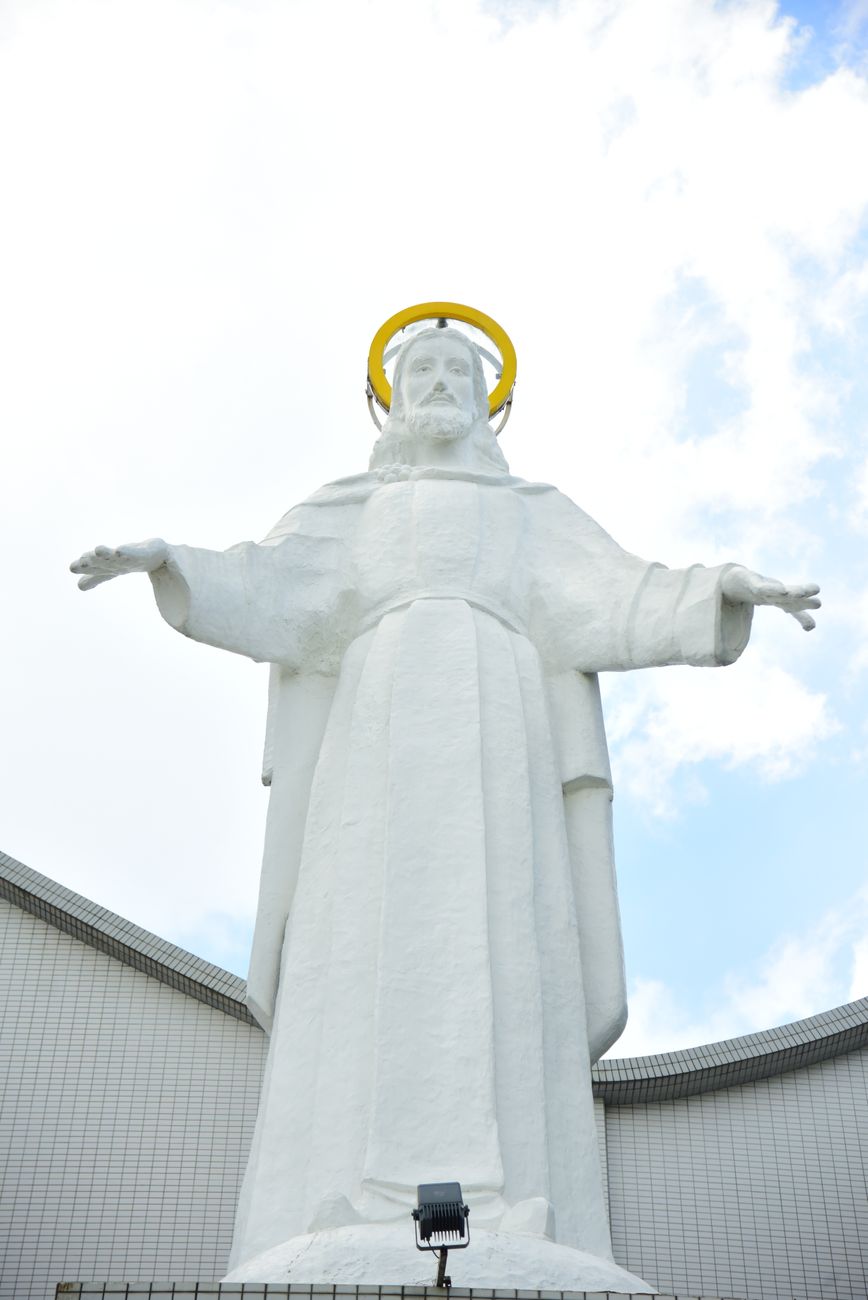
That may seem really harsh, but Idolatry is ANYTHING that we are worshiping in place of God himself.  There’s a reason we don’t have statues of God the Father in temples and churches, synagogues, and chapels around the world.  God warned us thousands of years ago about the dangers of creating substitutes.  Even things that are meant to remind us of him can become substitutes for worship.  That doesn’t mean that the crucifix necklace or the picture of Jesus knocking at the door are automatically evil– but when we stop reaching out to the real God, and focus on a false image, no matter how lovely or touching, we can fall into idolatry.  And the distractions of the digital age have been shown to create isolation and depression, and become impediments among our human relationships..  We don’t have meaningful meditation or intimate conversations online with people at the other end– what makes us think that wireless devices will bring us closer to God?

That doesn’t mean that we shouldn’t use technology to enhance our worship–just don’t make it an entertaining substitute for the real thing.  You wouldn’t (or at least I hope you don’t) text and catch up on Twitter while having a face-to-face and heart-to-heart talk with your spouse or child. Give God the honor, the time, and the respect he deserves.  You don’t have to live like a stone age hunter to get some alone time with God, but it is a great idea to set aside some time to unplug from media and the noise of this world, and plug into the wonder of meeting with God in the Garden.pexels-photo-130154.jpeg

When God “Remembers No More…”

In my last post, I discussed what it means (or doesn’t mean) when the Bible says that “God remembered…” God is not forgetful. He is omniscient, meaning that He knows everything, all the time. When God “remembers,” the Bible is usually talking about God’s timing. God “remembers” His promises– meaning that the time has come for God’s promises to be fulfilled. The reminder isn’t for God– it is for US. We need to trust that God will fulfill ALL of His promises in His time, not ours.

So what does it mean when God says, “ “For I will forgive their wickedness and will remember their sins no more.” Hebrews 8:12? Or “And no longer shall each one teach his neighbor and each his brother, saying, ‘Know the Lord,’ for they shall all know me, from the least of them to the greatest, declares the Lord. For I will forgive their iniquity, and I will remember their sin no more.” Jeremiah 31:34 ? (emphasis added)

How can a God who knows everything and remembers everything say that He will NOT remember? Once again, God does not forget. But He does choose what He will call to mind– what He will hold against us, or what He will hold in our favor. And, just as God remembers His promises, He promises to “forget” our sins and remove them “as far as the east is from the west” Psalm 103:12.

God’s perfect justice demands that He should remember every wrong, every injustice, every sin–and punish them. God will never leave one of His precious children as an eternal victim. Every martyr, every victim of theft, abuse, betrayal, slander, and injury will someday be vindicated, healed, and made whole. But God can, more perfectly than any human being, remember and correct the injustice without attaching all of the punishment to guilty party. Instead, He sees the Blood of Christ as the complete and entire payment for our sins! God has promised that the Blood of Christ has fully atoned for Sin. Our response of Faith allows us to claim that promise and move forward in New Life. Not just Eternal Life, but newness and abundance of Life today. Just as God can “remember (our) sins no more,” so we too can turn away from them.

There is great comfort in remembering that God always remembers His promises. There is also great comfort in knowing that God will NOT remember all of our failures and rebellious thoughts and actions. His forgiveness is not conditional on our level of guilt or our attempt to make atonement. It is complete, even to the point of wiping clear the very memory of our past sins! And Christ’s finished work on the cross also guarantees that every hurt and injustice we have suffered will also be made right–in His perfect way and time.

But there is a further comfort– WE can rest in the promise that our guilt and shame can stay in the past. We do not have to continually ask for God’s forgiveness for the sins we committed years ago, nor do we have to continually live in the guilt of knowing we have fallen short of the Glory of God. We do not have to live as constant victims of someone else’s sin. We do not have to rehearse our failures, justify our scars, or live as second-class Christians, feeling that we are not “as good” as others, since we are all saved by Faith, and not by our own works of goodness (see Ephesians 2:8-9).

Being a Christian is not a matter of what we’ve done (or what has been done to us) in the past. It is walking a new road, following Christ’s example and resting in His assurances. It is allowing the Holy Spirit to guide us on the road ahead, not letting our accuser (Satan) drag us back to our former paths. We will still remember our old actions, the pain of what we have suffered, the pain we have caused others. But we need not live in those memories. We can be ecstatically grateful for God’s promise to “remember (our) sins no more!”

When God “Remembers”

“He remembers His covenant forever, the promise He made, for a thousand generations.” – Psalm 105:8

“God remembered Noah and all the wild animals and the livestock that were with him in the ark”– Genesis 8:1

“God heard their groaning and he remembered his covenant”–Exodus 2:24

Throughout the Bible, God “remembers” His people and His Promises. But that doesn’t mean that He ever “forgot” either one.

God is omniscient– He “knows” everything– He “forgets” nothing. When God says He remembers, He is not suddenly conscious of something that slipped His mind. He doesn’t suddenly recall a person or promise that He hasn’t thought about in a while. Sometimes, it may seem that we are forgotten. God may seem distant, or silent, or preoccupied when we call out to Him. The descendants of Jacob lived for four hundred years in Egypt, and many of them must have felt as though God had abandoned them and forgotten His promises. But when it says, “God heard their groaning and He remembered His covenant (Exodus 2:24), it doesn’t mean that God suddenly heard their groaning, or that He had not noticed their suffering and slavery in the years leading up to that time. When “God remembered Noah and all the wild animals and the livestock that were with him in the ark” (Genesis 8:1), it doesn’t mean that God was letting them drift along in the ark aimlessly while He went off and played golf or took a nap!

God is always watching– always aware– always in control. NOTHING can take Him by surprise or sneak in or out of His conscious awareness. When God says He remembers–that is for OUR benefit. God is reminding us that He will never– can never– forget His promises. It is a reminder that He will NEVER leave us or forsake us– even when we can’t see Him, or understand what He is doing. It is a call for US to remember just how faithful, powerful, and omnipotent God really is!

I love this reminder, because there are many days when I feel alone, ignored, unheard, or “passed by.” There are days when I question whether God really hears my prayers. But I don’t have to wonder or worry. God will never forget me. His love is eternal and unshakable. God’s thoughts toward me are a constant cosmic embrace– even if I don’t feel them in the pain of the moment.

When God “remembers,” it is a powerful testament to His eternal plans for us. He shows up, not when we expect, or not when we have earned His comfort or His grace; He shows up in His perfect timing and for His Glory. Our job is to “remember” who has us in His thoughts, and in His Hands. What a great thing to remember today!

Dona Nobis Pacem*

*”Grant Us Peace!” (In Latin, Dona Nobis Pacem)
“When Peace like a River attendeth my Soul…”
“Peace be with you..”
“Give Peace a Chance..”
Peace that passes all understanding–Phil.4:7

We spend our days rushing, working, worrying and stressing, always hoping for a time of peace, believing that if we work hard enough, rush fast enough, hope fervently enough, we will be rewarded with peace.

But this is contrary to the Biblical pattern. God has already given us a blueprint for peace, rest, and contentment. And it doesn’t involve working harder! It involves trusting more. And that involves waiting and resting. God wants us to work, yes, but He also wants us to rest, to seek times of solitude, meditation, and silence. This is not a suggestion given to a holy few–it is a principle to be practiced by all of us. God wants to give us peace for the asking—not for the earning.

When prayer becomes a priority, and not just something that happens in our “spare” time, or after all the “important” things get done, we should find that peace is a by-product of our pursuit. Taking time for prayer gives our mind a new focus, calms the rhythms of our heart and body. It forces us to step aside from the frantic pace of life– to lift our eyes (or close them) away from the flickering light of the tablet or phone, to sit (or stand or kneel) still and apart from whatever task is beckoning, and listen, not to the blare of the radio or TV or street noise, but to the underlying sounds of life–heartbeats, breathing, the slow ticking of a clock, or the retreating rumble of the world. We close our eyes to the distractions of “to do” lists and calendars, comparisons and competitions. We set our hearts on all that really matters in the long run.

Photo by Luis Quintero on Pexels.com

Most importantly, through our time spent in prayer, we access the source of peace– The Prince of Peace! And it is this same Prince of Peace who will “grant us peace” if we just ask. You may not be able to set aside hours for blissful meditation. But if you ask, God will help you guard your time, and help you find those few precious moments of prayer and peace– peace with Him, peace that comes from Him, peace that passes all understanding.

Reading the Charts

Many industries rely on charts.  Health care workers chart vital signs, fluid levels, symptoms and reactions to medication.  Publishers  of books and music chart sales by category, age of audience, geographical region, and more.  Transport and shipping companies chart routes, weather, road construction, and fuel efficiency.

pexels-photo-273011.jpeg

Keeping charts, graphs, and records can improve performance, solve mysteries, and increase understanding.  It is good to keep charts in our Christian walk, as well.  Charting scripture can show us where we have or have not studied God’s promises, warnings, and wisdom.  Charting our prayer life can show us patterns in our communication with God, and help us see when and how God has answered our prayers.

I keep a prayer journal.  Each day of the year has its own page, with lists of people to pray for in general, a geographical region, and more immediate special requests.  But the back of each page has blank space.  This way, as God answers prayers in these areas, I can record them.  I’ve been using this journal for three years now, so the back sides are beginning to get filled up.

But that is not the most amazing part of what I wanted to share today.  The most amazing part is that I have had to revisit some of the answers because God keeps answering them!  Here’s a case in point:  About two years ago, I wrote in a request for a friend who was looking for a job.  There was a promising interview, and many friends were praying for a “positive” outcome.  The job seemed like a perfect fit.  But it didn’t happen.  More prayers led to other opportunities and one of them seemed to be working out.  I wrote the “answer” in my journal.  But when I came across it again this year, I realized that God used both the previous opportunities to prepare my friend for something even better:  a job that no one imagined two years ago!  We prayed, expecting God to answer with something good.  When the first answer was “no,” we trusted God to bring about something else.  And He did.  But I’m glad that I had charted this request, because I almost missed seeing how God used prayer to prepare for more than we had asked!

pexels-photo-941693.jpeg

Another friend was going through grief and distress just a little over a year ago, and I was reminded of how God answered prayers for strength, peace, and rest.  But  I was also reminded to lift my friend up again on a painful anniversary, and to offer thanks for the ongoing healing I’ve seen– not just for my friend, but for her entire family.

journal

If you don’t do it already, I highly recommend making a prayer diary or journal.  It doesn’t have to be elaborate or complicated– I use wire-bound theme books and write in them daily.  But you could use an actual bound journal, or a simple memo pad or old address book.  Don’t worry if you miss a day or two– no one is keeping score or grading you–the main thing is to make it a habit to record prayers and answers.  You will gain insight, remember God’s answers and promises kept, and be encouraged in the wait for other answers to come.

Prayer Journal

Proactive Prayer Points

The Company We Keep

Do your friends pray? Do you pray for your friends and neighbors? Do you pray with your friends? Prayer is often seen as a private and very isolated activity– just you talking to God. But prayer is much more. Prayer can bind people together in a common purpose. It can encourage and embolden others as we pray together, share burdens and blessings, and seek God’s wisdom on their behalf.

Conversely, when our friends don’t pray, or discourage us from spending time in prayer, we can become weak and lose the fullness of joy that comes from a rich prayer life. When Jesus walked among us, He spent time with people– sinners, self-righteous religious leaders, friends, and strangers alike. And He often went away and alone to spend time in prayer. But He also made a habit of taking a few key friends with Him; friends who would “watch and pray” when others might have distracted Him with their questions or doubts. Throughout the Bible, there are numerous examples of others who sought out friends and companions to join them in prayer.

I belong to a small weekly prayer group. We meet for an hour each week to discuss prayer needs in our church and community, as well as needs for our nation and our world. I look forward to meeting each week. Even though we pray for many serious needs, we also come together to worship and to thank God for His many blessings– including answered prayer from previous weeks! Our church also belongs to a prayer initiative that involves a larger regional area. At least 30 churches are committed to praying “round the clock” one day each month throughout the year. Individuals sign up to pray for 15- or 30-minute increments. These prayers may happen in small groups, or in private closets, but there is value in knowing that our prayers are part of a much larger and ongoing effort. There are even short-term prayer efforts that ask everyone involved to take the same 5 or 10 minutes to pray for a particular need or issue–nationwide or worldwide! Each of these has value, and can encourage growth in our prayer life and spiritual growth.

There is a lot more I could write about this concept today, but I think it is more important to act on it. I have a journal full of names, places, and situations that require prayerful attention– people battling cancer or depression; cities facing riots and economic upheaval; families in the midst of divorce or other crises. And I have friends who share my concerns and who can join me in praying (even remotely) for them.

If you have friends who pray– connect with them and pray for and/or with them today. If you don’t– pray that you will find companions who will come alongside you as you make this journey to pursue a life of prayer. Look for opportunities to join a group– in person, or on-line–that shares prayer requests (and answers to prayer!) Best of all, pray to and with Our Father, who will never leave us or forsake us, who always listens, and who has given us the constant companion of the Holy Spirit to strengthen and encourage each of us.

For on-line prayer groups, check here ( https://www.google.com/search?q=online+prayer+groups+free&rlz=1C1GYPO_enUS768US769&oq=online+prayer+groups&aqs=chrome.1.69i57j0l5.7234j0j7&sourceid=chrome&ie=UTF-8 ) and elsewhere.

Who Are My Enemies?

In the Parable of the Good Samaritan (see Luke 10:25-37), an expert in the law asks Jesus, “What must I do to be saved?” Jesus, as he so often does, answers with a question of his own. “What is written in the law? How do you read it?” Of course, the expert in the law answers with confidence, and Jesus commends him for his answer. But the law expert isn’t mollified by Jesus’s affirmation. The law is clear, but it is not necessarily specific. “Love the Lord your God with all your heart and with all your soul, and with all your strength, and with all your mind.” That seems pretty clear. But the rest– “Love your neighbor as yourself”– Just who IS my neighbor?

Jesus answers with the famous parable about a man who is beaten and left for dead on the side of a dangerous road. Two religious leaders see him, but each refuses to help. Instead, a Samaritan (despised by the Jews) offers help and compassion, beyond what the law would dictate. Thus, the expert in the law must conclude that a “neighbor” is one who shows mercy and kindness to those whose path he crosses.

In another instance, Jesus talks about enemies:

“You have heard that it was said, ‘Love your neighbor and hate your enemy.’  But I tell you, love your enemies and pray for those who persecute you, that you may be children of your Father in heaven. He causes his sun to rise on the evil and the good and sends rain on the righteous and the unrighteous.” Matthew 5:43-45 (NIV)

So, who is my enemy? If my neighbor is anyone who crosses my path, who is left to hate? Jesus IS more specific here. He commands us to pray for those who persecute us; that God causes the sun and rain (and other good and life-giving things) to happen for both the evil and the good; both the righteous and the unrighteous benefit from His mercy. God loves sinners so much that Jesus came to die for them! Jesus met a lot of needy people. He also met some nasty characters who never sought His forgiveness or His help. Yet He did not march in protest against oppression by Roman soldiers. He did not campaign to have the hypocritical Pharisees removed from their positions of power. He did not advocate stealing from the greedy tax collectors to pay for welfare programs. He allowed Himself to be arrested and even (unfairly) convicted and sentenced to death on a cross. His “enemies” were allowed to win a battle. But Jesus Christ has won the war. And when the war is over, there are no “enemies” left to fight!

There is a lot of talk today about enemies, and how they should be treated. We see enemies among our own neighbors who disagree with us politically, or who practice a different religion (or none at all). We see enemies in those who taunt us, or those who live more lavishly, or those whose position in life causes us to think of them as unfairly privileged, or unworthy of certain benefits. And, in many regions of the world, we see as enemies those who are causing war or inciting violence and damage against another nation. These are battles, indeed, but they are battles that, in God’s eyes, have already been won!

Jesus commands us to pray–even for those we may view as enemies! And we are to show mercy and love toward those who view US as the enemy! Not smug self-righteousness, or cold indifference. Not vengeful action or hateful rhetoric. Not name-calling or “cancelling,” “doxing,” or “ghosting” people. We are to pray for their well-being. We are to love them as we love ourselves!

In our own power, we cannot do this. It goes against our nature. We want to be “right.” We want to “win” our battles. We want to see justice done– NOW! We want to be able to dismiss and condemn those who are unrighteous. We want to see them pay. We want to be proved and justified. We want them to be found wanting in comparison with our own righteousness.

We do have a very real enemy– one who does not deserve our love or prayer. But it is not a person. Our enemy is Sin. Our “enemies” are godless spirits– of rebellion against God, of pride, of greed and rage and chaos. People may display behaviors and cling to false teachings; their actions may threaten us, horrify us, or disgust us. But there is a priceless soul involved– a soul who is in slavery to Sin. There is no person on earth who was not created in God’s image, or who is so far from God’s love and forgiveness that we are allowed to condemn. Therefore, there is no person for whom we cannot pray or show love.

Let me be very clear, however. There are certain actions that require us to stand up for truth and justice. Condoning dangerous, violent, unjust, evil actions– worse yet, promoting or participating in such actions in the name of kindness, empathy, “social justice,” equity, vengeance, or solidarity with a particular group–is not loving. We may defend the vulnerable, prosecute the violators of law, or work to remove ourselves from relationships that are abusive or oppressive, while still praying for our oppressors, persecutors, or self-described enemies. We may still show them forgiveness, work toward peace, and even treat them with respect without compromising our own dignity and adherence to the truth. We may (and should) continue to pray for justice. We may pray that the true enemy’s plans will be frustrated and ineffective, and that healing and righteousness will prevail.

Praying for our “enemies” is hard work. It requires us to be humble. It requires us to remember that we, too, are sinners saved by Grace, and not by our own actions or beliefs, but by God’s intervention and design. It requires us to see that our enemy is also our neighbor.

God, grant me the loving eyes to see others as You see them, and the wisdom to see my actions as others experience them.

Blog at WordPress.com.

Up ↑