In God We Trust

It appears on our money in the United States.  It is our official national motto, “In God We Trust.”  See article here  But is it true?

In recent years, many people and groups have tried to challenge this simple four-word phrase.   Some claim that it violates the “separation of church and state”.  However, the phrase is not specific to any one religion– most of the major world religions (and most of those practiced in America) agree that there is (at least) one God, who can and should be trusted.

I actually worry a little less about those who are challenging the phrase than about those who simply ignore it or give it lip service.  And I pray that I don’t fall into the latter group, but in certain moments, I can’t honestly say that I am trusting fully in God.  Instead, I tend to trust in various “God-like” things:

  • I trust my own intuition or my own reason
  • I trust “experts”
  • I trust “the science”
  • I trust “the numbers”
  • I trust in the money that bears the motto
  • I trust in my own strengths and abilities
  • I trust in my husband
  • I trust my church
  • I trust my family
  • I trust what I read on Wikipedia or what I look up on Google
  • I trust what my friends send me on Facebook or Twitter
  • I trust what “they” say on TV
  • I trust what I read on a cereal box or food label
  • I trust headlines
  • I trust photos and videos I see on the news
  • I trust what I hear on the radio
  • I trust celebrity endorsements
  • I trust public opinion
  • I trust my feelings…
beautiful beauty close up face
Photo by Pixabay on Pexels.com

Of course, some of the things listed above are obviously suspect; others seem reliable and true.  It’s hard to argue against some of the things on the list– it’s hard to doubt what I see, what can be measured, or what has proved true in the past.  And yet, I have been hurt and betrayed by many of these things– my feelings are unreliable; my friends or family give me advice with good intentions, but bad results; images and even eyewitness accounts don’t always tell the whole story, and, increasingly, honesty and integrity are being crushed out by compromise and expediency.  “If it bleeds, it leads…”  “The truth is evolving..”  “We all have our own ‘truth’..”

apps blur button close up
Photo by Pixabay on Pexels.com

God’s truths are eternal and righteous; that doesn’t make them easy or comfortable.  Sometimes it seems as though God takes a stand on both sides of an important issue– or that He takes no side at all– leaving us confused and wanting quick and well-defined answers.  I have friends who agonize about being on the “wrong side of history” with many current issues.  Let’s face it– no one wants to be on the “wrong side” of anything. We draw lines and pick sides– both sides can’t be “right”, can they?  So how can we know if we’re trusting God if God is silent or ambiguous?

In the end, there are a few guidelines that have helped me be more confident and have acted as anchors for my faith:

  • Reading the Bible:  not a verse here, or a chapter there to support a particular action or position–consistent reading THROUGH the Bible– from beginning to end, or at least through an entire book at a time.
  • Asking tough questions:  I would love to assume that I already know the answers or have the “right” opinions, but if I can’t handle being challenged; if I never have any questions or can’t ask the ones I keep pushing down, that should be a sign.  Sometimes the more questions I ask, the more I have!  But, as uncomfortable as it is in the beginning,  it is better to ask, and chase after an uncomfortable answer than to ignore the question or pretend to have all the answers.
  • LISTENING— really listening, whether to friends who seem to know all the answers (see above) ,  or those with really good questions.  It also means listening to those with whom I am tempted to disagree, and to those with whom I passionately disagree.  Listening is not the same as accepting or agreeing, but it is important for at least two reasons:
    • Every person is made in the image of God– how I treat them is a reflection of my love for God.  I will fall short; I will still hurt people’s feelings, whether or not that is my intention, but if I’m doing it through pride, hatred, or disdain, I am dishonoring God.
    • Second, I cannot say I understand a person if I’m cutting them off, talking over them, and finishing their sentences for them.  Often, while we may disagree on semantics or details, it turns out we agree on more than we assume we know about “the other side.”
  • Praying for wisdom and discernment.  It sounds odd to those who trust in their own understanding, but God WILL open your eyes, ears, and mind to truth, even if it’s being twisted, covered up, hidden, or falsified.  God promises, again and again, to give wisdom freely to those who ask.  He doesn’t want us to be confused and frustrated– but He does want us to seek out His truth instead of wallowing in the bog of “little white lies” and obfuscation around us.
  • Waiting and listening for the Holy Spirit to prompt my conscience.  This is much like asking for wisdom, but more subtle, and in some ways more dramatic.  The Holy Spirit is our guide and counselor (think Jiminy Cricket, but much more spiritual and always right).  Even if I’m not aware enough to know what to ask or what to question, the Holy Spirit will often prompt me.  Have you ever been reading along, or listening to someone’s story, and suddenly you just get the sense that something is “wrong”– you’re not getting the whole truth; or there is a detail that stands out and doesn’t make sense, and it keeps niggling at your conscience?  Yeah– that.  Pay attention to that– even amidst the graphic images and angry voices surrounding you.
  • Keeping track of God’s faithfulness– I don’t maintain this blog because I “wish” that God was faithful, or because someone managed to convince me that this is what I “should” believe.  God has proven faithful through all my questions.  I know I can trust Him because I have trusted Him through good times and difficult times; times when it didn’t make sense, when it wasn’t popular, and when circumstances pointed in other directions.  I have seen God’s hand at work in history and prophecy and personal testimony in ways that defy expectation and explanation.

pexels-photo-935944.jpeg

And whether of not it’s printed on my money; whether or not it’s popular or “patriotic” or punishable by law, I will continue to trust in God.  He is trustworthy and true; faithful in mercy and love; sovereign and altogether righteous.  In God I have trusted; In God I trust; and In God I will continue to trust.

The Legacy of a Praying Father

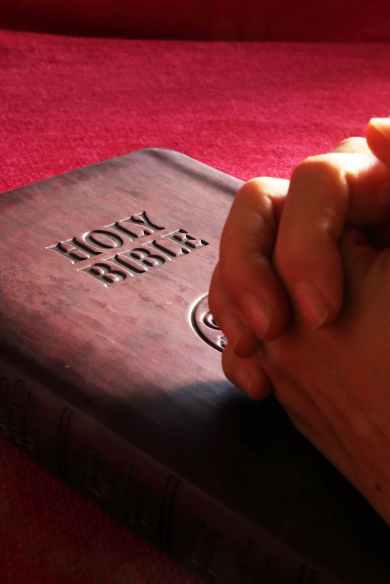
My father was a quiet man.  He loved music, and jokes, and animals, and peaceful summer nights listening to crickets and sipping tea on the front porch.  My father was not a man of lengthy, eloquent prayers.  His prayers were often short, and sometimes punctuated with emotional tears.  But my father prayed.  He led our family in prayer and devotions; he prayed in church on Sunday mornings and Wednesday evenings.  He spent much time, head bowed, talking silently with his Savior.

belief bible book business
Photo by Pixabay on Pexels.com

I spoke of a mother’s prayers last month, and they are important.  But fathers play a different role.  My mother’s prayers always seemed to wrap me in a cozy blanket of affection and hope.  My father prayers were more like an umbrella– spreading out over our family to seek God’s protection and grace.  Even if Dad’s voice wavered in prayer, his vocabulary was bold, filled with a rock-solid faith, and a deep sense of God’s power and wisdom ready to be poured out on our family.

Dadmegreenreunion

But the most lasting impression I have of my father’s prayers is that of Dad’s reverence for God.  I never, EVER, heard my father take the Lord’s name in vain.  (Not even when his favorite baseball team was losing– again!)  I never heard him express doubt of God’s care, His provision, or His wisdom.  He approached the throne of grace with awe and deep gratitude.  He never lost his sense of wonder at God’s creation, or his sense of awareness of and need for God’s mercy.

green grass field during sunset
Photo by David Jakab on Pexels.com

We need men of prayer.  I am so grateful for a husband who prays– regularly, fervently, compassionately, and boldly.  What would happen in our world if more men prayed daily in the quiet of their homes or places of work?  Our society makes fun of men who pray on public platforms, praising themselves as much or more than they praise God.  It denigrates prayer as weakness and hypocrisy, but what if more men of faith led their families in daily prayer?  What if, with trembling voices, more men sought out wisdom and strength to meet the challenges they face, instead of putting on a brave but false face of independence and self-sufficiency?  What if, instead of excusing vulgarity and cursing, more men took the challenge to clean up their language and set better examples.

grace1


If you know men of faith– take some time this weekend to let them know how much their good example means.  Encourage them to finish the race, to keep going, and to leave the kind of legacy that matters most.  And don’t forget to lift them up in prayer!

What’s Your Destination?

Recently, my husband and I took a weekend trip.  We had a destination in mind, but had to decide on a route.  Looking it up on the computer, we were given an estimated distance and travel time based on a programmed route that was found to be the “fastest.”  However, this route was not necessarily the shortest, or the most scenic, or the safest.  Knowing our destination, my husband was able to reconfigure the program to map out a route that fit our needs.  It got us to the correct destination, and allowed us to travel safely, leisurely, and confidently.

After we reached our initial destination, we decided to take a side trip.  Since we hadn’t counted on taking the side trip, we didn’t have a route.  We relied on the same technology, but, not knowing our exact destination, we typed in a general location and followed the instructions we were given.  We missed an important exit and had to reconfigure…we changed our plans and had to reconfigure…we misspelled the name of the new destination and were sent miles out of our way before we realized what had happened…we ran into an unexpected detour which sent us more miles out of our way.

pexels-photo-490411.jpeg

Knowing your destination, and having a good map or set of directions can make a huge difference.  We still had an enjoyable trip, but we might have been able to do more if we had planned a little better–one of the places we decided to visit had just closed by the time our reconfigured driving directions got us there!   And we might have been able to cut several miles off of the detour route if we knew the local roads better (it didn’t help that our map application wasn’t working at the critical moment, either!)

auto automobile automotive car
Photo by Mikes Photos on Pexels.com

In life, there are many “programs” that offer advice, direction, and focus to get us to a destination.  There are weight-loss programs, “life coaches,” self-help books, universities, “mindfulness” seminars, even religions that promise to guide us along a particular path.  But if we don’t have a clear destination in mind, we can end up wandering down a detour or even a dead end.  What started out with such promise becomes a maze of questions, unmet expectations, and frustrating twists and turns.

pexels-photo-618955.jpeg

So what is my destination in pursuing prayer?  Where do I want to end up at day’s end?  In a year?  When I face the end of my life (if God chooses to let me see the end approaching)? I want to experience the kind of prayer life that honors God, deepens my relationship with Him, and has an impact.  There are many “paths” of prayer– but they have different destinations.  Meditation, recitation, fasting and praying, praying corporately or in isolation–I need to map out a course that will get me to the goal.  And I need to rely on the guidance provided by the Bible, the Holy Spirit, and godly counselors and teachers.

pexels-photo-935944.jpeg


A Sacrifice of Praise

Hebrews 13:15 English Standard Version (ESV)

15 Through him then let us continually offer up a sacrifice of praise to God, that is, the fruit of lips that acknowledge his name.

Praise is an essential part of prayer– God is worthy of our continual praise and worship.  He is eternally good and thoroughly righteous; all-powerful and all-wise.  The author of Hebrews reminds us that we are to offer a sacrifice of praise–continually– to God.

This is more than just a simple “Praise the Lord” uttered when we are at church or surrounded by fellow believers.  A “sacrifice” of praise implies more than just a gift or even an acknowledgement of God’s worthiness and majesty.  It implies cost, and hardship; a giving up of something precious in the act of worship.

bow down

Sometimes, the sacrifice is small–giving up our right to take credit for God’s mercies; being thankful (instead of jealous) of our neighbor’s success.  Other times, the sacrifice is painful– praising God in the aftermath of a daughter’s rape, or a spouse’s betrayal, or acknowledging God’s goodness after a diagnosis of cancer or dementia.

God isn’t looking for false and empty worship–He wants us to be real.  Sometimes, the sacrifice isn’t eloquent, polished, or “pretty”; it comes with tears, tormenting questions, and anguish.  Sacrifices are poured out, broken, or burned up– dreams that have been dashed, hopes and plans that have been abandoned, heartaches that crush the soul.

God wants these sacrifices– but not because He is a cruel God who wants to see us crushed and hopeless.  God wants these sacrifices because only when we are ready to put them on the altar can He make the exchange– Beauty for ashes; eternal hope for temporary dreams; trust and security for our doubts and fears.

pexels-photo-133170.jpeg

In the same verse (Hebrews 13:15), the author describes the sacrifice of praise as the “fruit of lips that acknowledge his name.”  The Hebrews to whom he was writing were making a huge sacrifice in just uttering the name of Jesus.  They were beset on all sides– from the Jews who did not acknowledge Jesus as the Messiah; to the Romans who were using them as scapegoats for troubles within their Empire.  In the midst of their troubles, God did not ask them to slaughter their enemies, or to create a separate society and live only to themselves.  He didn’t ask for impossible deeds of daring–though many endured persecution and became martyrs for the Cross of Christ.  God asked for the sacrifice of praise.  God’s ways are not our ways– his weapons are not our weapons, and his words are not our words– God’s words are more powerful than any weapon or plan that we could ever imagine.

pexels-photo-546657.jpeg

The practice of praying the various names of God and titles of Jesus and the Holy Spirit– Almighty, Father, King of Kings, Lord of Lords, Counselor, I AM, Savior, Redeemer, etc.–is the essence of praise.  In times of trouble, God’s attributes may seem hidden, but when we acknowledge what we do not see, we are harvesting the fruit of our faith and putting it on the altar.

Stand back– God has been known to set both the sacrifice and the altar on fire!

fire wallpaper
Photo by Pixabay on Pexels.com

Where Your Treasure Is…

Our church held a hymn-sing and ice cream social last Sunday.  It was an informal evening service, but we heard testimony of the power of hymns to shape our worship, and to help us remember scripture’s promises.  We also had the chance to just “call out” a favorite hymn to sing together.  We probably sang 15 or 20 hymns that night, and each one had special meaning to many in the congregation.  We treasure certain songs, certain verses, certain stories– they feed our soul, encourage our heart, steel our thoughts, and pour balm on our wounds.

church-bank-wood-benches-161060.jpeg

One hymn we didn’t sing the other night, though it is a favorite of many, was “Sweet Hour of Prayer.”  Sweet Hour of Prayer– lyrics and much more here  In getting ready to post for today, I thought about this hymn.  We treasure the thought of prayer being sweet and bringing relief, but do we treasure prayer enough to spend an hour or more at it?  If I add up the time spent in morning prayers of devotion, grace at mealtime, evening prayers, and “quick thoughts to heaven” throughout the day, it probably adds up to an hour…but I spend more time writing about prayer each day than I actually spend practicing it.  And when was the last time I got so caught up in prayer that I lost track of time and spent over an hour at it in one sitting?

pexels-photo-707676.jpeg

In the Sermon on the Mount, Jesus warned that we should not lay up treasures for ourselves on earth, but to store up treasures in heaven, “For where your treasure is, there will your heart be also.” (Matthew 6:21 KJV)  This is true of our material treasures, but also our spiritual treasures, our thought treasures, and our time.  When I hear “Sweet Hour of Prayer,” one of my first thoughts is always, “That would be nice, but I don’t have an hour to spend praying– I’d never get anything done!”  But would I have said that about watching my favorite TV show?  Spending an hour on Facebook or shopping at my favorite store?

God is beyond time– he’s not counting the hours, minutes or moments we spend with Him.  But he feels our absence and our distraction just the same.  He isn’t trying to pull us away from important things to waste our time– he wants to pull us away from the things that weigh us down, worry us, haunt us, and eat up the precious time He has given us.

grayscale photography of people walking in train station
Photo by Skitterphoto on Pexels.com

I have found that when I feel “too busy” to spend time with Jesus, it’s a good time to pause and make time for prayer.  When I do (and it’s not as often as I should), three things happen:

  • I want more!  That time refreshes me, calms my spirit, and removes the burden of  worries, failures, and frustrations.
  • I accomplish more–maybe it’s a case of God re-ordering my other priorities; maybe he just gives me the power to work more efficiently; maybe it’s a miracle–but I find that the “time crunch” I worried about seems to melt away.
  • Jesus becomes “more” to me– I grow closer to Him, and closer to the person He created me to be.

Forgiveness is Free: It Isn’t a Free Pass

Yesterday, I posted about praying for our enemies– those who have hurt us.  We are commanded to forgive those who have wronged us, to do good to them, and to pray for them.  But I want to make sure I don’t give the wrong impression about offering forgiveness.

Forgiveness doesn’t ask us to excuse the inexcusable, or trust the untrustworthy.  Forgiveness is trusting that God, in His wisdom, His Holiness, and His timing, will bring justice, healing, and peace, when nothing else can.  This is important to remember, both as someone who asks for forgiveness, and as someone who gives it.

Jesus offers forgiveness–full, and free, and perfect– he died to make that offer.  He gave it to whoever believes on His Name.  But here’s the catch…he didn’t make that offer so you can temporarily wipe the slate clean and go on sinning without consequence.

Oscar Wilde wrote a chilling novel, “The Picture of Dorian Gray”, Dorian Gray/Wikipedia    in which the title character finds a way to trap his soul, with all its ugliness, hatred, anger, and sin, inside a portrait.  No matter what Dorian does, no matter how twisted or evil, he continues to look fresh, young, innocent, and handsome.  The effects of his dissipated lifestyle–drug addiction, sleepless nights, years of hard living, even murder–are all trapped in the portrait.  Over the years, the portrait haunts Dorian with its monstrous transformation from young man to gnarled wraith.  In desperation, he “kills” the portrait– and himself– in disgust and anguish.

dorian_gray_by_pti_spb-d6f1lmr

We live in an age of appearances– if all appears well on the surface, we ignore the deeper, long-term consequences of our sin.  If we “get away with” small sins, we run the risk of sinking deeper into a sham lifestyle.  We go through the motions of asking forgiveness, when what we really seek is escape from the consequences of our own actions.  We begin to see sin as a valid alternative to obedience–I can obey God if it is convenient, but when it’s not, I can just ask forgiveness.  This is a road strewn with lies, excuses, evasions, and it ends in death.  It is a lifestyle that makes a mockery of God, of his Holiness, His Sacrifice on the cross, and His loving offer of restoration.

God doesn’t just want to transfer your ugliness and rebellion into a painting to hide it away.  He wants to remove it “as far as the east is from the west.”  We don’t become perfect in an instant, but our past is expunged so that we can be free to choose obedience and live more abundantly in fellowship with a Holy God.  When we are truly sorry for our sins and seek true forgiveness, we want to make better decisions, we want to right wrongs– we want to redeem the past rather than merely escape from it.

pexels-photo-1018478.jpeg

When we, as imperfect people, offer forgiveness to someone else, we are not able to do what God does.  Our forgiveness is imperfect; like love, or discipline, or a new habit, it needs to develop and grow.  Forgiveness is not about freeing the offender, or wiping the slate clean for the other person.  It’s about freeing yourself to heal, to move away from slavery to the pain of the past, and to learn to trust God to bring justice.

Forgiveness isn’t natural or easy.  No one deserves forgiveness– that’s what makes it a miracle that God offers it to anyone who asks.  But God doesn’t undo our sin.  He doesn’t erase our actions, or clean up the messes we have made.  If I commit murder, God can forgive me, wash away the guilt of what I’ve done, and give me the power to live a life that seeks to do good, rather than evil.  But he’s not going to bring my victim back to life, or cause a judge and jury and the family of my victim to say, “Aw, that’s alright– you’ve probably learned your lesson.  No hard feelings.”  He can (and has) caused amazing healing to happen in such situations, but that’s the exception, not the expectation.

Similarly, if you have been hurt and you offer forgiveness, it doesn’t mean that the other person is no longer responsible for his/her actions.  It doesn’t mean that you were never hurt or betrayed, and it doesn’t mean that you trust them immediately and without reservation. It is not hateful, intolerant, or unforgiving to allow justice to catch up with someone who has hurt you– it IS unforgiving to seek beyond justice to vengeance and self-defined retribution.

pexels-photo-133170.jpeg

This is particularly important in cases of abuse.  If someone has abused you, physically, emotionally, or mentally, they are likely to make you feel the guilt they don’t want to deal with.  “You drove me to it.”  “You are the only one who understands my anger.”  Forgiving this person does not mean– it NEVER means– that you agree with their tactics and false accusations, or that you are giving them a pass.  But it DOES mean that you are giving them, and the damage they caused, over to the God of all justice.  Your case is closed; your final judgment is in his hands, and you are free to begin again– begin to heal, begin to see how God can bring something important and good and eternal out of something broken.  Forgiveness is impossible, but God will give you the power to do it– it may take several attempts, and several years, but when it comes, it will be the miracle of God working through you to glory!

Bloom Where You Are Planted

I love living in Southwest Lower Michigan– especially in the spring.  We have blossoms everywhere– apple blossoms, cherry blossoms, dogwood, red buds, tulips and irises, hyacinth and daffodils.  The rich earthy smell of freshly plowed gardens and fields permeates the air, and rides on the breezes coming off Lake Michigan.  Birds, newly returned from their winter wanderings are busily building nests, chirping away, while the sun’s rays chase away the last of the winter chill each morning.  There is color and new life everywhere you turn.

pexels-photo-165542.jpeg

We have a lot of spring festivals in the area, most of them centered on the blooms and blossoms that fill the countryside.  Gardens, orchards and fields are not just for show around here– they are also important parts of our economy and eco-system.  Without a good spring full of blossoms, buds, and blooms, we may have a disastrous harvest in the fall, and run-off of the soil; bees will die off, wild and domestic animals will have less grass and fewer berries to eat.  A late spring can shorten the growing season and shrink the harvest; an early spring can bring buds out too soon, only to have them lost to a late season frost or to have them mature too early and be burned in a mid-summer drought.

And yet, I have seen crocuses burst through two inches of snow; buds that defy harsh weather and cruel winds.  I have seen daffodils blooming where there once was a house and a yard, but now there are only brambles and foundation stones.  I have seen trees twisted and split by long-ago storms– one side dead and rotting, but with buds and new branches on the other side.

crocus-flower-spring-purple-60120.jpegpexels-photo-1031413.jpeg

It is easy to bloom when you are in a lovely flower bed, with tilled earth, fertilizer, gentle rains, just the right amount of sun, and protection from the winds and pests and birds.  But it is more spectacular to bloom in the desert; to defy the odds and stand in stark contrast to brambles, a broken-up sidewalk, or a litter-filled back alley; to bloom in the snow and sleet or weather a flood or a tornado.

pexels-photo-1035739.jpeg


Not always so with prayer.  Sometimes, it is easier to pray when we feel our own needs and shortcomings; when we are driven by our circumstances to call out for help.  When all is well, we may be grateful, but we may also begin to slack off.  We stop asking for wisdom and guidance, coasting in the beauty and ease of a good life, and forgetting that the beauty and the ease– indeed the life itself– is not our right, but a gift.  Amid so many other beautiful prayers, ours seem drab and ordinary, almost unworthy of God’s notice.

But God DOES notice– he has placed each of us where he wants us to bloom and grow– to pray, to fellowship, to walk with other believers and give off the fragrance of His grace as we live our lives in obedience to Him.  Have you been planted in an apartment complex?  Have you been planted as a suddenly single parent of three kids?  Have you been planted on a campus?  In a group of friends that all have Harleys?  Or one block from a rescue mission or homeless shelter?  A classroom full of high-energy first-graders?  A community that has had a lot of crime and blight?

pexels-photo-991681.jpeg

God has not placed you in circumstances to reward or punish you, but to grow you in the soil that can produce the best harvest.  Is your prayer list filled with needy people who live in turmoil and rebellion?  Bloom where you are planted– you may be the only person praying for your cantankerous neighbor– the only raindrop or fertile soil s/he will ever encounter.  Has God placed you in a family of people who taunt you for your faith?  Bloom where you are planted– pray for strength to stand firm in the beauty of meekness and compassion in the face of their taunts and disdain.  Are you in a greenhouse full of self-righteous orchids making you feel dowdy and wilted by comparison?  Bloom where you are planted– pray for God’s eyes to see the beauty in yourself, as well as those around you, and stop trying to be an orchid where God needs a lily.

Has God planted you in trying circumstances?  Bloom where you are planted– pray for God’s Peace as you face each day:

Matthew 6:25-34 English Standard Version (ESV)

Do Not Be Anxious

25 “Therefore I tell you, do not be anxious about your life, what you will eat or what you will drink, nor about your body, what you will put on. Is not life more than food, and the body more than clothing? 26 Look at the birds of the air: they neither sow nor reap nor gather into barns, and yet your heavenly Father feeds them. Are you not of more value than they?27 And which of you by being anxious can add a single hour to his span of life?[a] 28 And why are you anxious about clothing? Consider the lilies of the field, how they grow: they neither toil nor spin, 29 yet I tell you, even Solomon in all his glory was not arrayed like one of these. * 30 But if God so clothes the grass of the field, which today is alive and tomorrow is thrown into the oven, will he not much more clothe you, O you of little faith? 31 Therefore do not be anxious, saying, ‘What shall we eat?’ or ‘What shall we drink?’ or ‘What shall we wear?’ 32 For the Gentiles seek after all these things, and your heavenly Father knows that you need them all. 33 But seek first the kingdom of God and his righteousness, and all these things will be added to you.*

34 “Therefore do not be anxious about tomorrow, for tomorrow will be anxious for itself. Sufficient for the day is its own trouble.

*Emphasis added

The Power of a Praying Mother

Mother’s Day is coming, and I wanted to say a few words about the mothers in my life and their legacy of prayer.  My Mom is a prayer warrior.  I blog about prayer, and I pursue a better prayer life, but my Mom is a seasoned soldier,  and the daughter of another mighty woman of prayer.  Most of what I know about prayer, I learned through the examples of my Mom and Gram, but I have also been blessed by the godly examples of my mother-in-law, sister and sisters-in-law, aunts, cousins, and many more.

030

From my Mother, I learned to pray from the depths of my heart.  I have seen and heard her pray through pain, grief, and despair– not just her own, but more often that of someone else.  I have caught her holding back sobs over relatives and neighbors who don’t know or aren’t following Christ.  I’ve seen her pause in silent prayer over the plight of a person who is facing a lost job, or chemotherapy, or a migraine.  She very seldom offers to pray  aloud,”in the moment”, but she prays fervently, nonetheless.


Gramgrad

From my Grandmother, I learned to be patient and consistent in prayer.  Gram was quiet and unassuming, but she had an unshakable faith.  She prayed for years over situations that looked hopeless; often for people who or situations which never changed.  I asked her once how she kept from getting angry and frustrated.  She looked me straight in the eye and said, “We can’t change somebody else, and we can’t make them do what’s right.  That’s not our job.  Our job is to love each other, pray for each another, and let God deal with the rest.”  She died never seeing answers to some of what she prayed for, but that didn’t stop others from taking up the banner, and it never stopped her from earnestly and joyfully “taking it to the Lord in Prayer.”  She never gave up, never lost hope, and never stopped showing compassion.


There have been many other prayer warriors in my life– women (and men) of great faith who sought the Lord, and whose lives and words have had an unimaginable impact.  My family, members of my church family, classmates and friends from school or college, neighbors through the years…some of them have held my hand and prayed with me face-to-face; others have prayed on their knees in private; some have prayed for special needs and circumstances; others have prayed at the Holy Spirit’s prompting, never knowing why, but bowing in obedience.

prayermotherdaughter

Praying mothers are a treasure.  If you have one, or had one, don’t underestimate the value of her example.  And don’t just say, “Thank you”…Pay it forward.  Pray for family, neighbors and friends.  Pray early, pray often, pray without ceasing.  We all need more praying mothers, fathers, cousins, neighbors, co-workers, etc.  If you did not have a praying mother, you have a golden opportunity to become that good example to someone else.  You also have the opportunity to adopt a prayer partner– a surrogate praying mother–to pray with you and for you.

Can You Hear Me Now?

We experienced some storms last week, and while we didn’t have a lot of damage from the winds and rain, my husband and I lost our internet connection over the weekend.  No wireless internet meant no Facebook, no WordPress, no e-mail, and no cash register at our little shop downstairs.  We had to do every transaction by hand until we could rig up something so our smart phone could accept cards; no new chip cards, no Apple Pay or PayPal.  And while our phone could begin to accept limited credit payments, it could not provide any printed receipts, nor could it do double duty– we either had a phone or a point-of-sale device, but not both!

It was an inconvenience, but not a disaster.  I thought about thousands of people who are stuck in the aftermath of hurricanes, tornadoes, floods, earthquakes, and blizzards who have no electricity, no phone lines, no cell service, no roads, no water or sewer lines–cut off from common necessities and basic communication.  Suddenly, an emergency becomes even more tragic because of the isolation, and the inability to ask for help or to hear any message of hope.  (Of course, my husband would like me to put in a short plug here about the advantages of amateur radio– the radios can run on battery power and still connect over hundreds of miles!)

sound-speaker-radio-microphone.jpg

Isolation is an earthly concept.  God is eternally Triune.  He created us for relationship; from the very beginning, he declared that it is not good for “man” to be alone (Genesis 2:18)  God instituted marriage, and families, and communities so that we would stay connected, and he himself came to walk and talk with mankind in the Garden of Eden before the Fall.  It is mankind who hid from God and broke off communication– one of the effects of Sin is the desire to run away, to separate, to isolate and cut off relationships and break off contact.

That is one reason that prayer is so basic; so essential.  It is a lifeline to the one who loves us best, who knows what we need, and has the power to hear us, to help us, to lift us up wherever we may be, whatever our circumstances.

pexels-photo-787452.jpeg

But sometimes, even when we want to talk to God, it seems impossible to speak or feel like he hears us.  Sometimes, we are the ones who can’t come up with words, or can’t settle our minds to seek his face.  Sometimes, we pour out our hearts and wait in silence for an answer.   Why should it be that just when we need it most, prayer seems the hardest?

I wish I had a pithy, perfect answer.  I don’t know.  I have a few incomplete thoughts, though:

  • what comes easily has less value to us.  Cheap and pointless conversation doesn’t make us work hard, but it also leaves us empty and unsatisfied.  Crying out to God is hard–it humbles us, it strips us bare and uncovers all our pretenses and subterfuge.  The true depth of our need is ripped out of us like a tumor, and it hurts, but it is a healing hurt.  Waiting in silence can cause us to become restless and to doubt, but it also can cause us to listen more attentively– we strain to hear the answer; we stop the white noise of busyness and half-hearted hand-wringing, and listen with our whole being.  And the smallest whisper– that still, small voice– has the power of the first rain after a long drought.  We are revitalized and our strength renewed as never before.

pexels-photo-546657.jpeg

  • sometimes, though not always, we find prayer difficult because we have not really prayed for a long time (if ever)– we have developed a habit of saying words to the empty air and thinking that the words themselves hold some power of hope or magic or self-fulfilling prophecy.  When life’s realities cannot be wished away with simple words, we search for distractions, for other types of words, for other “realities”, when we should be searching for our maker and the lover of our souls.
  • sometimes, it is a matter of unacknowledged or unconfessed sin that keeps us from breaking through in prayer.  However, there are many people who will use this as a default position, and that, too, is wrong.  Jesus had such difficulty in praying at Gethsemane that he sweat drops of blood— NOT because of unconfessed sin, but because his heart was that overwhelmed.  Still, we should examine ourselves to see if we have started to move away from God– better to turn back than to go father afield.
  • sometimes, as with Christ in the Garden, our hearts are just overwhelmed in the moment– it’s hard to breathe!  It’s hard to go on; it’s hard to ask for help; it’s hard to keep the faith.  Just because it’s difficult, don’t give up– even if all you can do is groan or whimper–even if it feels like God has closed up the heavens and left you alone–don’t give up.  God DOES hear, he DOES care.  Sometimes, we are inches from victory– don’t give up!

And what can we do during those times?  Again, I wish I had better answers, but what I have, I want to share– some from my own experience, some wisdom from others, some of both:

  • Learn to “pray outside the box”–
    • Sing–sing the blues, sing an old hymn, sing along with the radio, sing like nobody else is listening
    • Write it out– write a letter, write an angry letter if you have to– write a rant, write a poem, write out all your questions
    • Move– dance, pace, run, punch a pillow, do some sit-ups, mop the floor, scrub the sink– as you get a rhythm going, add your thoughts or questions to your movements
    • Cry it out– it’s ok to cry, moan, sob, weep, or just stare into space and rock yourself to sleep after all the tears have dried up.  Jesus wept (John 11:35)– what makes us think that we can’t?

landscape-nature-man-person.jpgpexels-photo-256658.jpeg

  • Count your blessings
    • Make a list of what you have; what you have to be grateful for; what you have experienced and enjoyed now or in the past
    • Make a list of your questions, concerns, needs, wants, wishes–Now think back ten years and make a list of what you wanted then, and how many of those concerns have been answered, altered, or forgotten.
    • Put yourself in another time or place– what do you have here and now that others lack?  How do your present troubles compare to what others have had to deal with?
  • Ramp up your pursuit of God in other areas–
    • Search for answers in His word
    • Seek the companionship of someone you trust who will help you keep on going
    • Seek out counselors, web sites, and/or a church group or family who can keep you from becoming isolated

pexels-photo-935944.jpeg


The single most important thing is to continue the pursuit– seek God with all your heart–and you will find him sufficient through the silent times, as well as through the roaring of the fiercest storms.


What Did You Say?

Every once in a while, I like to check an app that counts the words I use on Facebook.  The end result is a cloud full of words that people see when they read my posts.  (You can see my most recent one above.)

Sometimes, I like the cloud– I love to see it filled with words like Love, People, God, Prayer, Joy, Peace, Thankful, etc.  I’d like to think that this is how I always look and sound.  Of course it isn’t.  I don’t always speak encouragement and love on people.  Sometimes, I complain and rehearse negative self-talk, or I explode and rant about bad drivers, rude customers, constant bills, and more.  Checking on my word count may not keep me from using negative words altogether, but it does show me patterns I may not be seeing or hearing on my own or from my friends.

pexels-photo-211816.jpeg

My prayer life acts in this same way–especially as I journal about my prayers.  I can look back through my prayer journal, and see patterns in prayer requests, notes, and even answers to prayer.  Sometimes, I see patterns of struggle–desperation, need, frustration.  Sometimes, the pattern is steady; other times it is a roller coaster of ups and downs.

It’s important to spend a little time periodically getting feedback like this.  Why?  Because what we actually say (and pray) may be very different from what we think we have said.  Jesus was very careful about words:

Matthew 12:35-37 English Standard Version (ESV)

35 The good person out of his good treasure brings forth good, and the evil person out of his evil treasure brings forth evil. 36 I tell you, on the day of judgment people will give account for every careless word they speak, 37 for by your words you will be justified, and by your words you will be condemned.”

Mark 10:17-18 English Standard Version (ESV)

17 And as he was setting out on his journey, a man ran up and knelt before him and asked him, “Good Teacher, what must I do to inherit eternal life?” 18 And Jesus said to him, “Why do you call me good? No one is good except God alone.

Paul is also careful to distinguish between words:

Romans 5:7-8 English Standard Version (ESV)

For one will scarcely die for a righteous person—though perhaps for a good person one would dare even to die— but God shows his love for us in that while we were still sinners, Christ died for us.

I include the last two examples because they both refer to “Good” people.  I want people to see God’s goodness in me.  But idle or careless words and habits can show up in my thought life, my prayer life, my on-line life, and my face-to-face conversations.  In attempting to show how “good” I am (self-righteousness), or how clever I am (even at someone else’s expense), or how__________________________________ (daring, popular, hard-working…you get the idea) I am, it compromises all that I want my life to say about God, and all that He is waiting to say through me.

cheaptalk

Words matter– whether in praying or blogging or commenting on someone else’s post.  I pray that I am making mine count!

Blog at WordPress.com.

Up ↑