Hot Dogs and Eutychus..

There is a curious story in the Bible about the Apostle Paul and a young man named Eutychus. https://www.gotquestions.org/Eutychus-in-the-Bible.html. The story is found in Acts 20:7-12, and involves a young man listening to the Apostle Paul. As Paul talks on into the night, the young man, sitting in the third story window, falls asleep, falls out of the window, and plummets to his death. Luke, who authored the the gospel which bears his name and the book of Acts, was a doctor, and an eyewitness of this event. He clearly states that Eutychus died from his fall. But Paul runs outside and brings Eutychus back to life, returning inside to finish his talk and eat with the crowd– who are amazed and relieved to have their friend alive and well.

Photo by Mark Neal on Pexels.com

Luke’s story doesn’t say whether or not Eutychus was alone in the third story window, or leaning against a wide window frame or perched precariously before he fell into “a deep sleep.” I have always imagined him perched comfortably leaning against the side of a wide and open window frame, one leg drawn up and the other dangling as he listened to Paul speak. As the night wore on, he may have slouched a bit, or even turned to lean his whole back against the frame, pulling both legs up onto the wide ledge. My mental picture may be completely wrong, but I don’t think of him hugging a narrow space and sitting tense and clinging before sleep claimed him.

Photo by Suliman Sallehi on Pexels.com

A few days ago, I referenced an old hymn knows as “The Solid Rock” or “On Christ the Solid Rock I Stand. ” One of the lines of the hymn states, “I dare not trust the sweetest frame, but wholly lean on Jesus’ Name.” But the flip side of this is that Jesus IS the solid rock and the “frame” on which we can both stand and rest secure.

Photo by Pixabay on Pexels.com

I was reminded today of another old hymn; one that I heard as a child and did not understand at all. Have you ever heard a new song, and completely mis-heard the lyrics? As a young child, I often heard hymns sung that were old to the adults but “new” to me. This was one of them. I paid little attention to the first verse, but the chorus!?! I was sure the congregation was singing, “Wienies (the word my grandparents sometimes used for hot dogs)! Wienies! Wienies on the everlasting arms…” It sounded like a righteous chorus of hot dog vendors at a baseball game. I giggled and snorted, and my grandmother, who was standing next to me, quietly leaned over and asked what I found so funny. When I explained it to her, she too began to giggle a little, and we shared a (quieter) giggle and smiles throughout the rest of the hymn. (Sacrilegious, I know, but it seemed very funny to a five-year-old.) Later, my grandmother lovingly explained the hymn–turning a “silly” song into a wonderful testament of God’s tender, loving care that touches me to this day.

I don’t recommend to anyone that they trust themselves to a window frame, a third story balcony, a too-comfortable seat at the theater, or to hot dogs eaten in bleacher seats at the baseball game. God doesn’t call us to get comfortable! Even if we are listening, and trying to follow Jesus, we may still fall– literally, like Eutychus, or figuratively. We may misunderstand, or get confused or weary and lose our focus. We may put ourselves at risk by leaning on the wrong frame.


Photo by Ece AK on Pexels.com

God could have kept Eutychus from falling from that third story window, but I believe He meant for that story to come down through the ages. It is not just a miracle, and a testament to the power of God and given to the Apostle Paul. It is a great reminder that even when we are trying to listen and follow God, we can still end up trusting in the wrong things and “falling asleep”. But no matter how far we fall, or how broken or “dead” we may seem to be, God sees us, cares for us, and wants to give us new life! We can rest “safe and secure from all alarms” when we remain in (or return to) the reassuring, everlasting arms of our Savior.

Some days, I feel like Eutychus– lying broken and useless three stories below where I began. Other times, I feel like a confused hot dog vendor, calling out to God for “Wienies”, when I really need Wisdom and Grace. But God is faithful to bring me back time after time, wrapping me in his amazing “Everlasting Arms”:

There my Burdened Soul Found Liberty

Prayer is often about burdens– the burden of need; the burden of sin and guilt; the burden of worry and distress. We bring our burdens to God, to the “throne of Grace;” we bring them “in Jesus’ Name,”, and we bring them to “Our Father.” But how often do we bring them to “Calvary?”

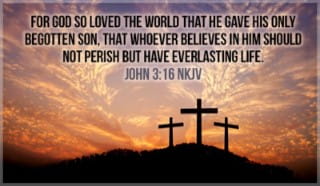
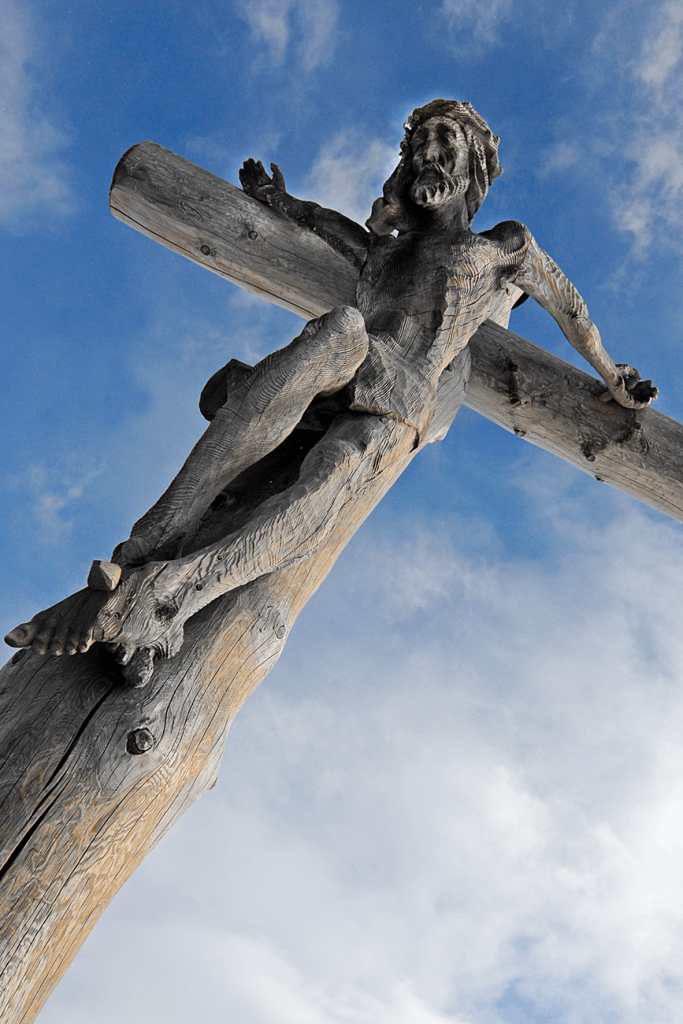
Not the victorious empty cross on the hillside with a beautiful sunset in the background, but the bloody, hot, dry and dreadful Calvary of the crucifixion? How often do we make the pilgrimage to that rocky outcropping with the smell of blood and sweat and death and agony? How often do we cry out to the one who was lifted up, struggling to breathe, pierced, wounded, broken and humiliated? When do we reach out to touch the scars and bruises he received in our place?

Photo by Pixabay on Pexels.com

It is at Calvary that we get the real story of Grace, Mercy, and forgiveness–the real cost of victory and peace. It is at Calvary that we see the full extent of God’s Holiness married to the full extent of His Love. Holiness demands justice; Love demands intimacy– together, they require sacrifice.

And it is at Calvary that we find, in the darkest and most hopeless of moments– God forsaking Himself, giving all He IS to bring justice and reconciliation for all we’ve done–that we trade our burdened souls, our worries, our despair for God’s embrace. Arms stretched so wide they are pulled from their sockets; blood spilled from head to toe; breathless and exposed in His passion for your soul and mine–that’s what God offers at Calvary.

Photo by Pixabay on Pexels.com

Why do I pray? I am ambushed and overwhelmed and enraptured by such a love. God had no need to suffer even a moment’s discomfort. He owed nothing to His rebellious creation; no mercy, no explanation, no hints as to His character (or ours). The creator of galaxies had no need to lift a finger to save one puny planet or any of its inhabitants from His own right to un-create them and blot out even their memory. Instead, He showed the greatest act of Love across all of space and time–to me!– At Calvary!

Photo by Pixabay on Pexels.com

Jacob’s (Third) Dysfunctional Family

The Bible is not a series of stories about super heroes, though it is often taught that way in Sunday School. Instead, it is the story of ordinary, flawed and hurting people who encounter a Holy and Majestic God. Jacob is one such person, and nearly half of the book of Genesis revolves around Jacob’s families– his parents and brother, his father-in-law’s household, and his own wives and children, extending to his grandchildren and even great-grandchildren.

Jacob grew into a man of great integrity and wisdom–a man of power and influence, wealth and consequence. But he was far from perfect, and his family caused him no end of headaches and heartaches. From the bickering and rivalry of his wives and their servants, to the violent clashes of his many sons, Jacob knew very little peace.

Photo by Pixabay on Pexels.com

It is important to note that, while the “God of Jacob” protected him, blessed him, and gave him a new name, He did not make life smooth and comfortable for him. We are not given great insight into Jacob’s parenting style, but we know that he had a favorite son, Joseph, and that his favoritism caused resentment among the others . Unlike his own father, though, Jacob interacted with all his sons, giving them each responsibilities and training them to work together. On his deathbed, he had blessings for each son that tied in to his strengths and weaknesses. We know that Jacob was highly respected by his sons, and that in the end, they did not disperse and lose contact with each other, but lived together in the land of Goshen in Egypt– even after the time of the famine that drove them there.

Even in a family of blessing, there will always be some level of dysfunction, struggle, hardship, and pain. Favoritism, discord, envy, resentment, unforgiveness– it all starts in families among flawed people living in a fallen world.

Photo by Craig Adderley on Pexels.com

So often, we try to present ourselves and our families “in our Sunday best”– we want people to be impressed by our show of piety or “good manners” or “problem-free” family life. We pretend that we never argue, never harbor bitterness, never have tantrums or meltdowns or sarcastic “episodes”. God is not looking for picture perfect families…He is looking for families who are honestly and earnestly seeking Him.

Surely, after his encounter with God, Jacob changed. He was a better man than before. But he was never the “perfect dad”, the “perfect husband”, or the “perfect man.” And his family wasn’t a model of decorum and harmony. But God did not turn his back on this dysfunctional family. He did not disown Jacob or cancel all the blessings He had promised. Instead, he solidified the promise he had made to Jacob’s grandfather and father, creating in Jacob’s sons the twelve tribes that would make up the nation of Israel. Just as Jacob’s family wasn’t perfect, the nation of Israel was never perfect– it still isn’t. But God has chosen to pour out His grace on imperfect people throughout history– it’s His specialty!

If you are experiencing disharmony or even angry clashes with family members– take heart and hope from reading about Jacob’s trials and triumphs. Remember to take your pain, resentment, hurt and worry to “the God of Jacob.” God was with Jacob through all his many struggles, including the heartaches of “losing” his favorite son, losing his beloved wives, suffering during the famine in Canaan, having to move to Egypt in his old age, and watching his sons struggle with their own families and trials. Out of each struggle, God brought renewal, hope, rescue, and promise. And remember, God will not abandon you (or your children) because your family experiences disharmony or you have wayward family members. Others may pass judgment on appearances, but God sees the heart– He’s in the business of fixing that which is dysfunctional– not promoting those who hide behind a “perfect” facade.

Photo by Trinity Kubassek on Pexels.com

Jacob’s family was not perfect– but they were perfectly poised to show God’s power, protection, and grace!

Jacob the Brother of Esau

The Biblical story of Jacob and Esau has long baffled readers and scholars alike. I don’t pretend to have the answers to some of the tough questions it poses, but I’d like to take a close look at some of them.

Esau and Jacob were twins–the only sons of their parents–born just minutes apart. Yet their personalities, their destinies, and their relationships with God and others could not have been more different.

We spent the last post covering some of Jacob’s character flaws– his early years involved scheming and “cheating” this twin of his. Jacob’s life and actions are the focus of the story, after all. He is the one God chose to establish the nation he promised to Jacob’s father and grandfather. But why Jacob and not Esau?

In many ways, this story echoes that of the very first brothers in the Bible. God chose Abel’s sacrifice over his brother’s. We are not given an obvious reason why Cain’s sacrifice was unacceptable– or why Abel’s was. In this case, God does not give Rebecca a reason why her boys would fight throughout their lives or why the elder son would serve his younger brother. At one point, the Bible even says that God “loved” Jacob and “hated” Esau! So we are left with a big question–Does God play favorites? Does He give His favor capriciously? If so, why bother to worship, serve, and obey Him if, in the end, He has already chosen who will be blessed?

We may never have a full explanation of God’s ways– we are told that they are not our ways; that they are higher and wiser than our ways–but there are several things I want to consider that may shed some light.

  • God is timeless. He lives beyond the boundaries of linear time, and he sees the end from the beginning. As we read through the story of Jacob, we see his progression, and the changes he makes as he matures and as he encounters the great God of his fathers as it unfolds in time. His beginning shows little promise, but God already sees Jacob as Israel, as the father of twelve tribes of people, as the ancestor of Moses, of King David, and of the coming Messiah. He sees all of this before Jacob is even born! It is part of His eternal plan that Jacob, the cheater, the underdog, the “lesser” brother should become all of these things.
  • God sees inside the human heart. Esau’s character is not fully shown in this Biblical story, but we get a few clues: 1) Esau despised his birthright– he was flippant about his inheritance, trading it for a bowl of stew. 2) Esau took foreign wives who caused his parents distress–this detail may almost escape the modern reader. We do not tend to live with our extended family, but it was (and in some cases still is) common to the society in which Isaac lived. Esau did not consider his parents when bringing foreign women into the family. They had different customs and different gods. And Esau didn’t learn from the first two wives..when Rebecca commented on the Hittite women, Esau married a daughter of Ishmael, a woman likely to resent her father’s rival (remember Ishmael was banished on account of his resentment of Isaac!) 3) Esau plotted his brother’s death. His anger and resentment over the lost blessing caused him to plot murder. Jacob was sent away, not only to find an acceptable wife, but to keep him safe from his brother’s vengeance. Even though the two brothers later met in peace (Genesis 33), the meeting was filled with tension and the brothers were never close. 4) There is not one indication in the Bible that Esau ever sought the God of his fathers—no mention of him praying, offering a sacrifice, or acknowledging God. In fact, the sons and descendants of Esau (Edom) would attack and fight with the nation of Israel for centuries to come, finally being conquered and forced to serve the descendants of Jacob. https://www.jewishvirtuallibrary.org/the-edomites
  • God does not “love” or “hate” in the same way that we do. God’s love is universal and eternal. God loves even those who reject, mock, and hate him. So when God says, “Jacob have I loved, and Esau I have hated”, He is not talking about his feelings for individuals (see https://www.biblegateway.com/passage/?search=Malachi+1%3A1-5&version=NIV and https://www.biblegateway.com/passage/?search=Romans+9%3A6-16&version=MEV). Rather, He is talking about how He shows mercy. Jacob and Esau were real people, and God blessed both of them, and built both of them into great nations. But God showed mercy and favor on Israel for keeping his commandments, while destroying the nation of Edom because of its continuing wickedness. (God eventually showed wrath on the nation of Israel as well, sending its people into exile because of their unfaithfulness!) Even in their destruction, both nations retained a remnant and their peoples exist to this day.
Photo by Pixabay on Pexels.com
  • God did not abandon Esau. When Jacob finally reconnects with his older brother, Esau is the head of a mighty army. Esau’s sons became the heads of tribes and kings of Edom. God allowed Esau to prosper and grow strong. But Esau never sought God; Edom never showed humility, wisdom, or reverence–only arrogance, might, and hatred. God shows mercy to those who don’t deserve it, and grace to those who desire it, but He will not allow injustice and arrogance to go unchecked forever.
  • God’s grace is a gift–Jacob didn’t deserve to be favored; but neither did Esau, or Isaac, or Abraham. Nor do any of us. https://www.biblegateway.com/passage/?search=Romans+3%3A9-18&version=ESV Not one of us has earned God’s blessing. God chooses to love us even in our sin, and chooses to give us the Grace to return and receive His blessing!
Photo by Reafon Gates on Pexels.com

Praise be to the God of Jacob!

Jacob the Cheater

Why do we pray to, sing praises to, and trust in the fortress of “the God of Jacob” (Psalm 46; Psalm 75, etc.)? Isn’t Jacob the one who cheated his brother and tricked his father to steal an inheritance? Wasn’t he a liar, and a thief?

Last time, https://wordpress.com/read/feeds/78948359/posts/2322587905, I wrote about Jacob as the “other son”, the one in the shadows. But Jacob wasn’t content to stay in the shadows. He waited and schemed, and used his brother’s and father’s character traits against them and to his own advantage. Jacob was crafty, and sly, and devious. These are not characteristics designed to build trust or inspire admiration. They are, however, characteristics many of us secretly admire. Jacob tricked his way to the top! He didn’t exactly “steal” his brother’s inheritance– he tricked his brother into giving it away! No bloodshed or fighting…Jacob simply used his brother’s weakness and vanity to get what he wanted. Some might say that Esau didn’t deserve to keep an inheritance he was willing to barter away for a measly bowl of stew. (https://biblia.com/bible/nlt/Ge25.27-34) Even the Bible says that Esau despised his birthright!

Photo by Buenosia Carol on Pexels.com

Later, Jacob steals his brother’s blessing, too. This time, he lies and deceives his dying father in the process. This Bible story is curious, and much has been written about whether Jacob and his mother set out to deceive Isaac, and why. Was Rebekah trying to cheat her own son, Esau, out of his blessing, and lie to her husband in the process? Why would Jacob want to steal a blessing from his brother when he already had “taken” the birthright?

The Bible doesn’t always give us easy answers and complete explanations. What it does, however, is give us glimpses into the lives of real people and their very real encounters with God. Jacob’s family was a divided family. Isaac was prepared to give everything to Esau when he died. There is no evidence that he was prepared to give Jacob any kind of blessing– it had all been reserved for Esau. Whether this was in retaliation for Jacob’s earlier “trick”, we are not told. Whether Jacob and Rebecca intended for Jacob to appease his father with meat and get “a blessing” , and things got out of hand, or whether they intended that Esau should be cut out of both blessing and birthright, we don’t know. What we see is that Isaac meant to bless only Esau. When the “real” Esau showed up too late, there was nothing left for Isaac to give as a blessing. There was no plan for a secondary blessing– for either son. (Ironically, because Jacob was sent away, Isaac had a “going away” blessing for him that was also denied to Esau.. (see Genesis 28:1!)

Photo by Pixabay on Pexels.com

Jacob’s days of cheating and using deception were to leave a lasting impact on his life. He was sent far away from his family, fearing his brother’s anger. He missed years of being with his mother and father; of having their advice, or letting them spend time with their grandchildren. Jacob ended up finding, in his Uncle Laban, a bigger cheat and liar than he had ever dreamed of being; a man whose craftiness cheated Jacob out of years of labor and saddled him with family problems for the rest of his life. Jacob’s heart was broken by the deception his own sons would perpetrate on him when they sold their brother, Joseph, into slavery. Cleverness, deceit, and crafty schemes may offer a temporary ticket to victory, power, and “the good life.” But such schemes have consequences that cause lasting pain and punishment.

But that’s not the end of the story. We see Jacob rise above his own earlier mistakes. Jacob never loses his cleverness or his desire to succeed, but he learns how to “cheat the cheater”– he becomes so successful and hard working that Laban can’t fault Jacob for having larger flocks and becoming rich. Jacob could rightfully show that he had not stolen any of his uncle’s flocks, and he made Laban rich, too. Jacob’s cleverness was not the problem– it was how he had used it; with lies and deception against his father and brother. Later in life, he uses the same cleverness to appease his brother, provide for his family, and establish his own growing dynasty.

Photo by Quang Nguyen Vinh on Pexels.com

And, at the end of his life, Jacob had blessings for each of his sons. Even though he had “favorites”, he made sure each son knew that he was loved and blessed by both his earthly and heavenly father. God also confirmed this by giving each “son” an inheritance among the burgeoning nation of Israel when they returned to the land of promise after their time in Egypt.

What caused this change? Some might say that Jacob “learned his lesson” (and he did!) at the hands of his uncle and with the passage of time. Some might say he matured with the responsibilities of fatherhood and his career. But the Bible gives us one other important factor– Jacob encountered God. Jacob even wrestled with God. But God cannot be cheated. God cannot be outwitted or tricked. God cannot be grabbed by the heel and tripped up by any scheme of man. Yet God blesses even the cheater. God loves even the liar. God chooses even the thief. God’s love and grace are greater by far than any birthright or blessing we can “grab” for ourselves. God doesn’t bless us because we are clever, and certainly not because we lie or cheat. But he gives us intelligence, cleverness, and, if we ask for it, the wisdom to know how to use our gifts in ways that please him and help others.

Photo by Pixabay on Pexels.com

We can take refuge in the “God of Jacob”, because even in our sin, God wants to rescue us from ourselves and give us a better way.

Praying in the Present

I don’t know about anyone else reading this, but I need a reminder every so often about living in the present (including keeping my prayer life centered in the present).  It is very tempting sometimes to wallow in the past or dream of the future.  There’s nothing wrong with learning from past mistakes or making future goals, but we are not to waste our time or our energies pursuing what isn’t, while ignoring what is happening around us.

TheLordsPrayer

If we look closely at the Lord’s Prayer, we see how centered it is in the present.  There are a couple of forward-looking phrases (Thy kingdom come…lead us not into temptation…For ever and ever..) but most of the prayer is for the present and foreseeable future.

I need to be reminded, through Christ’s example and through scripture, that God wants me to trust Him for my daily needs and follow one step at a time.  If I find myself spending more time asking God for things far out in my future, or continually bringing up things from my past, it may mean (though not always) that I am not fully trusting in the sufficiency of His Grace for today.

God has already seen my past– and loves me unconditionally.  His Grace will not be rescinded each time I face a reminder of my past; He will not change His mind if someone else carries a grudge against me.

God has also seen my future.  He knows my needs, my concerns, my desires.  He wants me to bring my whole heart to Him in prayer–a heart that is ready to trust His provision and plan, even when I don’t know the details.

Think what would happen if every parent-child conversation involved the following themes:

blur broken ceramic clay
Photo by Fancycrave.com on Pexels.com

  1. “Mom, do you remember the time I tipped over your plants when I was five, and you yelled at me.  I just want to tell you I’m so sorry I did that.  I know you said you’ve forgiven me, but I need to ask you again.”  “Dad, I know you were disappointed when I got into a fight with my brother back when I was eight, but I hope you can see how I’ve learned a lot since then.  Please don’t hold that against me today.”
  2. “Hey, Dad, I really want to drive when I turn 16.  Can I ask you for a purple sports car when I turn 16?  I want to be a good driver, and I just know that you want me to be a good driver.  I think a purple sports car would make me a great driver in another seven years.”  “Mom, will you promise to babysit my kids after I have kids?  I just know my kids will want to have a close relationship with you, so will you just promise to be close to my kids when I grow up and have them?”

action asphalt automobile automotive
Photo by Taras Makarenko on Pexels.com

There’s nothing essentially wrong with the actual requests– but when we focus on the past or the future at the expense of the present, we miss learning what God has for us TODAY.  We also risk seeing God only for what He gives and what He has done, and not for Who He Is!

Let’s enjoy time with God today (and every day) as it unfolds.

pexels-photo-546657.jpeg


The Mercy Rule

I witnessed a blow-out high school football game last week.  The final score was 57 to 0!  Once the point differential was over 50, they invoked the “mercy rule.”  The game clock would not stop for downs; there would be no more “time out” calls– as this happened late in the game anyway, it just meant that the end came quickly and “mercifully” for the losing team.  It also meant that players were less likely to take dangerous risks in the forlorn hope of scoring big points.

High school football has a “mercy rule”  so that struggling teams don’t become victims of absolute despair.  This team deserved to lose, and they did.  They lost big; but they could’ve lost by a wider margin.  And they didn’t lose for lack of effort– they pushed hard and gave it a mighty try.  But they were not up to the challenge of a better team.


In life, when we come up against Sin, we can give our best effort, and still lose big.  Oh, there are certain sins that seem easily “tamed” or “defeated,” but there are others that end up crushing us– maybe it’s an addiction to porn, or a tendency to spread rumors; maybe we harbor bitterness or doubt, or we can’t control angry outbursts.

close up court courthouse hammer
Photo by Pixabay on Pexels.com

In the end, we are all losers in the game against Sin– whether the loss seems like a close shave or a blowout, the result is the same.  But the consequences are much more dire.  The penalty for Sin is Death.  Not just a single lost game, but an eternal loss of life and hope and light and love!  We are no match for Sin, and Sin shows no mercy.  Even with a mercy rule, our situation seems hopeless.  But it is not.

Death may seem like a a harsh and undeserved judgment.  We “can’t” win.  Or, more correctly, we will always lose.  Even a “mercy rule,” while it may mean that we don’t get the death we deserve, wouldn’t keep us from being “losers.”  This is how many people see God’s offer of salvation– as some sort of mercy rule that keeps us from the fate we can’t avoid.  But even if God only offered mercy, it would be infinitely better than we can imagine.  Because God’s mercy is not just a “rule”, it is a priceless gift of restoration.  We can be free from the “loss” and penalty we deserve, no matter what the “point differential.”  Even a close “loss” to sin is wiped out by God’s mercy.

God’s offer of salvation doesn’t just stop at mercy, however.  It includes something that will never happen in a football game or anywhere else in life.  God extends His Grace– all that we don’t deserve, and never could deserve–above and beyond the already infinite and superior mercy we needed to escape the judgment of Death.  We don’t just escape the horrors of death and hell.  We are gifted with all we need to win the game– to be co-victors over Death and Sin.  God, in His mercy keeps us from losing.  In His Grace, He coaches us, plays alongside us, cheers for us, and gives us the power to become all that we need to be to play our best.  AND, He has already secured the victory.  Far from being in a position where we “can’t” win– God offers us the opportunity to be in a position where we can’t LOSE!

accomplishment achievement adult african
Photo by rawpixel.com on Pexels.com

It is my ongoing prayer that if you are reading this, you have already responded to God’s invitation, through Jesus Christ, to be victorious; that God’s spirit would guide me to write what will be helpful in encouraging you and strengthening your faith (as well as my own).  I pray that you will grow in faith and make the pursuit of prayer part of your daily walk in Faith.  If that is not the case, and you have not accepted both God’s mercy and His grace, I pray that you will take that opportunity today.

Don’t wait for a “mercy rule”– accept the mercy of the Ruler!

Repent, relent, or resent?

I’m revisiting Jonah today.  The book of Jonah is a fascinating study–it’s just four short chapters, but they are packed with messages that inspire, convict, and encourage. More about Jonah here…

waves

At the beginning of the book, Jonah is sent by God to preach disaster to a city steeped in evil and violence.  Nineveh was an ancient metropolis of the Assyrian empire, located near modern-day Mosul, Iraq.  The people of Nineveh had been responsible for attacks against Israel, and it is believed that Jonah may have lost family members in these attacks.  Now God is sending him into the “belly of the beast” to preach judgment and doom.  Instead of following God’s command, Jonah tries to run away and gets swallowed by a big fish.

photography of whale tail in body of water
Photo by Daniel Ross on Pexels.com

This is the part of the story with which most people are familiar– Jonah and the “Whale”.  But this covers only the first quarter of the story!  Inside the fish, Jonah prays.  It is a beautiful prayer of praise and acknowledgement of God’s might and power to save.  This is not the sniveling coward of chapter one, but the great prophet he could have, should have been.  God gives him another chance and this time, Jonah is faithful to preach the message God sends– forty more days and He will wipe out Nineveh.

brown concrete building
Photo by Nicolas Postiglioni on Pexels.com

But something unexpected happens.  The people of Nineveh hear Jonah’s dire warning– a lone voice calling in the streets with a gloomy message– and they repent.  From the least to the greatest, they cry out for mercy, they fast and mourn and do a complete about-face.  Just as God saved Jonah from the fish, He relents and saves Nineveh from destruction.  Jonah’s enemies get to live to see a new day!

The Ninevites repented, God relented, and Jonah resented.  The last chapter tells of Jonah’s temper tantrum in the light of God’s mercy.  God even sends him an object lesson in the form of a gourd vine.  The book of Jonah ends abruptly with God’s last statement.  We never read Jonah’s response; we never find out if he learned his lesson a second time or not.

green trees
Photo by Juan Pablo Arenas on Pexels.com

Even with its abrupt end, the book of Jonah teaches about three important responses:

  • The people of Nineveh repented.  When faced with judgment, they humbled themselves and called for mercy.  They received it.  In spite of their former violence, idolatry, and wickedness, God sent them a warning, and He extended the grace and mercy they did not deserve.
    • Two words of warning here:
      • 1) Their response was immediate, sincere, and dramatic.  That makes for an exciting story, but repentance sometimes comes over time and quietly.  God knows if our repentance is real.  It is not our place to judge someone else’s conversion or apology.
      • 2)  In the case of Nineveh, their repentance was short-lived.  God eventually destroyed the city and the Assyrian empire.  Just because we have a moment of sincere regret or keenly feel a need for mercy doesn’t mean that God has an obligation to extend mercy or to withhold judgment indefinitely.  Grace is a gift, not a negotiation!

pexels-photo-576926.jpeg

  • God relented.  God listens, ready to extend His grace.  He does not punish us as we deserve.  He does not mete out immediate judgment without hope of redemption.  God sent Jonah with a message of potential doom to Israel’s sworn enemy in the knowledge that they (EVEN THEY) would repent.  God sent dozens of prophets to the nation of Israel warning of doom and exile, and they mocked and even killed the messengers!  God is patient, loving, and kind.  But He is also just– evil will not be forgotten or left unpunished.  God will relent, but He won’t retreat, back down, or surrender.

pexels-photo-583437.jpeg

  • Jonah resented.  We don’t know if he stayed resentful, or rediscovered gratitude for God’s grace to Nineveh or to himself, but we are left with a picture that Jesus echoes in the story of the prodigal son.  Jonah is like the older brother who worries more about his brother’s misdeeds than his brother’s soul.  How many of us who have experienced grace sulk and pout when we see others enjoying their first delightful taste of it?  Do we stamp our feet at God when he sends us to bring the Gospel to people we have written off as uninterested in or unworthy of it?  Do we resent being corrected and humbled by a loving God?  Do we worry and fret over our creature comforts as Jonah worried over his gourd vine, while others live without hope, food, or shelter?

Three words, so similar in spelling and sound, but so very different in impact!

Lord, I pray that my repentance would always be immediate and sincere; that I would see others, and their need for your grace, through your eyes of compassion; and that I would not resent your goodness and patience toward others.  Thank you for your patience and mercy toward me, and may I give the same to those who need to see Your face.  Give me the wisdom to trust you and obey, even when my flesh would run away.  May I see the gourd vines and big fish in my life as your gifts.

The Just and the Unjust

“God isn’t Fair!”  I hear this often from angry and bitter people who have suffered losses or disappointments in life.  Some of their losses are heavy and come with great pain– loss of a child, loss of a home, loss of health…these are legitimate losses, and there are no conclusive, comprehensive or comforting answers.  In fact, in many ways, God is NOT “fair”– as we usually define “fair.”  God sends life, health, happiness, sunshine and rain to both the “just” and the “unjust”; to both rich and poor, tall and short, ugly and good looking, gracious and annoying, kind and cruel…  Tragedy strikes at random, some are touched by it, others seem to be plagued by it, and still others skate through life unscathed.

God may not seem “fair”, but let’s look at it from another angle.  God sends rain and sunshine on the just and the unjust.  He sends gifts, and we use, abuse, accept, or reject them.  Circumstances and outcomes are not always pleasant, but does this mean they are “bad?”  And when they are easy, and comfortable, does this always make them “good?” Good people have to endure tragedy– this is usually what we focus on when we talk about God being “unfair.”  And we generally put ourselves in the “good” category.  Why should we have hardship and pain, while “bad” people seem to get a “pass?”    Shouldn’t bad things only happen to bad people, while good people enjoy only good things?  Sounds “fair”, doesn’t it?

But what happens when the world operates on that principle?  If “bad” people are the only ones who get sick, then they deserve to be sick– not healed.  If “bad” people are the only ones to experience poverty, then we don’t need to help the poor or the needy.  Good people should be rich and healthy.  But what if we are sometimes good, and sometimes selfish?  Do we deserve to keep all that’s good if we misuse it, or lose all that’s good if we go astray and then repent?  Is that fair?!  Where is the motivation to cure diseases, share resources, or enforce laws?  Who decides whether your “good” idea is “good” for everyone around you?  Who can ascend to heaven and tell God what is “fair?”

God created us in His image, and that means that we have a spirit that longs for justice and fairness.  It’s how we recognize evil and injustice.  But sin clouds our eyes, and poisons our world–pollution doesn’t just hurt the people who pollute; arson doesn’t just burn the arsonist; drunk drivers don’t just hurt themselves; and so on.  We don’t look at the evil or thoughtless or “unfair” things we have done or said that went unpunished or unnoticed.  And we discount all the unmerited blessings that have come our way– God is often “unfair” in our favor!  We don’t complain about that.

God is not the author of “unfairness”, though He allows it.  And, while I can’t explain away pain and suffering when they occur, I know two things:

God is Gracious– If God’s justice were not tempered by mercy, every mistake, every sin, would be unforgivable and eternally ours to bear.  Every random thoughtless action, and all its consequences, would weigh us down forever.

God is Just–Jesus’s death was about redemption and restoration– He didn’t just die to “save” you from hell– He died to restore you to the person and position for which you were created– whole, pure, unstained and uncorrupted.  This wasn’t “Plan B”– this was His eternal plan, and it includes perfect justice and perfect restoration.

cross jesus summit cross
Photo by Pixabay on Pexels.com

Knowing these things does not take away the pain of the present.  It does not make suffering easy; it does not erase the loss.  But it can allow us to take the next step, and the next, on our journey.  Rain or shine.


Can You Hear Me Now?

We experienced some storms last week, and while we didn’t have a lot of damage from the winds and rain, my husband and I lost our internet connection over the weekend.  No wireless internet meant no Facebook, no WordPress, no e-mail, and no cash register at our little shop downstairs.  We had to do every transaction by hand until we could rig up something so our smart phone could accept cards; no new chip cards, no Apple Pay or PayPal.  And while our phone could begin to accept limited credit payments, it could not provide any printed receipts, nor could it do double duty– we either had a phone or a point-of-sale device, but not both!

It was an inconvenience, but not a disaster.  I thought about thousands of people who are stuck in the aftermath of hurricanes, tornadoes, floods, earthquakes, and blizzards who have no electricity, no phone lines, no cell service, no roads, no water or sewer lines–cut off from common necessities and basic communication.  Suddenly, an emergency becomes even more tragic because of the isolation, and the inability to ask for help or to hear any message of hope.  (Of course, my husband would like me to put in a short plug here about the advantages of amateur radio– the radios can run on battery power and still connect over hundreds of miles!)

sound-speaker-radio-microphone.jpg

Isolation is an earthly concept.  God is eternally Triune.  He created us for relationship; from the very beginning, he declared that it is not good for “man” to be alone (Genesis 2:18)  God instituted marriage, and families, and communities so that we would stay connected, and he himself came to walk and talk with mankind in the Garden of Eden before the Fall.  It is mankind who hid from God and broke off communication– one of the effects of Sin is the desire to run away, to separate, to isolate and cut off relationships and break off contact.

That is one reason that prayer is so basic; so essential.  It is a lifeline to the one who loves us best, who knows what we need, and has the power to hear us, to help us, to lift us up wherever we may be, whatever our circumstances.

pexels-photo-787452.jpeg

But sometimes, even when we want to talk to God, it seems impossible to speak or feel like he hears us.  Sometimes, we are the ones who can’t come up with words, or can’t settle our minds to seek his face.  Sometimes, we pour out our hearts and wait in silence for an answer.   Why should it be that just when we need it most, prayer seems the hardest?

I wish I had a pithy, perfect answer.  I don’t know.  I have a few incomplete thoughts, though:

  • what comes easily has less value to us.  Cheap and pointless conversation doesn’t make us work hard, but it also leaves us empty and unsatisfied.  Crying out to God is hard–it humbles us, it strips us bare and uncovers all our pretenses and subterfuge.  The true depth of our need is ripped out of us like a tumor, and it hurts, but it is a healing hurt.  Waiting in silence can cause us to become restless and to doubt, but it also can cause us to listen more attentively– we strain to hear the answer; we stop the white noise of busyness and half-hearted hand-wringing, and listen with our whole being.  And the smallest whisper– that still, small voice– has the power of the first rain after a long drought.  We are revitalized and our strength renewed as never before.

pexels-photo-546657.jpeg

  • sometimes, though not always, we find prayer difficult because we have not really prayed for a long time (if ever)– we have developed a habit of saying words to the empty air and thinking that the words themselves hold some power of hope or magic or self-fulfilling prophecy.  When life’s realities cannot be wished away with simple words, we search for distractions, for other types of words, for other “realities”, when we should be searching for our maker and the lover of our souls.
  • sometimes, it is a matter of unacknowledged or unconfessed sin that keeps us from breaking through in prayer.  However, there are many people who will use this as a default position, and that, too, is wrong.  Jesus had such difficulty in praying at Gethsemane that he sweat drops of blood— NOT because of unconfessed sin, but because his heart was that overwhelmed.  Still, we should examine ourselves to see if we have started to move away from God– better to turn back than to go father afield.
  • sometimes, as with Christ in the Garden, our hearts are just overwhelmed in the moment– it’s hard to breathe!  It’s hard to go on; it’s hard to ask for help; it’s hard to keep the faith.  Just because it’s difficult, don’t give up– even if all you can do is groan or whimper–even if it feels like God has closed up the heavens and left you alone–don’t give up.  God DOES hear, he DOES care.  Sometimes, we are inches from victory– don’t give up!

And what can we do during those times?  Again, I wish I had better answers, but what I have, I want to share– some from my own experience, some wisdom from others, some of both:

  • Learn to “pray outside the box”–
    • Sing–sing the blues, sing an old hymn, sing along with the radio, sing like nobody else is listening
    • Write it out– write a letter, write an angry letter if you have to– write a rant, write a poem, write out all your questions
    • Move– dance, pace, run, punch a pillow, do some sit-ups, mop the floor, scrub the sink– as you get a rhythm going, add your thoughts or questions to your movements
    • Cry it out– it’s ok to cry, moan, sob, weep, or just stare into space and rock yourself to sleep after all the tears have dried up.  Jesus wept (John 11:35)– what makes us think that we can’t?

landscape-nature-man-person.jpgpexels-photo-256658.jpeg

  • Count your blessings
    • Make a list of what you have; what you have to be grateful for; what you have experienced and enjoyed now or in the past
    • Make a list of your questions, concerns, needs, wants, wishes–Now think back ten years and make a list of what you wanted then, and how many of those concerns have been answered, altered, or forgotten.
    • Put yourself in another time or place– what do you have here and now that others lack?  How do your present troubles compare to what others have had to deal with?
  • Ramp up your pursuit of God in other areas–
    • Search for answers in His word
    • Seek the companionship of someone you trust who will help you keep on going
    • Seek out counselors, web sites, and/or a church group or family who can keep you from becoming isolated

pexels-photo-935944.jpeg


The single most important thing is to continue the pursuit– seek God with all your heart–and you will find him sufficient through the silent times, as well as through the roaring of the fiercest storms.


Blog at WordPress.com.

Up ↑