Vacant “Lot”

I’m continuing to explore the life of Lot in the Biblical story of Genesis. Lot, the nephew of the Biblical patriarch, Abraham, chose to live near, and then in, the wicked city of Sodom. His circumstances have made him wealthy, but they have also made him a pawn and a victim of greed and war all around.

When we left Lot (see Friday’s entry), he had been rescued by his uncle Abram (later renamed Abraham), along with all his possessions, after being kidnapped from Sodom. This might have been a good time for him to move on with his life, make a fresh start, and get away from the wars and wickedness surrounding him. But he didn’t. Nor does he seem to have had any kind of positive impact on his neighbors and friends. The Bible doesn’t mention whether or not Lot joined in any of the wicked behavior of his fellow Sodomites, but he seems to have turned a (mostly) blind eye to it.

Photo by omar alnahi on Pexels.com

The Biblical narrative leaves Lot for a few chapters, to concentrate on the life of Abraham, the changing of Abram’s name to Abraham, the birth of his son, Ishmael, and the promised coming of Isaac. But at the end of chapter 18, the LORD speaks to Abraham about the impending destruction of the cities of Sodom and Gomorrah:

17 The LORD said, shall I hide from Abraham what I am about to do, 
18 seeing that Abraham shall surely become a great and mighty nation, 
and all the nations of the earth shall be blessed in him? 19 For I have 
chosen him, that he may command his children and his household after 
him to keep the way of the LORD by doing righteousness and justice, so 
that the LORD may bring to Abraham what he has promised him.”
20 Then the LORD said, “Because the outcry against Sodom and 
Gomorrah is great and their sin is very grave, 21 I will go down to see 
whether they have done altogether according to the outcry that has come to me. And if not, I will know.” 22 So the men turned from there and went toward Sodom, but Abraham 
still stood before the LORD. 23 Then Abraham drew near and said, “Will 
you indeed sweep away the righteous with the wicked? 24 Suppose there 
are fifty righteous within the city. Will you then sweep away the place 
and not spare it for the fifty righteous who are in it? 25 Far be it from 
you to do such a thing, to put the righteous to death with the wicked, 
so that the righteous fare as the wicked! Far be that from you! Shall not
the Judge of all the earth do what is just?” 26 And the LORD said, “If I
find at Sodom fifty righteous in the city, I will spare the whole place for
their sake.” 2Abraham answered and said, “Behold, I have undertaken 
to speak to the Lord, I who am but dust and ashes. 28 Suppose five of the fifty righteous are lacking. Will you destroy the whole city for lack of 
five?” And he said, “I will not destroy it if I find forty-five there.” 
29 Again he spoke to him and said, “Suppose forty are found there.” He
 answered, “For the sake of forty I will not do it.” 30 Then he said, “Oh let not the Lord be angry, and I will speak. Suppose thirty are found there.” He answered, “I will not do it, if I find ththirty there.” 31 He said, “Behold, I have undertaken to speak to the Lord. Suppose twenty are found 
there.” He answered, “For the sake of twenty I will not destroy it.” 
32 Then he said, “Oh let not the Lord be angry, and I will speak again
but this once. Suppose ten are found there.” He answered, “For the sake
 of ten I will not destroy it.” 33 And the LORD went his way, when he had finished speaking to Abraham, and Abraham returned to his place.

(Genesis 18:17-33 ESV via http://www.esv.org)

The Bible is not explicit in describing the evil that occurred in Sodom and Gomorrah. But two things stand out in this passage. The LORD speaks of “the outcry” against these two cities and the gravity of their “sin.” Some people have suggested that there is a single egregious sin– “sodomy”– that roused God’s especial judgment. Certainly, in chapter 19 (https://www.biblegateway.com/passage/?search=Genesis+19&version=NIV) the men of the city demand that Lot’s “guests” be brought out so they can have sex with them. Lot offers his virgin daughters, but the men refuse and become so violent that the “guests” have to intervene. However, a parallel story is reported later in the Old Testament, this time in the city of Gibeah in the region of Benjamin. (https://www.biblegateway.com/passage/?search=Judges+19&version=NIV) And, while judgment is delivered to the city, it is not singled out for especial judgment by fire from heaven.

Photo by Engin Akyurt on Pexels.com

Whatever the evil in Sodom, it included rape, sodomy, and likely human trafficking and human sacrifice (see the end of Genesis 14, where the king of Sodom offers Abram all the material spoils of war, in exchange for all the people). It was not just the evil of sexual promiscuity or occasional violent practices, but something that caused an enormous “outcry” from victims, and possibly even angelic messengers reporting on the level of depravity, destruction, and oppression involved. Yet Lot lived there for years, raising his family, going about his business, and ignoring or excusing the evil all around him. There is no record of him making any positive difference, any positive contribution; no record of Lot doing anything to stand out from among his neighbors.
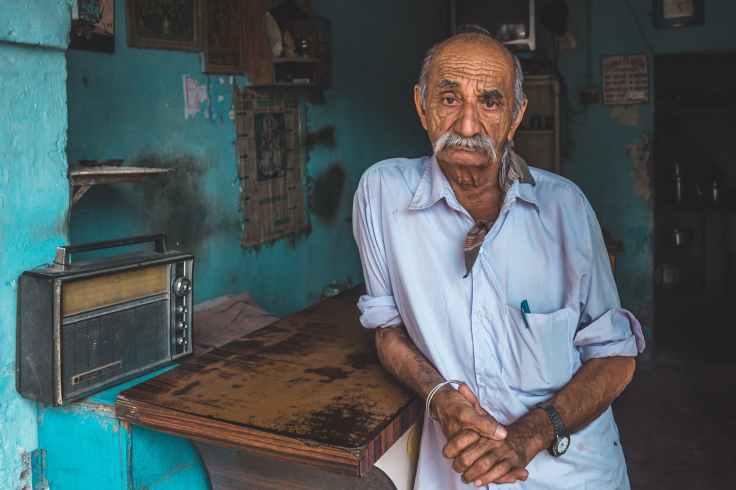
Photo by Krunal Parmar on Pexels.com

And when judgment comes, it is swift and terrible. The Angelic messengers must drag Lot and his family away from their home and possessions. They urge him to flee into the mountains, but he balks and asks to be allowed to flee to the small town at the edge of the destruction. (More about this at a later time…) Lot has lost almost everything of value– he ends up bankrupt; materially, and spiritually. Lot is a vacant shell of a man–fearful and snivelling, weak and empty.

What evil occurs in our neighborhoods today? What are we doing to alleviate it? Combat it? Excuse it? Enable it? If God were to bring judgment to our city or country, would He have to send angels to drag us out of the fire? Would he find even 10 righteous people on our block? In our apartment complex? God didn’t find 10 righteous people in Sodom…In fact, the Bible doesn’t say that he found ANY! Lot and his daughters were spared, but the stench of Sodom and Gomorrah lingered in this family to their ruin.

Lot’s legacy is one of emptiness, loss, and depravity. But there is one bright spot, which we’ll look at next time. God is slow to anger, and rich in mercy. His redemptive plan will include even Lot with all his flaws and weakness. And it extends to each of us, regardless of where we’ve lived, or what we’ve experienced. God didn’t find any righteous people in Sodom; He knew He wouldn’t! More than once the Bible tells us “there is no one righteous; not even one; there is no one who understands; there is no one who seeks God.
All have turned away, they have together become worthless; there is no one who does good, not even one.” (Romans 3:10-12; Psalms 14:1-3, others…) God’s plan is not to find people who are already righteous– His plan is to rescue people like Lot; people like US! And His plan is to include us in the rescue effort, too.

Photo by Julian Jagtenberg on Pexels.com

I’m learning a “lot” from Lot. There are a couple more things I want to explore in the coming days. I hope you will join me.
There my Burdened Soul Found Liberty

Prayer is often about burdens– the burden of need; the burden of sin and guilt; the burden of worry and distress. We bring our burdens to God, to the “throne of Grace;” we bring them “in Jesus’ Name,”, and we bring them to “Our Father.” But how often do we bring them to “Calvary?”

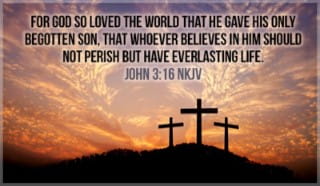
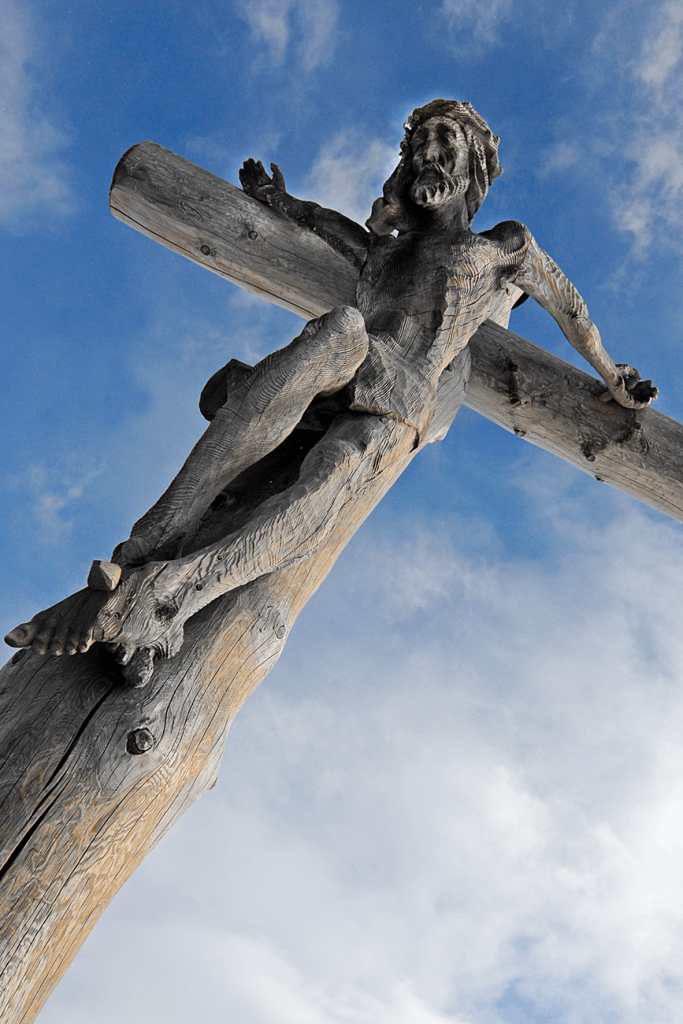
Not the victorious empty cross on the hillside with a beautiful sunset in the background, but the bloody, hot, dry and dreadful Calvary of the crucifixion? How often do we make the pilgrimage to that rocky outcropping with the smell of blood and sweat and death and agony? How often do we cry out to the one who was lifted up, struggling to breathe, pierced, wounded, broken and humiliated? When do we reach out to touch the scars and bruises he received in our place?

Photo by Pixabay on Pexels.com

It is at Calvary that we get the real story of Grace, Mercy, and forgiveness–the real cost of victory and peace. It is at Calvary that we see the full extent of God’s Holiness married to the full extent of His Love. Holiness demands justice; Love demands intimacy– together, they require sacrifice.

And it is at Calvary that we find, in the darkest and most hopeless of moments– God forsaking Himself, giving all He IS to bring justice and reconciliation for all we’ve done–that we trade our burdened souls, our worries, our despair for God’s embrace. Arms stretched so wide they are pulled from their sockets; blood spilled from head to toe; breathless and exposed in His passion for your soul and mine–that’s what God offers at Calvary.

Photo by Pixabay on Pexels.com

Why do I pray? I am ambushed and overwhelmed and enraptured by such a love. God had no need to suffer even a moment’s discomfort. He owed nothing to His rebellious creation; no mercy, no explanation, no hints as to His character (or ours). The creator of galaxies had no need to lift a finger to save one puny planet or any of its inhabitants from His own right to un-create them and blot out even their memory. Instead, He showed the greatest act of Love across all of space and time–to me!– At Calvary!

Photo by Pixabay on Pexels.com

The Mercy Rule

I witnessed a blow-out high school football game last week.  The final score was 57 to 0!  Once the point differential was over 50, they invoked the “mercy rule.”  The game clock would not stop for downs; there would be no more “time out” calls– as this happened late in the game anyway, it just meant that the end came quickly and “mercifully” for the losing team.  It also meant that players were less likely to take dangerous risks in the forlorn hope of scoring big points.

High school football has a “mercy rule”  so that struggling teams don’t become victims of absolute despair.  This team deserved to lose, and they did.  They lost big; but they could’ve lost by a wider margin.  And they didn’t lose for lack of effort– they pushed hard and gave it a mighty try.  But they were not up to the challenge of a better team.


In life, when we come up against Sin, we can give our best effort, and still lose big.  Oh, there are certain sins that seem easily “tamed” or “defeated,” but there are others that end up crushing us– maybe it’s an addiction to porn, or a tendency to spread rumors; maybe we harbor bitterness or doubt, or we can’t control angry outbursts.

close up court courthouse hammer
Photo by Pixabay on Pexels.com

In the end, we are all losers in the game against Sin– whether the loss seems like a close shave or a blowout, the result is the same.  But the consequences are much more dire.  The penalty for Sin is Death.  Not just a single lost game, but an eternal loss of life and hope and light and love!  We are no match for Sin, and Sin shows no mercy.  Even with a mercy rule, our situation seems hopeless.  But it is not.

Death may seem like a a harsh and undeserved judgment.  We “can’t” win.  Or, more correctly, we will always lose.  Even a “mercy rule,” while it may mean that we don’t get the death we deserve, wouldn’t keep us from being “losers.”  This is how many people see God’s offer of salvation– as some sort of mercy rule that keeps us from the fate we can’t avoid.  But even if God only offered mercy, it would be infinitely better than we can imagine.  Because God’s mercy is not just a “rule”, it is a priceless gift of restoration.  We can be free from the “loss” and penalty we deserve, no matter what the “point differential.”  Even a close “loss” to sin is wiped out by God’s mercy.

God’s offer of salvation doesn’t just stop at mercy, however.  It includes something that will never happen in a football game or anywhere else in life.  God extends His Grace– all that we don’t deserve, and never could deserve–above and beyond the already infinite and superior mercy we needed to escape the judgment of Death.  We don’t just escape the horrors of death and hell.  We are gifted with all we need to win the game– to be co-victors over Death and Sin.  God, in His mercy keeps us from losing.  In His Grace, He coaches us, plays alongside us, cheers for us, and gives us the power to become all that we need to be to play our best.  AND, He has already secured the victory.  Far from being in a position where we “can’t” win– God offers us the opportunity to be in a position where we can’t LOSE!

accomplishment achievement adult african
Photo by rawpixel.com on Pexels.com

It is my ongoing prayer that if you are reading this, you have already responded to God’s invitation, through Jesus Christ, to be victorious; that God’s spirit would guide me to write what will be helpful in encouraging you and strengthening your faith (as well as my own).  I pray that you will grow in faith and make the pursuit of prayer part of your daily walk in Faith.  If that is not the case, and you have not accepted both God’s mercy and His grace, I pray that you will take that opportunity today.

Don’t wait for a “mercy rule”– accept the mercy of the Ruler!

Repent, relent, or resent?

I’m revisiting Jonah today.  The book of Jonah is a fascinating study–it’s just four short chapters, but they are packed with messages that inspire, convict, and encourage. More about Jonah here…

waves

At the beginning of the book, Jonah is sent by God to preach disaster to a city steeped in evil and violence.  Nineveh was an ancient metropolis of the Assyrian empire, located near modern-day Mosul, Iraq.  The people of Nineveh had been responsible for attacks against Israel, and it is believed that Jonah may have lost family members in these attacks.  Now God is sending him into the “belly of the beast” to preach judgment and doom.  Instead of following God’s command, Jonah tries to run away and gets swallowed by a big fish.

photography of whale tail in body of water
Photo by Daniel Ross on Pexels.com

This is the part of the story with which most people are familiar– Jonah and the “Whale”.  But this covers only the first quarter of the story!  Inside the fish, Jonah prays.  It is a beautiful prayer of praise and acknowledgement of God’s might and power to save.  This is not the sniveling coward of chapter one, but the great prophet he could have, should have been.  God gives him another chance and this time, Jonah is faithful to preach the message God sends– forty more days and He will wipe out Nineveh.

brown concrete building
Photo by Nicolas Postiglioni on Pexels.com

But something unexpected happens.  The people of Nineveh hear Jonah’s dire warning– a lone voice calling in the streets with a gloomy message– and they repent.  From the least to the greatest, they cry out for mercy, they fast and mourn and do a complete about-face.  Just as God saved Jonah from the fish, He relents and saves Nineveh from destruction.  Jonah’s enemies get to live to see a new day!

The Ninevites repented, God relented, and Jonah resented.  The last chapter tells of Jonah’s temper tantrum in the light of God’s mercy.  God even sends him an object lesson in the form of a gourd vine.  The book of Jonah ends abruptly with God’s last statement.  We never read Jonah’s response; we never find out if he learned his lesson a second time or not.

green trees
Photo by Juan Pablo Arenas on Pexels.com

Even with its abrupt end, the book of Jonah teaches about three important responses:

  • The people of Nineveh repented.  When faced with judgment, they humbled themselves and called for mercy.  They received it.  In spite of their former violence, idolatry, and wickedness, God sent them a warning, and He extended the grace and mercy they did not deserve.
    • Two words of warning here:
      • 1) Their response was immediate, sincere, and dramatic.  That makes for an exciting story, but repentance sometimes comes over time and quietly.  God knows if our repentance is real.  It is not our place to judge someone else’s conversion or apology.
      • 2)  In the case of Nineveh, their repentance was short-lived.  God eventually destroyed the city and the Assyrian empire.  Just because we have a moment of sincere regret or keenly feel a need for mercy doesn’t mean that God has an obligation to extend mercy or to withhold judgment indefinitely.  Grace is a gift, not a negotiation!

pexels-photo-576926.jpeg

  • God relented.  God listens, ready to extend His grace.  He does not punish us as we deserve.  He does not mete out immediate judgment without hope of redemption.  God sent Jonah with a message of potential doom to Israel’s sworn enemy in the knowledge that they (EVEN THEY) would repent.  God sent dozens of prophets to the nation of Israel warning of doom and exile, and they mocked and even killed the messengers!  God is patient, loving, and kind.  But He is also just– evil will not be forgotten or left unpunished.  God will relent, but He won’t retreat, back down, or surrender.

pexels-photo-583437.jpeg

  • Jonah resented.  We don’t know if he stayed resentful, or rediscovered gratitude for God’s grace to Nineveh or to himself, but we are left with a picture that Jesus echoes in the story of the prodigal son.  Jonah is like the older brother who worries more about his brother’s misdeeds than his brother’s soul.  How many of us who have experienced grace sulk and pout when we see others enjoying their first delightful taste of it?  Do we stamp our feet at God when he sends us to bring the Gospel to people we have written off as uninterested in or unworthy of it?  Do we resent being corrected and humbled by a loving God?  Do we worry and fret over our creature comforts as Jonah worried over his gourd vine, while others live without hope, food, or shelter?

Three words, so similar in spelling and sound, but so very different in impact!

Lord, I pray that my repentance would always be immediate and sincere; that I would see others, and their need for your grace, through your eyes of compassion; and that I would not resent your goodness and patience toward others.  Thank you for your patience and mercy toward me, and may I give the same to those who need to see Your face.  Give me the wisdom to trust you and obey, even when my flesh would run away.  May I see the gourd vines and big fish in my life as your gifts.

The Just and the Unjust

“God isn’t Fair!”  I hear this often from angry and bitter people who have suffered losses or disappointments in life.  Some of their losses are heavy and come with great pain– loss of a child, loss of a home, loss of health…these are legitimate losses, and there are no conclusive, comprehensive or comforting answers.  In fact, in many ways, God is NOT “fair”– as we usually define “fair.”  God sends life, health, happiness, sunshine and rain to both the “just” and the “unjust”; to both rich and poor, tall and short, ugly and good looking, gracious and annoying, kind and cruel…  Tragedy strikes at random, some are touched by it, others seem to be plagued by it, and still others skate through life unscathed.

God may not seem “fair”, but let’s look at it from another angle.  God sends rain and sunshine on the just and the unjust.  He sends gifts, and we use, abuse, accept, or reject them.  Circumstances and outcomes are not always pleasant, but does this mean they are “bad?”  And when they are easy, and comfortable, does this always make them “good?” Good people have to endure tragedy– this is usually what we focus on when we talk about God being “unfair.”  And we generally put ourselves in the “good” category.  Why should we have hardship and pain, while “bad” people seem to get a “pass?”    Shouldn’t bad things only happen to bad people, while good people enjoy only good things?  Sounds “fair”, doesn’t it?

But what happens when the world operates on that principle?  If “bad” people are the only ones who get sick, then they deserve to be sick– not healed.  If “bad” people are the only ones to experience poverty, then we don’t need to help the poor or the needy.  Good people should be rich and healthy.  But what if we are sometimes good, and sometimes selfish?  Do we deserve to keep all that’s good if we misuse it, or lose all that’s good if we go astray and then repent?  Is that fair?!  Where is the motivation to cure diseases, share resources, or enforce laws?  Who decides whether your “good” idea is “good” for everyone around you?  Who can ascend to heaven and tell God what is “fair?”

God created us in His image, and that means that we have a spirit that longs for justice and fairness.  It’s how we recognize evil and injustice.  But sin clouds our eyes, and poisons our world–pollution doesn’t just hurt the people who pollute; arson doesn’t just burn the arsonist; drunk drivers don’t just hurt themselves; and so on.  We don’t look at the evil or thoughtless or “unfair” things we have done or said that went unpunished or unnoticed.  And we discount all the unmerited blessings that have come our way– God is often “unfair” in our favor!  We don’t complain about that.

God is not the author of “unfairness”, though He allows it.  And, while I can’t explain away pain and suffering when they occur, I know two things:

God is Gracious– If God’s justice were not tempered by mercy, every mistake, every sin, would be unforgivable and eternally ours to bear.  Every random thoughtless action, and all its consequences, would weigh us down forever.

God is Just–Jesus’s death was about redemption and restoration– He didn’t just die to “save” you from hell– He died to restore you to the person and position for which you were created– whole, pure, unstained and uncorrupted.  This wasn’t “Plan B”– this was His eternal plan, and it includes perfect justice and perfect restoration.

cross jesus summit cross
Photo by Pixabay on Pexels.com

Knowing these things does not take away the pain of the present.  It does not make suffering easy; it does not erase the loss.  But it can allow us to take the next step, and the next, on our journey.  Rain or shine.


We Hold These Truths…

We hold these truths to be self-evident, that all men are created equal, that they are endowed by their Creator with certain unalienable Rights, that among these are Life, Liberty and the pursuit of Happiness–Declaration of Independence, Thomas Jefferson (July 4, 1776)

Full text of the Declaration of Independence

We’re getting ready to celebrate our Independence Day in America.  There will be parades, cookouts, parties, fireworks, and a host of other celebrations.  There will be a lot of flag-waving and patriotic displays.  At some gatherings, there may be readings of our Declaration of Independence.  This document was drafted to outline, not just a list of reasons why they should rebel, but what they hoped to build as a result of their struggle for freedom.

man in red and white musical suit playing flute during daytime in camera focus photography
Photo by Pixabay on Pexels.com

Over 240 years later, this document, and what it stands for, is still relevant and calls us to a high standard– one our nation has not fully achieved.  In spite of the great strides we have made and the example we have been to the rest of the world, in recent decades, we have left behind many of the very truths we aspired to hold.

First, there is a dangerous belief that “truth” is no longer self-evident, nor is it timeless.  We don’t hold beliefs and truths anymore.  We shift with the tide of public opinion and the shadowy promise of “being on the right side of history”– which just means being on the winning side of the current debate within our lifetime and hopefully into the next set of history books.

Second, we have spent countless hours, shedding blood, sweat, and tears over the phrase “ALL MEN”– struggling to reach the promise of equality for all humankind.  We have fallen short of this vision, and twisted it into a grotesque parody of itself.   Instead of working together in unity and inclusiveness, we have devolved into factions each fighting to be “more equal” than others.  Instead of looking at the equal value and humanity of all our people, we point fingers at all the people who are “less worthy”, “more privileged”, “entitled”, “marginalized”, “intolerant”, “judgmental”, who “need to be silenced”, or “need to be kept in their place”…how can neighbors and fellow citizens be so vicious?  One answer may be found in the very next phrase…

adult back view bald crowd
Photo by David Whittaker on Pexels.com

ARE CREATED equal, and are endowed BY THEIR CREATOR…Usually, this phrase is emphasized in the exact opposite places– the emphasis is on EQUAL and ENDOWED.  We have lost the “truth” of being “UNDER GOD”.  We have lost the truth of being created.  We have lost the truth that our worth, our rights, our values, are not a product of our own opinions and observations.

It is easy to point to others and say, “They are ruining our country– They are not living out these truths.”

The harder lesson is to look at my own assumptions, actions, and beliefs.  Do I TRULY believe that all the people around me– of every creed, gender, race, political party, nationality, educational achievement, or economic level are created equal and endowed BY THEIR CREATOR with value, and inalienable rights?  If, at any point, I make assumptions about the worthiness of “those people”, assuming that God loves me more, or will have more mercy or grace toward me because of who I am or how I behave; because of the color of my skin, or where I live, or who I voted for; because of the things I know or the good deeds I have done–I am part of the problem.  Christians, if we bear the name of Christ who created all mankind, and we hate those whom Christ created, the love of Christ IS NOT in us.

man couple people woman
Photo by Gratisography on Pexels.com

That doesn’t mean that we ignore sin and compromise our character, and pervert justice in the name of a comfortable facsimile of equality.  But it also means that we must stop whitewashing hatred and injustice in the name of morality.  Morality without love cannot heal our nation.  Nor can rewriting our history.  Nor can declaring our Independence.

man with fireworks
Photo by Rakicevic Nenad on Pexels.com

The Declaration of Independence is not a stand-alone document.  It had no authority on its own.  If our founders had lost the Revolutionary War; if they had abandoned their vision of a government “of the people, by the people, for the people”; if their descendants had failed to bring a divided nation back into unity; if our parents and grandparents had not struggled and fought to make our nation live up to its principles; and if our generations fail to come together and work toward that same vision– Independence will not be something to celebrate, but something to detest.

While it is called the Declaration of Independence, it is a spirit of dependence– on God, on His truth, and on the goodwill of our fellow Americans, that keeps this document alive and full of promise.

silhouette of people beside usa flag
Photo by Brett Sayles on Pexels.com


We need to pray for our nation– and for our own revival– if we are to truly celebrate this Fourth of July.

Forgiveness is Free: It Isn’t a Free Pass

Yesterday, I posted about praying for our enemies– those who have hurt us.  We are commanded to forgive those who have wronged us, to do good to them, and to pray for them.  But I want to make sure I don’t give the wrong impression about offering forgiveness.

Forgiveness doesn’t ask us to excuse the inexcusable, or trust the untrustworthy.  Forgiveness is trusting that God, in His wisdom, His Holiness, and His timing, will bring justice, healing, and peace, when nothing else can.  This is important to remember, both as someone who asks for forgiveness, and as someone who gives it.

Jesus offers forgiveness–full, and free, and perfect– he died to make that offer.  He gave it to whoever believes on His Name.  But here’s the catch…he didn’t make that offer so you can temporarily wipe the slate clean and go on sinning without consequence.

Oscar Wilde wrote a chilling novel, “The Picture of Dorian Gray”, Dorian Gray/Wikipedia    in which the title character finds a way to trap his soul, with all its ugliness, hatred, anger, and sin, inside a portrait.  No matter what Dorian does, no matter how twisted or evil, he continues to look fresh, young, innocent, and handsome.  The effects of his dissipated lifestyle–drug addiction, sleepless nights, years of hard living, even murder–are all trapped in the portrait.  Over the years, the portrait haunts Dorian with its monstrous transformation from young man to gnarled wraith.  In desperation, he “kills” the portrait– and himself– in disgust and anguish.

dorian_gray_by_pti_spb-d6f1lmr

We live in an age of appearances– if all appears well on the surface, we ignore the deeper, long-term consequences of our sin.  If we “get away with” small sins, we run the risk of sinking deeper into a sham lifestyle.  We go through the motions of asking forgiveness, when what we really seek is escape from the consequences of our own actions.  We begin to see sin as a valid alternative to obedience–I can obey God if it is convenient, but when it’s not, I can just ask forgiveness.  This is a road strewn with lies, excuses, evasions, and it ends in death.  It is a lifestyle that makes a mockery of God, of his Holiness, His Sacrifice on the cross, and His loving offer of restoration.

God doesn’t just want to transfer your ugliness and rebellion into a painting to hide it away.  He wants to remove it “as far as the east is from the west.”  We don’t become perfect in an instant, but our past is expunged so that we can be free to choose obedience and live more abundantly in fellowship with a Holy God.  When we are truly sorry for our sins and seek true forgiveness, we want to make better decisions, we want to right wrongs– we want to redeem the past rather than merely escape from it.

pexels-photo-1018478.jpeg

When we, as imperfect people, offer forgiveness to someone else, we are not able to do what God does.  Our forgiveness is imperfect; like love, or discipline, or a new habit, it needs to develop and grow.  Forgiveness is not about freeing the offender, or wiping the slate clean for the other person.  It’s about freeing yourself to heal, to move away from slavery to the pain of the past, and to learn to trust God to bring justice.

Forgiveness isn’t natural or easy.  No one deserves forgiveness– that’s what makes it a miracle that God offers it to anyone who asks.  But God doesn’t undo our sin.  He doesn’t erase our actions, or clean up the messes we have made.  If I commit murder, God can forgive me, wash away the guilt of what I’ve done, and give me the power to live a life that seeks to do good, rather than evil.  But he’s not going to bring my victim back to life, or cause a judge and jury and the family of my victim to say, “Aw, that’s alright– you’ve probably learned your lesson.  No hard feelings.”  He can (and has) caused amazing healing to happen in such situations, but that’s the exception, not the expectation.

Similarly, if you have been hurt and you offer forgiveness, it doesn’t mean that the other person is no longer responsible for his/her actions.  It doesn’t mean that you were never hurt or betrayed, and it doesn’t mean that you trust them immediately and without reservation. It is not hateful, intolerant, or unforgiving to allow justice to catch up with someone who has hurt you– it IS unforgiving to seek beyond justice to vengeance and self-defined retribution.

pexels-photo-133170.jpeg

This is particularly important in cases of abuse.  If someone has abused you, physically, emotionally, or mentally, they are likely to make you feel the guilt they don’t want to deal with.  “You drove me to it.”  “You are the only one who understands my anger.”  Forgiving this person does not mean– it NEVER means– that you agree with their tactics and false accusations, or that you are giving them a pass.  But it DOES mean that you are giving them, and the damage they caused, over to the God of all justice.  Your case is closed; your final judgment is in his hands, and you are free to begin again– begin to heal, begin to see how God can bring something important and good and eternal out of something broken.  Forgiveness is impossible, but God will give you the power to do it– it may take several attempts, and several years, but when it comes, it will be the miracle of God working through you to glory!

Taxing Prayers

It’s tax time in my neck of the woods, and that means that a lot of people are praying.  Some are praying for a tax refund; others are praying that their tax bill is lower than expected, or that they can somehow find the money to pay it.

Taxes are not pleasant, but they are a constant reality of this world.  Even Jesus had to pay taxes–to an oppressive foreign empire, no less.  The people of his time wanted him to lead a rebellion against Roman occupation.  But even if he had done so, their own religious leaders collected Temple taxes.

There are a lot of other unpleasant realities in this life– injustice, bigotry, hatred, disease, natural disasters, accidents, and death.  God doesn’t remove them, no matter how hard or how earnestly we pray… he may send healing, comfort, or strength to get us through a crisis, but he never promised to end poverty, or remove the consequences of sin, or wipe out cancer–YET.

These are the taxing prayers that we continue to pray– prayers that come from our pain and longing for a new Heaven and a new Earth.  It is in our fallen nature to yearn for the perfection of God’s original creation;  a world we have never experienced, but for which our souls were designed.  In praying for things to be made “right”, we acknowledge that they are, in this present age, very wrong.  And we acknowledge that our best efforts can never be “enough” to overcome the ravages of sin.  Finally, in bringing them to God, we acknowledge that only He has the power and wisdom to “fix” them– in His time.

pexels-photo-449627.jpeg


Taxes are not pleasant, but there will come a day when they are abolished.  God’s love, his mercy, his blessings– they are tax-free, and they are in endless supply.

Even during tax season, that’s something to celebrate!

Blog at WordPress.com.

Up ↑