If is a very short word, but it can cause a lot of trouble in our thoughts and prayer life. It seems harmless enough, but it can be very corrosive.
“If” is generally a speculative word. We waste precious time and energy on things that didn’t or haven’t happened. What if my circumstances were different? Why didn’t I get that promotion “if” I could have gotten it? What if I had made other choices in my past? Would I be in a different place now? Could I have a “different” life? What if something happens to my health? “If” seems to promise a lot of possibilities, and lead to a lot of pointless questions, but it delivers nothing concrete.
“If” is a conditional word. If…then… This is not always a bad thing, but it can warp our thinking about higher things, like God’s Love and Forgiveness. Sin and its consequences are conditional. IF we sin, there are consequences. Some of God’s promises have conditions– “If we confess our sins, He is faithful and just to forgive us our sins…” (1 John 1:9) But God’s love is not an “if”– it is constant and unwavering. His forgiveness is not based on whether we have earned it, or whether we go to the “right” church or say the “right” things. God’s promises are based on HIS eternal character and faithfulness. Nor is God’s truth conditional. It does not change or depend on our feelings or the opinions of our neighbors.
“If” takes our focus away from the present. We spend time wondering “what if..” about the future, or “if only..” about our past. And “if” is passive about the present. It causes us to focus on fear of the future and regret about the past, instead of action and accountability in the present.
“If” only has two letters, but the first one is “I.” I don’t spend much time asking “if” someone else made the right choices (unless I’m judging them, which is also wrong), or if something good or bad will happen to my neighbors. “If” usually focuses on MY wants, MY fears, MY past, MY circumstances.
“If” doesn’t have to hurt our prayer life or take over our thoughts, but it must be kept in check. The Bible has a lot to say about letting the “ifs”, “what ifs”, and “if onlys” take over our thinking:
Matthew 6:25-28 Isaiah 35:4 John 14:27 Jeremiah 17: 7-8 Luke 12:28-30 Psalm 59:16 Philippians 4:6-7
I am always drawn by the stories in the Bible. Stories of ordinary and extraordinary people used by God– sometimes in spite of themselves–to rescue others, to teach others, to serve as examples, and to show how God wants to interact (or discipline) those He loves.
One such person was a man named Saul, son of Kish. Of all the young men of Israel, God chose Saul to be their first king. This was a mixed blessing for the nation. In asking for a human king, they were saying that the did not want to be “ruled” by God or His prophets. God warned Israel through the prophet Samuel that they might come to regret having a human king. They were rejecting the pattern established by God under Moses, and asking for a system of leadership that matched the surrounding nations. This would make it easier to make treaties, do business, and interact with neighboring countries, but it would also bring some of the same problems (succession, power struggles, greed, etc.) that plagued all the other monarchies and empires around them. The choice of Saul reveals not only God’s character, but the character of Israel. God chose a man from one of the least of the families of the least of the tribes of Israel. Saul’s father, Kish, was a man of some power and wealth, but his family line was one of younger sons of younger sons. God often chooses the “least” among us to lead. He is not a respecter of rank or birth, wealth or experience. However, God also chose Saul as a man who “looked” the part. Saul was “head and shoulders” taller than others. He was good-looking and well-educated. Wasn’t this exactly was Israel wanted in a king?
On the day Samuel called a great assembly to publicly anoint the new king, lots were cast to show God’s choice. Among the 12 tribes of Israel, the tribe of Benjamin was chosen– the youngest of the sons of Jacob, and the smallest of the tribes. A lesser family among the tribe was then selected. Finally, the choice was narrowed down to Saul, son of Kish. But Saul could not be found! A search ensued, and he was eventually found– hiding among the baggage! The tallest man in the kingdom– the one who already had been confirmed as God’s choice– tried to hide from his own coronation! And it was God who revealed Saul’s hiding place and forced him to face his exaltation!
The ongoing story of Saul’s reign as king is filled with both triumph and tragedy. Time and again, Saul tries to “hide” behind excuses. He fails to obey God’s command, but blames his weakness on others. God takes away His favor, and His spirit leaves Saul, who descends into paranoia, anger, and madness.
But today, I want to look at the idea that Saul thought he could hide “among the baggage.” (1 Samuel 10:22) Other translations say he was “among the stuff” or “among the supplies.” Saul did not run away from the assembly altogether; he did not reject his role. Yet he tried to hide from the gravity and responsibility of kingship. In many ways, this shows good qualities of humility and an understanding of his own limitations. Saul’s problem wasn’t that he thought he was “born to be king.” Saul wasn’t born to be king– it was an honor thrust upon him. Saul’s problem was that he wasn’t prepared to let God rule through him. Saul would be the titular King of Israel. But who would be the King over Saul’s own life and heart? Saul, like the nation he ruled, ended up rejecting God’s rule. He tried to follow the letter of the law, and the traditions of his people, but he did not always choose to follow the God who had created them, nor did he humble himself to accept God’s correction.
We may not be chosen for a position of leadership. But what responsibilities are we hiding from today? Are we surrounding ourselves with baggage? Do we hide in the busyness of our hobbies or our job? Do we cover ourselves with “obligations” that leave us drained to no real purpose? How many hours do we spend hiding in chit-chat, or watching television, or shopping, or daydreaming? How many times are we volunteering to work with strangers in order to avoid spending time with difficult relatives or neighbors? How often do we offer up the sacrifice of generic worship instead of the sacrifice of a teachable spirit?
Saul had many gifts, which he used to strengthen his nation and expand its territory. He had the opportunity to do even more great things for God and for Israel. But he is mostly remembered for his failures– his defiance of Samuel’s orders and excuses about disobedience; his ongoing murderous pursuit of his anointed successor, David; his consultation in the dead of night with the witch of Endor; his ignoble death in battle… We too, have opportunities to do great things with God’s help and in His power. We cannot hide forever among the “stuff” of life. God will reveal our hiding places– to others, even if we don’t acknowledge them!
Today, I pray that I will come out from behind the baggage of my everyday activities, and be available for God’s good purposes!
This month, I want to encourage you to let people know you are praying for them. This seems like such a simple thing, and not necessarily a way to improve one’s prayer life. After all, didn’t Jesus teach us not to brag about our praying? Aren’t we supposed to pray in private, not calling attention to ourselves? (See Matthew 6:1-15)
There are four “do’s” and a couple of “don’t’s” when it comes to telling others about praying that I want to emphasize today. Not because I have a perfect formula, but these are things I have found true in my own experience, and I think they line up with Biblical principles:
DO:
When you hear a need, pray about it. Don’t put it off; don’t promise to pray at a more convenient time. Do it now. If that means stopping in the middle of a conversation and praying with someone who is pouring out their heart– do it (assuming that it is possible). Not only is this practicing obedience to the prompting of the Holy Spirit, but it is honoring the importance and value of the other person. (see Philippians 4:6; Romans 12:12; Ephesians 6:18; others…) Showing others that their needs are important and that God cares about their needs is NOT boasting or being hypocritical. Just remember to approach with humility. Don’t be offended if they refuse in the moment; don’t use the opportunity to pray “over them”– pray beside them; pray with them; pray for their needs, not your own virtue-signaling. If you are worried about your actions being misconstrued or offensive in some way, ask first. “May I pray for you right now?” “Would you mind if we just stopped and said a quick prayer about this situation?” They can always refuse to let you pray immediately, but at least they will know you sincerely want to bring their burden before God. Also, if there is practical help you can give in the moments following, don’t hold back. Maybe their need is beyond your ability, but if you can direct them to counseling, aid from a local church group or non-profit, or offer to follow-up, you should do what you honestly can. Don’t promise beyond your ability, but don’t just pray and walk away, either.
The same goes for on-line requests for prayer. Don’t just scroll past someone’s need. It takes three seconds or less to type, “Praying”, or “I’m praying for you.” Again, if there is practical help you can offer, this is an opportunity to do so. There is no need to go overboard– but letting others know that someone “out there” is praying can be an enormous encouragement.
Be specific. Generic prayers aren’t “bad,” but they are often hasty and leave something lacking. The same goes for practical help. One of the mistakes I often make is to say, “If there’s anything I can do, give me a call.” I mean it– I want to help, and don’t know just how. But this puts the burden of asking on the person you meant to help! If you don’t know what to do– say so– but give them something solid to go on. It may be a phone number or e-mail, or an idea of a service you are able to offer–“I have Wednesday afternoons off if you need someone to drive you/go with you to an appointment.” or “If you ever want to meet for coffee…” or “I know the church has a Benevolence fund for unexpected bills and expenses. I could contact someone or give you their contact information,” etc..
Follow through! If someone asks for prayer for an ongoing concern, make a point of checking in every so often. Call, send a note or text, stop them at church and let them know you are still thinking of them and praying for them. This can also be another opportunity to offer practical help, a hug, or other form of encouragement. Often a week or two can be time enough to reveal practical steps to meet some of the smaller needs related to a big crisis or situation.
DON’T:
Say you will pray and then forget to do it. I used to be bad about this on-line. It only takes three seconds to promise to pray or to type a message about prayer, but don’t say it/send it if you aren’t going to act on it. Either stop then and there to pray about it, or stop and write it down where you will see it later and act on it! Good intentions are NOT enough to bring real encouragement and change. And good intentions do not form a disciplined and growing pursuit of prayerful living. In fact, such lost opportunities can become a barrier to our prayer life AND our relationships with others.
Break confidences. If someone asks publicly for prayer, it is fine to respond publicly that you will pray or are praying. It is NOT fine to then share someone else’s burden with ten of your other neighbors or closest friends. It is not fine to repost someone else’s request without their permission. It is not fine to publicize others’ private burdens, confessions, or pain. You may want to ask others to join in prayer, but don’t share details and names. Even if you have permission to share a prayer request, it is not for you to pour out someone else’s feelings, relationships, or struggles. This is another area in which I’ve had to learn a lot. I tend to over-share my own struggles when asking for prayer, and I want others to be concerned, so they will pray also. But it is very easy to fall into gossip, oversharing, and speculation, which has no place in prayer– and no place in my relationships! Share only those specifics that are helpful– “S______ is battling cancer. She has an appointment with her oncologist this week and would like prayer.” It is tempting to give the time and date of the appointment– and S______ may be ok with you doing this so people can be praying “in the moment.” However, she may be concerned about too many people knowing when she will or won’t be home, which might tempt a burglar. She may not want to receive a host of phone calls later that afternoon from people wanting “updates” or wanting to “cheer her up” when she is exhausted. Respect others’ privacy.
We are commanded to pray for one another (see Galatians 6:2; Colossians 4:2, etc.) And prayer is the most powerful tool we have to help those around us. Even though I recommend “practical” help along with prayer, I do not mean to say that prayer is impractical. Prayer IS practical and powerful. It should never be dismissed as “lesser than” other forms of help. But neither should it be used as an excuse not to meet needs in others ways as God gives us resources.
Making a habit of praying for others– really responding to needs immediately and faithfully in prayer– is a great way to experience its power. We will see God working through the prayers we offer– not just in the way He answers in the lives of others, but in the way He will change our hearts and minds about situations, relationships, and in growing Faith and confidence. It will train you to listen for needs, and to prepare to help. It will also train you to see needs in your own life, and make it easier to trust God with the needs in your life. You will find it easier to share your needs with others, and to accept help when you experience how much your efforts (even small ones) can encourage others. It may even encourage you to begin networking with others to meet needs and be proactive, instead of just reacting to needs after they are felt! If you are already strong in this area, be grateful for the way God is using you in the lives of others. If you are struggling in this area, I hope you will persevere. God is gracious in giving us opportunities to grow and serve!
Many years ago (never mind how many..) there was a television show called “Green Acres.” It was a comedy about a couple from New York City, who moved to a small town in the country. The husband was excited about the move– he was tired of the rat race and bustle of the city; his wife, however, was reluctant to leave all the opportunities– she missed the shops and activity.
Green Acres was one of a group of shows that both celebrated and poked fun at rural life in America in the sixties and early seventies. The shows were very popular among viewers, but were panned by critics, and cancelled by network executives, even at the height of their popularity. https://www.closerweekly.com/posts/cbs-rural-purge-mayberry-rfd-green-acres/
More than fifty years later, you can often see these shows on networks like TV Land. They are still popular among some viewers, who like the nostalgia and the gentle humor. These shows all have happy endings. They don’t involve grotesque murders, lots of foul language, preachy lectures on social issues like homelessness, domestic abuse, or drug addiction, or copious amounts of sex, violence, or nudity. They don’t talk about war and gangs, poverty or prejudice, or urban sprawl. They celebrate family, fresh air, hard work, community, truth, justice, kindness, and humility.
What does “Green Acres” (or Andy Griffith or any other old TV show) have to do with Psalm 23 and Pursuing Prayer? Not a lot, but I would like to look at the phrase in verse 2– “He maketh me to lie down in green pastures..” Not the same as “Green Acres,” but I think the green pastures of God are viewed by the world in much the same way as “Green Acres;” scorned by a small and vocal group, but quietly cherished by many others.
Our Shepherd causes us to lie down– to find rest and nourishment and refreshing– in green pastures. That doesn’t mean that He won’t lead us through times of bustling stress, struggle, anxious moments, or rugged paths. But He will make us lie down. He will cause us to stop our frantic rushing, and renew our strength in green pasture. He doesn’t offer green pastures as an “escape from reality”, but as a reminder that dealing with reality requires us to see beyond the immediate stresses of the day and listen beyond the distracting noises around us.
God’s green pastures won’t look like “Green Acres” with old tractors and fresh-mown hay. They may not look like the small town simplicity of Americana. In fact, God’s green pastures may not be places at all, but practices– spending time in Scripture, time in prayer, times in fellowship and encouragement, time in meditation, even time in service to others. You may find green pastures in the heart of a barrio, or in the quiet of a walk in the forest, or in praying as you climb a flight of stairs or fold laundry. But you will find spiritual nourishment and renewal in God’s green pastures, wherever they are and whatever they look like. https://www.biblestudytools.com/commentaries/treasury-of-david/psalms-23-2.html
God’s green pastures will have many critics, who will ask that you cancel these practices. They will call them old-fashioned, failed practices– naive, simplistic, even laughable. But as we respond to God who make us lie down in green pastures, others are watching– and taking heart. The critics in our life may be loud and insistent. It may seem like they have the power to “cancel” our rest, and pave over the green pastures to build another fast food restaurant. But others are watching in silence, longing to experience the kind of rest and refreshment they see in us– the kind that cannot come from sophisticated treatises on war or crime, or harsh critics’ disdain, or yet another trip to an upscale shop or fast food restaurant or spa. God may ask us to stay in Manhattan, or Tokyo, or Nairobi, but He doesn’t want us to live in the same way as many of our neighbors. We are to stand out and stand apart. And that will make us targets for criticism, but it will also make us shining examples!
A few years ago, I left a full-time job– a job I loved–to help my husband open up a second-hand store that also sells amateur radio equipment. Most people would look on our store as a failure–it doesn’t make a lot of money; we don’t have hundreds of sales in a week; it hasn’t made us famous or important. But it gives me the opportunity to spend time talking and listening to the customers we do have, many of whom are lonely. It gives David the opportunity to do the same. And it gives me time to pray more, spend more time in God’s word, and write and edit this blog. It has allowed me more flexibility to spend time with my family. And it has reminded me that God is our provider and protector in ways I took for granted when I drew a bigger salary and had a more prominent position. From a worldly perspective, this is a move I would never have chosen. I spend most of my days unnoticed and unpaid–hardly a recipe for worldly fulfillment. And many days, I actually miss the bustle of deadlines, the drama of staff conflicts, and the extra money in the bank. Some days I am frustrated and ungrateful and restless–God has led me to the green pastures, but I refuse to lie down and receive the rest He wants to give me. I’d rather be shopping, or running the rat race. And God may choose to make me get up and move through valleys, up hills, or over rocky paths to the next pasture. But for this season, in this pasture, He is teaching me to lie down–to be less busy about my business, and more open to His.
The world may offer us Times Square; God offers us fresh air. The world may offer us clever ways to spend our time and money– God gives us peace that passes all understanding. God’s “Green Acres” is the place to be–resting where and how our Shepherd leads us.
My prayers will not change the world. Read that again, because it is important to come to grips with certain realities, and with certain half-truths. My. Prayers. Will. Not. Change. The. World. BUT…
We have a great tendency to think in extremes. And the subject of prayer is no exception. Either our prayers seem powerful or they seem empty. But we live in a world of limitations, a world of boundaries. I can do small things– things that make a small difference. I can help a neighbor. I can give out of my abundance. I can exert whatever power or influence I might have. I can write or speak in an effort to persuade.
But I can’t move mountains. I can’t fix a broken soul. I can’t end wars or stop famines or control the wind and waves. And my prayers cannot FORCE God to bend to MY will; to act as I see fit, or in My timing. It is not my actions or my wishes or my words– even in prayer– that will ever change the world.
Sometimes, others will see this as failure. They will say that prayer is ineffective, or weak, or no more than wishful thinking. They see it as an abdication of power– asking God to do something instead of taking action. And that kind of faulty thinking can take root and cause me to stop praying as fervently or as faithfully as I once did. It might make me doubt God’s goodness or His willingness to hear me, or to bless others. Worse, I may see His blessing of others as a slight to my own prayers and pains. I may see my prayers as a waste of time, and I may place more value on striving and struggling and fighting over the power of Faith and Obedience.
Keep Praying!
The truth is that God is the only one who has both the power and the wisdom to save the world– and us– from all the problems we see around us. And the other truth is that HE is the one who invites us to pray as an act of communion with Him IN all his power, wisdom, mercy and love. Our “small” prayers are tied to a Great and Mighty God!
My prayer will not CAUSE God to change circumstances, but it WILL involve me in the process of change– it will allow me to confirm and acknowledge God’s work as it unfolds.
My prayer may not result in immediate change of my circumstances or in the face of great disasters. But it will result in a change in ME. And it will result in changes I can’t even begin to imagine– changes that may unfold over generations; changes that may multiply ten-thousand-fold! Prayer will put me in a place where God can more easily mold me and shape my character to endure and thrive and even ACT in ways that make a positive and lasting difference.
Even prayers of worship and thanksgiving, that may seem to go in only one direction– we have no idea how God uses such prayers to pour out His greatness and worthiness on those of us who are unworthy. God’s ways are mysterious and unpredictable– but they lead to unexpected miracles and unmerited blessings.
Keep praying in the face of doubt. Keep praying in the face of exhaustion and pain. Keep praying in the face of persecution and misunderstanding. God is listening. God is at work. And others are watching and listening, too. Your prayers may be the inspiration to someone else who is struggling. Your prayers may be the seed that is being planted in the very person who is persecuting you. Your praise may be the fuel that will start a fire elsewhere in the world!
I went to a weekly prayer meeting the other day. We started with a reading from scripture. It was just a short passage from Mark (chapter 1, verses 29-39) about Jesus’ early ministry. But I was so excited about the insight we got, that I want to share it here.
29-30 Then, leaving the synagogue, he and his disciples went over to Simon and Andrew’s home, where they found Simon’s mother-in-law sick in bed with a high fever. They told Jesus about her right away. 31 He went to her bedside, and as he took her by the hand and helped her to sit up, the fever suddenly left, and she got up and prepared dinner for them!
32-33 By sunset the courtyard was filled with the sick and demon-possessed, brought to him for healing; and a huge crowd of people from all over the city of Capernaum gathered outside the door to watch. 34 So Jesus healed great numbers of sick folk that evening and ordered many demons to come out of their victims. (But he refused to allow the demons to speak, because they knew who he was.)
35 The next morning he was up long before daybreak and went out alone into the wilderness to pray.
36-37 Later, Simon and the others went out to find him, and told him, “Everyone is asking for you.”
38 But he replied, “We must go on to other towns as well, and give my message to them too, for that is why I came.”
39 So he traveled throughout the province of Galilee, preaching in the synagogues and releasing many from the power of demons.
Mark 1:29-39 The Living Bible
The first thing we noticed was the timing. Jesus had just been at the Synagogue, so this was likely on the Sabbath– the day of rest! Jesus and the disciples walked to the house where Simon Peter and Andrew lived. This would be close to the Synagogue, since travel was curtailed on the Sabbath. But instead of being able to rest, Jesus ended up healing Simon’s mother-in-law. Then people start flooding in, before and after sunset, begging to be healed. After sunset, even more people could come from a farther distance, and many were there just to watch. Jesus worked far into the night, healing and casting out demons.
But look what happens in verse 35. “The next morning, he was up before daybreak and went out alone into the wilderness to pray.” Jesus might have been tempted to sleep in. He might have decided to wake up and find a quiet corner of the house to say a quick prayer for the morning. He might have done many things. But He chose to wake up before dawn, even after an eventful evening, and go off into a solitary place to spend time with His Father.
Prayer was a priority with Jesus. Not sleep. Not comfort. Not convenience.
But later, Simon and the others tracked Him down and asked Him to come back. The response to His healing of the day before had been phenomenal. People were asking for Him, waiting to see more of His miracles and hear more of His teaching! Surely this was success!
But Jesus didn’t come to have a popular ministry. He didn’t come to do command performances and His miracles were not meant primarily to impress and astonish people, or to draw vast crowds. Jesus came to do His Father’s Will. And so He dismissed the opportunity to do an “encore.” Instead, He was focused on His true mission– to preach the Kingdom to the other towns as well. Some of these towns would be eager to hear the message and receive the blessings and healings that Jesus brought. Others would mock Him and urge Him to leave their village or city. But His mission was clear– He would travel where the Father led Him, and preach the message the Father gave Him. Even at the expense of His own popularity; even at the expense of the temporary success of his ministry.
What did Jesus and His Father speak of during that early morning encounter? Did Jesus talk about how tired He was from the day (and night) before? Did He share with the Father the success of His healing, and the great need in that village? What advice did He seek from the Father?
We know only that Jesus got up from Prayer and was immediately obedient to the Father’s Will. Though His trusted friends and companions were encouraging Him to return and repeat the success of yesterday, Jesus walked into the unknown, following the Voice of His Father. “For that is why I came.” Jesus could have done much good by staying put and continuing the success He had on the Sabbath. But that wasn’t why He had come. He didn’t just come to do “good.” He came for much more! Sometimes “good” can be the enemy of the “best.” It takes discipline, humility, and obedience to follow God into the unknown– especially when we are tempted to continue in our own power to do what others deem as “important” and “good.”
What voices are speaking to us today? Have you taken the time today to speak to the Father and seek His direction? Have you submitted yourself to His Will? Are there people “looking for you” to do good; to replicate a good performance from yesterday? What if God is calling you to move on? What if He has something better in mind? Maybe He is calling you to go out into a solitary place, where you can better hear His voice over the noise of the crowds or even the pleas of your friends.
My prayer today is that I will find the discipline to meet with God early, listen intently to His voice above the others, and obey! May I do not just what is “good” in the short-term, but what is “best” in the long-term. Even if “everyone” is looking for me– I want to be looking for God first and foremost! Don’t you?!
My Mom died recently, and my brother and sister and I are cleaning out her estate. This is by no means a small task, as my Mother saved EVERYTHING! All of our elementary school report cards, 4-H Awards programs, class play programs, thousands of photos (mostly unidentified), post cards from all of our vacations (including places we re-visited!), ticket stubs from movies and football games and banquets, our old baby shoes, broken toys, recipes clipped from magazines and old boxes, letters we sent from college, and letters sent to her when she was in high school. She even saved such things that her own mother and grandmother had saved! Souvenirs and memories, all tucked away or piled up throughout her house.
My mom was what is known as a “hoarder.” She was pathological in her collecting bits and pieces of everything that went on all around her. She had clothing she had never worn. She had Christmas gifts she had opened and put back in their wrapping, but never enjoyed. She had books she had never read, DVDs she had never watched, and pots and pans she had never used. She had stacks and bags and boxes of memories she always meant to sort through– someday.
As she grew older, she sometimes would lament that we, as her children, would be burdened with the job of sorting through all her “stuff.” Even so, she wouldn’t let us touch any of it until the last months of her life, when it was obvious that she would never be able to do it herself. And we weren’t to throw anything out– only make an attempt to organize it all!
Of course, now we are throwing out the majority of what she kept. Much of it was damaged by being stacked and stored in the haphazard way it was. Some was damaged by a leaky roof, or mice. Many of the things that are damaged were once useful, and might have been useful yet if they had not been hoarded and held back. Blankets and towels that might have been passed on were left to be chewed up or rotted. Books and photos are warped or stained.
I loved Mom, and she was a great woman of God– a prayer warrior and evangelist. But she was human. In this part of her life, she missed some great opportunities to bless others with the resources she had. She even missed the opportunity to enjoy many of the things she obsessively stored for “someday.” Moreover, she saved many things that weren’t useful. Old boxes and jars of spoiled food, old bills and advertisements, expired credit cards and driver’s licenses.
I have been reminded of many things as I’ve helped go through Mom’s “things.” There are many wonderful memories that still can be found in all of her souvenirs. I found an old storybook– one of my favorites–about a Mama Bear and her naughty, curious little cub. “Why do you love me?,” the cub asks after getting into trouble yet again. “Because you’re my little bear,” she answers as she cleans the wounds and lovingly carries her cub home. Love transcends mischief. It transcends things like lost opportunities and hoarding tendencies, and the frustrations of life.
But sometimes we hang on to things, not out of love, but out of pain or desperation. Mom was a child of the Great Depression. Her family had to move a lot when she was younger. She was forced to give away toys and clothes she wanted to keep; forced to leave old friends and make new ones; forced to make things “last” when new things couldn’t be had. She spent many years having to be frugal and careful to make small memories last a lifetime. She became obsessed with collecting “souvenirs” of even the smallest events, even tragic ones, and holding on to what was “good enough,” even if something better was offered.
Many of Mom’s “souvenirs” have become baggage for those of us who follow. And many of our “souvenirs” will be baggage for those who follow us. Some of our scars will be passed down to our children. Some of our hopes and dreams will be unrealized–unopened and unused gifts that “might have been.” Others objects and experiences will be pleasant reminders of the love that lasts beyond our own lives and limitations. But objects, in themselves, cannot take the place of the actual experiences of joy, love, and peace they are meant to represent.
God wants us to hold fast to certain things. Truth. Hope. Love. Faith. But He calls us to let go of other things. Bitterness, resentment, anger, self-pity. I know that in my final days, I will probably find that I am still carrying some baggage. But I hope that I will find more souvenirs– good memories of a life enjoyed, goals accomplished, and relationships that have stood the test of time. Mom had those in abundance. But some were hidden among the baggage–treasured memories of those who loved her, and those whom she loved, surrounded by the baggage of heartache and longing. I pray that those who follow me won’t have to search among the ruins to find my souvenirs, or hunt through piles of souvenirs to find my treasures.
At least once each month, I want to encourage you with a practical step in pursuing a life of prayer. Today, I want to talk about how you can pray globally.
What does this mean, and how does it look? Well, it means making a concerted effort to pray for different places, people groups, and issues around the world. How you do that may look very different from how I choose to do it, but I’ll give you a peek into my method. You can tool around until you find what works for you.
I mentioned in a previous post that I once found a commercially-produced “Prayer Journal” on sale at a Christian Bookstore. It was a marvelous book with a world mission focus. Each week, there was a short discussion of a different “at-risk” people group. There was information about the region(s), the population, the average life expectancy, the literacy rate, the estimated percentage of Christians (as well as percentages for other religions) in the area, and more. There were suggestions about how to pray for the people/area, and then space to write notes and other prayer requests. I have never again found such a resource in a bookstore, but I decided to make my own journal.
My journal takes up four notebooks– one for each quarter of the year– roughly ninety-two days in each notebook. Each day has a heading with a geographical location: a continent, a nation, a state or province, a city or town, even major rivers, deserts, and oceans. (In addition, I have space for the names of individuals with birthdays or anniversaries, and a space for urgent and immediate prayer requests for that day. In the front of the journal, I have a list of “Prayer Points” for the various days of the week– you can check out my page on Prayer Points here Proactive Prayer Points. The notebooks can be used from year to year, and have space on the back of every page to record answers.)
I don’t have the marvelous demographic information that was in the earlier journal, but I have an almanac or the internet if I want to dig deeper. In putting the notebooks together, I alphabetized all the names of places I wanted to include, narrowed the list down to 365, and assigned one place to each day of the year. Yesterday, I prayed for Fennville, a small town in Michigan where I used to be a student teacher. Today is Fiji, which comes next alphabetically. So I will be praying for Fiji, along with other people, places, and issues on my list. I may not know a lot about Fiji- I know it is an island republic in the South Pacific. I know that many Fijians are Christian, while others are Muslim or Hindu. But God knows everything about this group of islands– He knows if it is the rainy season there now, or if the people are battling sickness or poverty, or if they are in a season of clear skies and abundance!
So WHY do I recommend praying for Fiji (and all the other nations of the world, as well as major cities and even deserts?) Why Global Prayer?
First, it is Biblical, and it is a step in obedience. We are to “go into all the world” to preach the gospel (Mark 16:15). So we should also pray “into all the world”– pray for those who are going to other nations; pray for those who need to hear the Gospel in other nations; pray for those who are going FROM there into all the rest of the world. “For God so loved the WORLD…” (John 3:16). And so should we. Whether we can travel or not; whether we can study all the needs and factors of each nation or area or not, we should remember them in prayer.
Second, it will change your prayer life. I believe it makes my prayer life richer and more effective. Once again, it takes my focus off of me and lifts it to the God who holds the whole world in His Hands. I’m not just praying to “my” Father– I’m praying to “Our” Father. He loves me, and He listens to me, but He is big enough, powerful enough, and compassionate enough for the entire world! Once I acknowledge that, it changes the way I approach prayer.
It also is a great way to learn about the world and about other people and cultures! Imagine meeting someone from Fiji, and being able to say, “I have prayed for your homeland!” Imagine how much joy it can bring to pray for those places that have special meaning to your family and friends. I haven’t traveled the world, but I have met people from many countries. I’m still waiting to meet someone from Fiji, but if I do, I will have even more joy in praying for it next year on this day!
It brings discipline to my prayer life. Sure, I feel an urgency to pray for “hot spots” around the world– wars and famine, political upheaval and natural disasters call to mind certain areas of the world for prayer. But praying for an area without such prompts requires that I have some system in place. And who knows what God’s plans are for any given region on any given day, or what needs may arise that I can’t know about in advance?
So HOW can you pray Globally? I can recommend a few first steps:
Make a list. Maybe start with a single week. List seven locations– nations, cities, even continents or oceans (there are seven continents and “seven seas” after all). Perhaps you want to list places both near and far– local towns or villages AND faraway lands–over the course of a month or even a year.
Set up a system–you may want to use a notebook, planner, or calendar. Or you may want to set up a database. Your system can be set up weekly, monthly, yearly— whatever will work for you.
Be flexible and persistent. It has taken me nearly 20 years to settle on a system that truly works for me. Don’t be afraid to make changes or say “no” to a system just because it works for someone else.
Pray about it!
Resolve to DO IT. Many years, I spent so much time trying to “perfect” my system that I neglected to do the actual prayer! Please don’t let this happen to you. And don’t let guilt or impossible expectations keep you from your pursuit. Even if you take a step backward, forget a day, stumble through a week– Keep going!
Thank God for the opportunity to pray for others. Thank Him for loving the whole world (including you)! Praise Him for being a God who watches over every grain of sand and every drop of water in the oceans, over every bird of the air, and every precious life!
Imagine what can happen in our world if even a few of us are faithful in praying for all of us?! God is giving YOU an opportunity to be involved in HIS work throughout the world. Will you pray for Fiji today? Who can you pray for tomorrow?
I could have smiled when I paid my utility bill the other day– When the clerk asked if she could help me, and thanked me, and sent me on my way.
I might have offered my unused coupons to that young man who was shopping– The one with two boisterous kids in the cart, and very few groceries. Maybe he would have been offended. But maybe it would have given him an opportunity And a little hope.
I thought about calling an old friend and asking if we could pray together. Maybe we could have met for tea or gone for a walk together.
I had planned to clean out the closet and set aside some clothes to take to a local shelter.
I considered calling my sister, sending a card to that widower from church, or e-mailing my cousin…
I really needed to spend a little time in confession and repentance, and cleansing. I needed to be renewed, recharged, and transformed. At least, I thought I did. But something else claimed my thoughts, and my good intentions. Now, I just feel worn and guilty and unworthy.
And the “thing” is– I didn’t do anything horrible. I didn’t make anyone cry, or rob a bank. I didn’t burn dinner or break the speed limit. I didn’t break my marriage vows or embezzle a fortune. I didn’t break the law– I didn’t even break a sweat!
I just Didn’t.
Lord, today, I pray that you would light a fire under me. Help me to see the opportunities all around me– tiny acts of kindness, and truths that I need to hold tight. Show me people who need a listening ear, or a helping hand, or a word of encouragement. Help me to move “at the impulse of your love.” And when You direct me to be still, help me to be still and KNOW that You are a God of purpose and hope; joy and abundance. Help me to BE first–to Be obedient, to Be humble, to Be available. But then, help me to DO what you would have me do for Your Great Name. Thank you for second (and third) chances to BE and DO all that brings You honor. Amen.
Prayer can take many forms and be many different things. I write about prayer as a pursuit– something done with purpose and with some kind of discipline. Prayer is not meant to be just another discipline in the life of a believer. “Pray without ceasing,” Paul says in 1 Thessalonians 5:17; but this is not meant as an exercise to pursue quantity of prayer over quality, or to spend every waking moment consumed with prayer to the exclusion of all else.
However, we are called to be disciples– and that necessarily entails learning discipline. Any activity taken on without discipline can’t really be called a pursuit. It may be a hobby or an entertainment, but pursuit involves direction, dedication, and focus. And this includes our prayer life.
I want to be very careful in discussing this aspect of prayer, because I believe that there is a real danger of letting the discipline overshadow the purpose of prayer. HOW we pray is never more important than WHY we pray, or to WHOM we pray! But failing to make a plan for prayer can cheat us of the benefits of learning to pray deeply, consistently, and with greater focus.
With this in mind, I want to spend some time each month talking about ways to “grow” a life of prayer. Today, I want to focus on journaling as a way to pursue prayer.
As with any discipline, the key is consistency. That’s why journaling can really help. Keeping a record every day of things to pray about, of reasons for praise, of people or issues to bring before the throne of Grace, can keep us focused. It can also help us chart God’s answers and His work in our lives and the lives of others. I keep four separate notebooks– one for each quarter of the year. But there are wonderful daily journals and notebooks that can work as well. Some come pre-printed with scripture or prayer prompts for each day. Some people use a pocket calendar or calendar app on their phone or computer. The method isn’t as important as having a planned approach.
I recommend having a daily focus that is consistent from week to week. For instance, on Sunday, I focus on The Church– missions, local church congregations, persecuted churches, evangelism effort, etc.. On Monday, I focus on Family and Friends. Tuesday, I pray for the Government– local, state, federal, and leaders of other nations. Wednesday is Community–community services, schools, businesses, neighbors, even roads and parks and utilities! Thursday is Global Day– things like war and drought, natural disasters and diseases. Friday, I focus on business and finances– my own, and others. Saturday is a day to pray about cultural issues, like abortion, marriage, gender issues, etc. That doesn’t mean that I don’t pray about family members on Thursday, or about a school shooting on Sunday. But it means that I pay special attention to those matters on particular days. Here are some reasons why:
God wants to hear from me about everything. But without a plan, I tend to pray about the same few things over and over. I pray about whatever is worrying me in the moment. And only that. God wants me to be aware of all that He is doing. He also wants to remind me that He is LORD of everything; big and small, immediate and long-term, far away or around the corner.
God wants me to be consistent and persistent in praying. But that doesn’t mean praying obsessively. Obsessive prayer can become nagging, doubt-ridden, desperate pleas. God listens to our prayers. And we can trust Him, even when we don’t get immediate answers or relief. We don’t stop praying, but we also don’t stop trusting Him for the next step in the journey. God is bigger than just one aspect of my life– no matter how urgent or overwhelming that aspect may seem today. My focus needs to be on God’s sovereignty, and not just my immediate circumstances.
God works in mysterious ways. I may not feel like praying for my Governor, or my neighbor, but it may be that my faithful prayer today is what God will use to make changes in some other aspect of my life. Praying for what I have on my list, rather than just what pops into my mind may actually remind me of something else, and help me see how God is working in an area I might have missed otherwise!
By practicing this discipline in prayer, I am learning discipline in other areas of my Christian walk.
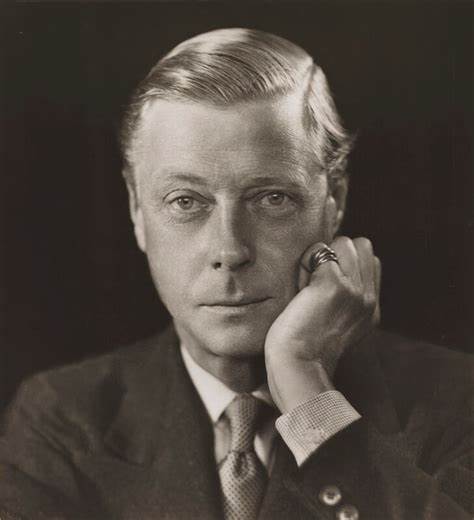
I read an interesting article on-line the other day about the late Duke of Windsor. Born as the heir to the throne of Great Britain, he was trained from an early age. His father, the King, wanted him to learn discipline and honor, so as to be prepared to assume his role. But Edward despised his father’s training. He found his father to be harsh and critical, prim and joyless. And he rebelled. He took little interest in the affairs of state, preferring to focus on his own pleasure. As his father grew older and weaker, Edward was asked to take on more royal duties. He enjoyed making appearances at parties, but despised many of the other tasks– letter writing, or visiting factories or various parts of the Commonwealth. He refused to settle down and marry, until he met Wallis Simpson, who was twice-married, and separated from her second husband. She was also an American citizen.
Edward VIII wanted to defy the laws and traditions of his own nation in order to marry. When this proved to be contentious, he decided to abdicate his throne, marry Mrs. Simpson, and live abroad. Instead, his brother became the next king (George VI), guiding his nation and the commonwealth through the difficult days of the second world war.
For many years, the myth of a king who gave up his throne to be with “the woman I love” has prevailed. But there was more to Edward’s abdication than blighted love. Edward was not incapable of ruling, but he was unfit to rule it well. His lack of dedication to his duties and citizens became evident in the very first crisis. Those who were working with him during his short reign witnessed his lack of care or concern about paperwork, and his selfish insistence on doing what he wanted to do, and not what was expected of him or of benefit to his people. He was a man without discipline and without a clear moral compass https://www.dailymail.co.uk/news/article-417388/Prince-Charmless-A-damning-portrait-Edward-VIII.html.
The Bible is filled with many examples of kings throughout the history of Israel and Judah who also failed to learn discipline or restraint. Their desire to reap the benefits of their position without learning to fulfill their responsibilities led to the moral, and eventually the physical and political collapse of their nations. They did not make a habit of seeking God, or of listening to His prophets. They sneered at good advice, and defied the laws of Moses and the rules God had given for the kings. Some of them worshiped other gods; some even sacrificed their own children to foreign gods or goddesses. They failed to keep the sacred holidays; they failed to read the Word of God; they failed to pray– except as a last resort!
We often perceive prayer as a personal practice– and it is. But how we choose to develop our prayer life may be tied to how we choose to develop the rest of our lives. We don’t need to be rigid and legalistic about it. But we do need to live– and pray– with purpose, if we wish to follow the example of Jesus and grow in our walk with Him. Not only does it impact our life and growth– it impacts our witness and our influence as well. Pursuing prayer in a disciplined way may have a far-reaching impact on our life and the lives of others– even in the generations to come. For more, see the page Why I Keep a Prayer Journal








































 Pursuing Prayer