More Evidence of Things Not Seen…

I have a story of a miracle that happened this past week.

This has been a difficult year for my husband and I. We had COVID back in February, and between hospital bills and David being unable to return to work for several weeks (and then being able to return only part-time), our finances have been rather tight. God has been faithful throughout, so it was a lack of faith that had me in a panic at the end of the week. Several of our monthly bills come due on the 10th each month, and we had only enough money in the bank to make a partial payment on one of them. David got paid on Friday (the 10th!), but that was still only enough to pay two bills. The one bill I was unable to pay was our health insurance premium– not a comfortable choice with our continuing health issues! We would be behind again, as I had paid last month’s bill a couple of days late. I had no idea when we would have enough money to make this month’s payment.

Photo by Mikhail Nilov on Pexels.com

So Friday, we got a statement from our health insurance/health share network. I was afraid to open it. It wasn’t our regular monthly statement, and it was on pink paper, which generally means a warning about a past due account, or worse, a cancellation notice. I was sick with worry– so much so that I put the statement aside, afraid to open it and read the worst.

Photo by Andrea Piacquadio on Pexels.com

By Saturday night, I was frantic. I couldn’t sleep, wondering and worrying. I “knew” that God was aware of our situation, and that He was in control. I also knew that another big bill would come due on the 15th– with no money in sight. I cried, and pleaded with God to help me trust Him, and to meet our needs.

Photo by Alex Green on Pexels.com

At that point, I heard a clear prompting from the Holy Spirit to find the statement and open it. How could I say I trusted God when I was too scared to even look at the situation? I found the statement and took it into the kitchen to open it and look, without waking my husband. My hands shook as I unfolded the pink paper.

Photo by Castorly Stock on Pexels.com

And as I read, I cried– this time tears of joy and repentance as I read the short note and saw the attached check. Our insurance comes through a health share network. The members of the network pay a base fee each month and can send extra money to help other members in need. Their generosity meant that a check– more than enough to pay our own monthly premium and the other looming bill on the 15th– had arrived just when we most needed it. My fears were turned to praise in an instant as I SAW what God had done, instead of seeing what I dreaded.

God didn’t send us thousands of dollars to meet all our desires. But He sent, through the faithfulness of strangers, enough to meet our needs, and, more importantly, enough to remind us of His power to provide and His grace to meet our spiritual needs.

I know God answers prayer. I know it because the Bible says so. I know it because I have seen it in the lives of others. And I know it from personal experience. I know that, even if that pink notice had NOT been an unexpected miracle, that God was still present, waiting for me to trust His wisdom and timing.

Photo by Munmun Singh on Pexels.com

“Faith is the substance of things hoped for; the evidence of things not seen”..(Hebrews 11:1). This weekend, what I imagined I saw through the eyes of doubt was really evidence of God’s great faithfulness. I just needed to open the eyes of faith– and open the evidence that was right before me all along!

The LORD God Almighty Is His Name

He who forms the mountains, who creates the wind, and who reveals his thoughts to mankind, who turns dawn to darkness, and treads on the heights of the earth— the LORD God Almighty is his name.

Amos 4:13 NIV (via biblestudytools.com)
Photo by Quang Nguyen Vinh on Pexels.com

To whom do you pray? I know many people who address their prayers to “Our Father.” Others pray to the Name of Jesus, or to “Abba,” or even through a saint. I’ve heard some even use terms like “Daddy God,” or “The Man Upstairs.” But the One who hears our prayers, the Triune God of the Universe, is altogether Holy, Righteous, Sovereign, and Supreme. We forget that or diminish that to our peril.

Photo by Tima Miroshnichenko on Pexels.com

That doesn’t mean that we cannot draw near to our Creator– in fact, He wants us to call on Him and commune with Him. But He is more than just another someone we can talk to. He sees us– and He sees through us! We may be able to “fool” our friends and even our family with a false smile or half-attentive listening, but God is not fooled by our appearance or our shallow actions.

Photo by Dids on Pexels.com

The people of Israel, during the time of Amos’s writing, had formed a bad habit of “fake” worship. They prided themselves on their rituals– morning sacrifices, tithes, offerings, etc. They were religious– on the surface. But their lives were filled with greed, selfishness, corruption, pride, and apathy. They not only knew there was injustice all around them, they were willing participants!

They had pushed a loving and merciful God to His limits. He had sent plagues, famines, war, and other disasters to humble His people and shake them out of their sinful stupor. Hard times can bring people together; disasters can cause them to turn their eyes to Heaven; to ask for help, and to offer help to their neighbors. But these stubborn people used hard times to take advantage of those who were already in trouble– the rich watched in comfort and disdain as their countrymen starved. They cheated and hoarded while others were dying.

Photo by George Webster on Pexels.com

Sadly, the Israelites of Amos’s time are not so very different from people in our own time and countries. God’s warnings and pleadings don’t sound out of place in 21st century America. Or Europe. Or anywhere else. We have a form of worship– people who brag about their Mega-churches with worship orchestras, bistros, indoor playgrounds for the kids, light shows, and more; people who attend every “Christian” concert that comes to town, or attend retreats and seminars. And there’s nothing overtly “wrong” about such worship. But it has to translate into WORTH-SHIP–recognizing that God is not just another superstar; that His House is not just a place to be entertained or meet other “nice” people. That His Word is not just a bunch of stories about “other” people who messed up, with a list of suggestions on how to live a “better life now.”

Photo by Karolina Grabowska on Pexels.com

He who forms the mountains, who creates the wind, and who reveals his thoughts to mankind, who turns dawn to darkness, and treads on the heights of the earth— the LORD God Almighty is his name.” May we never forget or take for granted WHO God really is. And may we always recognize His Worth and Majesty. May we be quick to listen and obey Him, and quick to repent when we go astray. That’s what He was asking through Amos and the other prophets– that’s what He asks of us today.

Celebrate Variety

It’s growing and harvesting season in our area for many vegetables. Gardens have been spilling over with zucchini, cabbages, carrots, summer squash, onions, green beans, peas, tomatoes, potatoes, sweet corn, and much more. Similarly, the flower gardens are blooming with every color and variety imaginable– bright yellow sunflowers, tiny blue and white blossoms, and red cardinal flowers. I’m amazed at the variety of wonderful things God designed for us.

Photo by Solare Flares on Pexels.com

Did you know there are dozens of different varieties of just carrots?! Orange, yellow, purple, red, white, long and skinny, or short and fat, rounded ends or tapered…and that doesn’t begin to cover varieties of tomatoes, potatoes, squash, etc. Not to mention fruits, nuts, grains, herbs, flowers, fungi, and bark that are edible. Plants of every size, color, shape, taste, and texture. And many plants have other uses– medicine, fibers for clothing and rope, dyes, wood for building or burning as fuel, oils, and so much more.

Photo by Mike on Pexels.com

And that’s just the plant world. There are millions of different varieties of insects in the world, and animals ranging from bats to butterflies, pandas to pigs, geese to giraffes, wolves to whales, ocelots to octopuses, and ponies to platypuses.

God could have provided only grass or leaves for us to eat, instead of giving us such a variety of tastes and textures for our nourishment. He could have made all trees look alike with the same texture of leaves/needles, and wood. He could have made just one kind of fish to swim the lakes and oceans. In the same way, God could have created us to act and look just the same. But God loves variety. He loves for us to discover and celebrate all the uniqueness of His creation– including our neighbors and family and friends.

Photo by cottonbro on Pexels.com

We have a tendency to look down on or make fun of differences– we say that some people are a little “corny,” while others are just plain “nuts,” or go “against the grain.” But the truth is, God designed each of us to reflect His nature in all Its infinite, glorious variety. We shouldn’t try to be someone else, or belittle someone else for not being just like us. Instead, we should reach out and celebrate those fellow “human beans” who carry a unique imprint of God’s image.

Photo by Meruyert Gonullu on Pexels.com
Genesis 1:27-30 NIV
Photo by Ron Lach on Pexels.com

Even the Queen Has to Pray

I’m not talking about the current Queen of England–though it’s my understanding that she must, and does, pray as well as the rest of us. Sometimes we forget that even royalty have very human needs, and their power and authority, while greater than ours, is limited. God is still the ultimate authority. Instead, I’m thinking about the old testament Queen Esther/Hadassah.

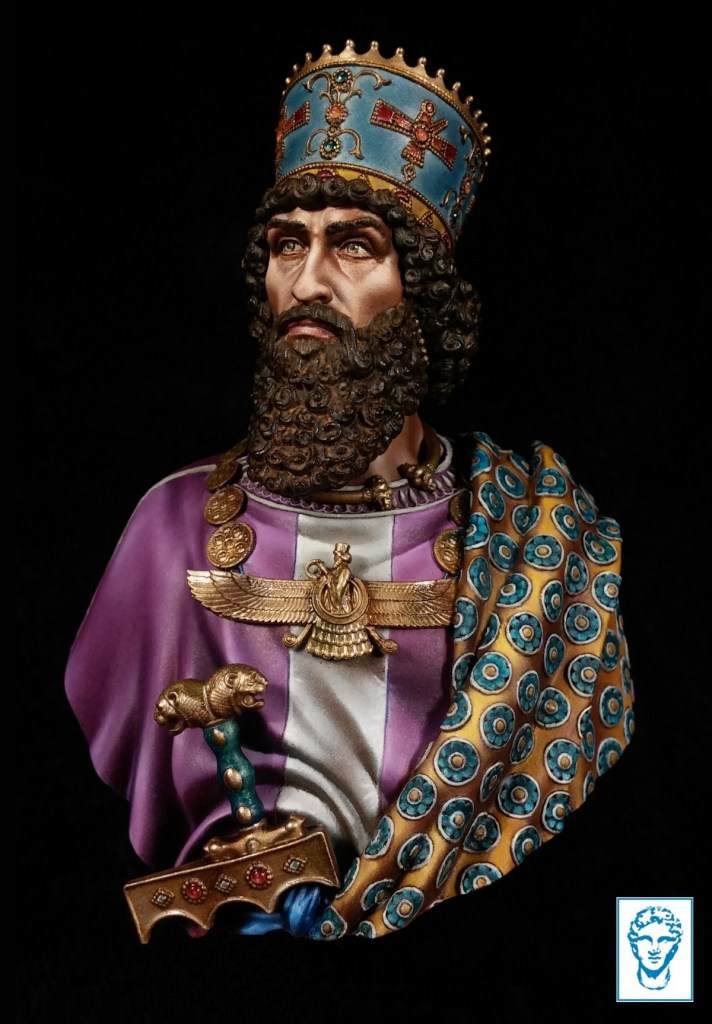
Queen Esther’s position was one of great power– and of great peril. Her husband, Ahasueras, the King of Persia, had chosen her from among a host of women to replace the disgraced Queen Vashti. But Ahasueras was not a man of character and integrity. Vashti’s disgrace came after the King had been banqueting and drinking for a solid week, and this after six months of entertaining other heads of state! Ahasueras left the running of his kingdom in the hands of his ministers–even Vashti’s dismissal and Esther’s elevation were at the suggestion of the King’s counselors (though the King made the particular choice of Esther over all the other contenders). Ahasueras was unpredictable, capricious, vindictive, hot-headed, and easily led. He also had “unlimited” power– his word was, literally, law.

Even though Esther had risen to a place of prominence and (limited) power, she still faced danger, in the guise of her husband’s Prime Minister, Haman. Haman’s power was second only to the king, and he intended to use that power to rid himself of his enemy, Mordecai, a Jewish exile, who just happened to be the foster-father and cousin of Queen Esther! Not content with simply having Mordecai executed, Haman suggested to the gullible King Ahasueras that all the Jewish exiles throughout the kingdom should be slaughtered and plundered within a single day.

Queen Esther’s only option was to get the king to reverse his own edict– even if she managed to escape the genocidal plot, her silence would spell the doom of the entire scattered nation of her own people. Queen Esther could not trust in her own limited authority, nor in the beauty that had brought her to the throne. Only God could capture the heart and mind of such a king. Queen Esther began to pray.

And she didn’t just fall on her knees in silent despair She asked others to fast and pray for three days before she would approach the king. And she paved the way with another banquet, during which she flattered both the king and his arrogant prime minister before pleading for her life and the lives of her countrymen.

Esther’s beauty and grace alone were no match for Haman’s treachery. But God knew the end of this story from the beginning. Esther was in grave danger, but she was also in God’s loving and all-powerful hands. Esther is remembered for her bravery and poise in the face of Haman’s diabolical plotting, but also for her dependence on God’s power over her own.

What dangers will we face today? If Queen Esther needed to pray– and ask for prayer– in her situation, how much more should we be willing to do so in ours?!

Photo by Michelle Leman on Pexels.com

Who’s On First?

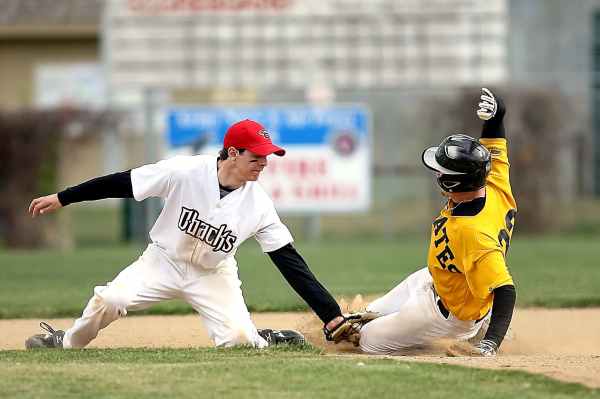
One of the classic comedy routines of the 20th century was a skit by Abbott and Costello, called “Who’s on First?” It’s all about mistaken identities and confusion, when the roster of players on a baseball team contains unusual names and nicknames that sound “question-able”.

I love baseball, and comedy, but the routine should make us do more than laugh. One of the big problems we face is that we often don’t know “who” is on first (or second, or in left field) in the game of life. We tend to become spectators, and fans, but we don’t always know the names of the players, or what position they play. We watch as players–celebrities, government power brokers, athletes, etc.–come and go on the “roster.”

Photo by Andrea Piacquadio on Pexels.com

And it can filter into our prayers. While we look at the line-up of human “players” around us, we can forget that God is in charge of the outcome of the “game.” God knows exactly “who’s on first,” and who will be there at the bottom of the fourth. He knows who will strike out in the third, who will hit a grand slam in the fifth, and who will drop the ball in the sixth. While we watch the players and bite our nails when the bases are loaded and there is a full count, God already knows the next pitch.

Photo by Liza Summer on Pexels.com

We may not understand why “Who” is on first, instead of someone else. Sometimes, we see people rise to a position only to abuse their power and oppress others. We may question “Why?” as well as “Who?” Sometimes, we may ask, “How?” “How could God put them in the line-up?” And the only answer I can offer is, “I don’t know.” God’s ways may not make sense to us in the moment. We may never understand the How or Why of our lives or circumstances. But God sees the whole picture, and His ways are not our ways. His understanding is far greater than ours.

Finally, we need to make sure that we are more than just spectators. Watching from the sidelines may seem safer, but we won’t really learn how to pray if we never learn how to “play.” God loves prayer warriors, but He commands us to be “doers of (His) Word.” (James 1:22-25) If we are just listening from the sidelines, we will continue to be confused and frustrated– in our praying and in our living!

We may not always know “Who’s on First.” But we should take comfort in knowing “Who IS First.” No matter who takes their position as shortstop or who is throwing the pitches, God is always sovereign. No matter who seems to be “winning” the game, God has already determined the outcome of the ultimate “World Series.” We can pray with confidence, knowing that, with God as our manager, Christ as the umpire, and the Holy Spirit as coach, we have the winning team!

Photo by Tima Miroshnichenko on Pexels.com

To Bow; To Kneel…

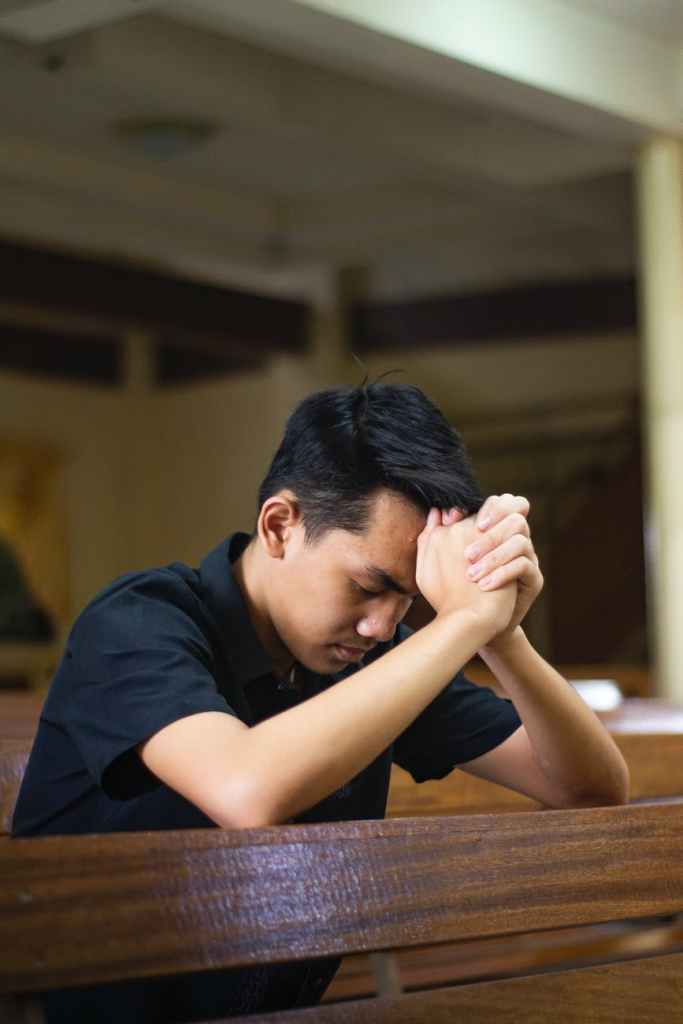
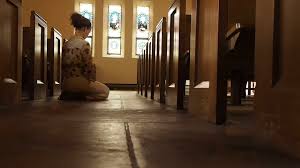
There is no one “right” way to pray–God listens to our heart, whether we are standing, sitting, bowing, lying prostrate, or running! However, kneeling or bowing before God shows our heart attitude. And I think it is important to talk about it a little here.

Photo by Ian Panelo on Pexels.com
  • Bowing or kneeling shows deference. A person bows or kneels before a sovereign or dignitary, someone of rank and importance, or someone in high authority. 9 Therefore God also has highly exalted Him and given Him the name which is above every name, 10 that at the name of Jesus every knee should bow, of those in heaven, and of those on earth, and of those under the earth, 11 and that every tongue should confess that Jesus Christ is Lord, to the glory of God the Father. (Philippians 2:9-11 NKJV)
  • Bowing not only demonstrates God’s superior position, but reminds me of my own position before Him. It is a humbling position to kneel; to bow one’s head; to become smaller and cast one’s eyes down. If there is pride lurking in my heart, bowing may not come easily…
  • To bow or kneel forces us to stop, and puts us in a position for prayer. It forces us to turn away from distractions and from comfort. I can pray in any position, but I don’t generally kneel to do household tasks, or bow to take a phone call. Even if I am not in a position to physically kneel or bow, I can put aside distractions, and take a heart and mind “stance” of prayer.
Photo by Tima Miroshnichenko on Pexels.com
  • Throughout the Bible, we are encouraged to bow or kneel when we pray– it is one among many stances of worship we are to take when approaching God’s throne. (see also Romans 14:11, Isaiah 45:23, Revelation 5:13, and Psalm 95:6-7)

https://www.gotquestions.org/bowing-kneeling-prayer.html

  • Kneeling or bowing sets us apart. That is not to say that we should make empty postures to make ourselves look virtuous. But neither should we be afraid to bow our heads, or reluctant to kneel, if we feel led to do so. This is especially true when we are at home or in church. It may NOT be appropriate to kneel in the breakroom at work or bow your head while driving– but if bowing or kneeling at church or in your own home makes you feel uncomfortable (other than for physical limitations), because someone “might” see you, there may be another heart issue at stake.

Today, as I come before my creator, I will kneel in reverence, bow in humility, and worship Him in word and action.

“God Bless…What’s His Name”

In the movie, The Sound of Music, a young woman named Maria is asked to leave her life in a convent to become a governess of seven children belonging to a widowed Navy Captain. After a hectic first day, she settles in for her evening prayers. She lists by name all the people she wants God to bless; but as she goes through the unfamiliar names of the seven children, she realizes she has forgotten the name of the younger, “incorrigible” boy. After a short struggle, she simply asks God to “bless what’s his name.” That evening, a storm comes up and soon three frightened girls come running to Maria’s room, and happen to mention the boy’s name– Kurt. “That’s it. Kurt. God Bless Kurt!” A short time later, Kurt, his brother, Freidrich, and the other girls show up, and they all end up bonding and singing through the storm. It’s a nice movie scene, but it also teaches us a lesson about prayer.

Maria’s lapse reminds us that even when we try to include everyone, we often forget a person’s name, or forget one member of a larger group. Sometimes, we forget that we already mentioned someone else, and count them twice. It happens. When I was a teacher, even with my roll call list, sometimes I would make mistakes as I hurried through the task to get to a lesson. As I get older, I find it’s common for me to see a person’s face, and not be able to remember their name. And, disconcertingly, I often see a name and cannot remember the face! (“God bless Kurt…whoever he is.”)

Photo by Katerina Holmes on Pexels.com

God knows the weaknesses and limitations of our minds. While it would be irresponsible to pray “God bless what’s his name” every night, and never try to call Kurt by name, it is important to lift up the “what’s his/her names” in our lives, trusting that God knows their names, their needs, their hearts, and their unique place in His plans. The very fact that we remember some essence of their personality or presence is enough to make them worth lifting up to the one who knows them far better. And perhaps someone else, who has forgotten your name, but not your value to the Father, is lifting you up in this very moment!

Maria’s prayer also reminds us that it is important to pray for individuals BY name (when we remember). We can pray for nations, groups, civil and corporate bodies, and churches, but when we pray for individuals, calling them to mind and heart, we are continuing a prayer that stretches through time and around the globe. This prayer– this list of names and remembrance of faces and spirits– began with Jesus and His disciples, and continues unbroken over centuries. It is a single prayer, tying together brothers and sisters in Christ who are otherwise divided by language and distance, time, and tide. Children saying their bedtime prayers; aged saints at their morning devotions; mothers lifting up their precious children; fathers lifting up their neighbors; missionaries lifting up their persecutors–throughout generations–this prayer is a continuous offering, like incense, rising to the throne of grace.

Photo by Luis Quintero on Pexels.com

God Bless Kurt. God Bless Gretl, and Fabiani, Yayoi and Bruno. God Bless You. And God Bless “What’s-her-name.”

“God Brought You to Mind..”

How many times have you suddenly felt the desire to lift someone up in prayer? You have no idea why or what to pray about, just that you should lift them up– in concern, in gratitude, in remembrance…It might be that someone mentioned their name; or you’ve just seen someone who reminds you of someone you knew long ago; suddenly, they are in your mind–an old neighbor or friend, a classmate or co-worker, maybe even someone who hurt you or betrayed you. But you feel an urge to pray–urgently.

Photo by ThisIsEngineering on Pexels.com

Maybe you’ve been on the other end– you get a sense that someone has been praying for you– something that you were dreading turned out to be less scary that you thought, or you had a “near miss” on the highway.. you don’t know who or where, but you know that someone, somewhere just prayed for you.

Photo by Leah Kelley on Pexels.com

God works in mysterious ways. Sometimes we ask others to pray for us; sometimes they let us know that they will be praying for us– but other times, we break into spontaneous prayer for someone “God brought to mind.” We may not know the situation; we may not know the particulars. Sometimes, we don’t even know the names or places– we just know we need to pray for a general group– missionaries, police officers, government leaders, teachers, fathers…

Photo by Keira Burton on Pexels.com

Stories abound of people who have obeyed such urgings– praying for people they barely know, or haven’t thought of for years–only to find that in that very moment, those people were in crisis and in need of help. Such stories help us see the heart of God. God is powerful enough to step in and take control of any situation. He doesn’t “need” us to pray for others in such cases. But He wants to include US in His plan! And by “bringing to mind” those who need prayer, and “bringing us to” the minds of others in our time of need, He reminds us of the importance of interconnectedness and dependence on Him.

Photo by Mary Taylor on Pexels.com

Of course, we should be looking for opportunities to pray for those around us–faithfully, consistently, earnestly. But we also need to be open to the promptings of the Holy Spirit, who works to involve us in His ongoing work. Our hearts and minds may wander or waste time in empty thinking, but the urge to pray is one we should be quick to follow.

A Flash in the Pan

During the era of flintlock muskets, gunpowder was ignited by a spark from a flint striking a plate. The gunpowder was held steady in a small “pan”, and the resulting explosion was supposed to propel the lead shot “ball” or bullet to its intended target. But often, the gunpowder would not explode; it would simply burn out in a brief flash of light, failing to result in a shot, and wasting the powder. This was known as a “flash in the pan.” It came to symbolize an impressive display that accomplished little or nothing of use.

Photo by Dmitrii Fursov on Pexels.com

Years later, prospectors in the California Gold Rush would see a “flash in the pan” as they looked for gold. They would take a shallow pan, dip it in a river, bring up water and silt, dirt, and rocks, and swirl it around. Sometimes, they would see the “flash” of a gold nugget or gold dust. More often, they would see a glint of something else– pyrite, or “fool’s gold” was more likely than a flash of real gold. And, as the water swirled, the tiny flash of gold could disappear amid the eddy of dirt and other dull rocks– remaining just a “flash in the pan.”

Photo by cottonbro on Pexels.com

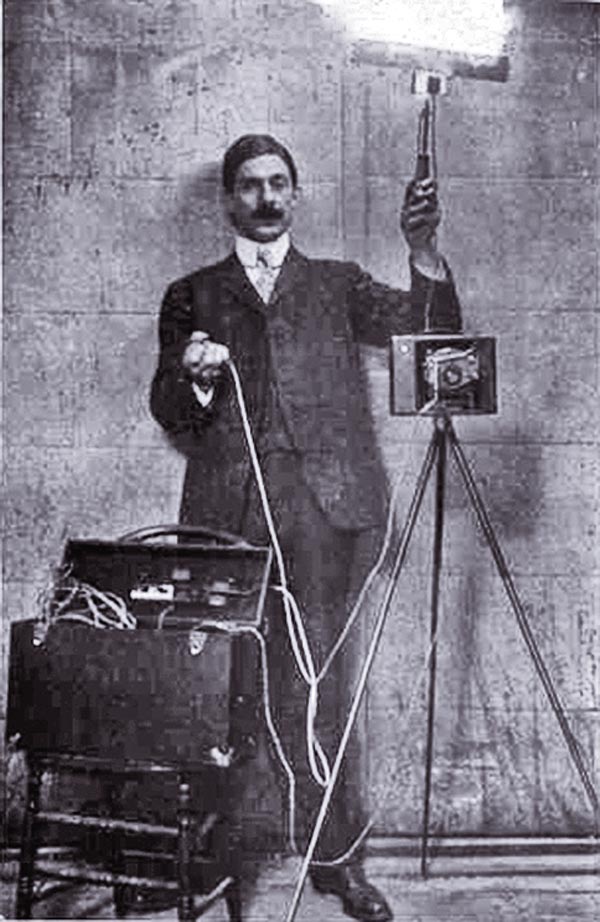
Early photographers, struggling to bring enough light into their studios, experimented with explosive powders, hoping to get a “flash” of light bright enough to create a better negative exposure, so that their subjects would not have to sit so long in the same position in order to get a clear image. They would mix powders, spread some of them on a shallow “pan,” and ignite them to create a brief, but brilliant, flash of light.

Photo by Suzy Hazelwood on Pexels.com

Our lives may sometimes seem like “a flash in the pan.” Our days are numbered, and our abilities limited. Even our brightest ideas and most explosive actions seem to be swallowed up in the larger scheme of things; our good deeds and noble intentions disappear in the swirling waters of time and the tides of injustice, disease, and evil around us.

But our lives, while brief, can be more than a “flash in the pan.” We are called to be the follow Jesus, the “Light of the World.” Jesus’s life on earth was brief, even by human life expectancy. But unlike a spark that burned itself out and ended in death and darkness, Jesus brought light and life that continues today. And He calls us to use our lives in ways that light the way for others.

Sometimes, our prayers can also seem like brief flashes, producing little of significance. But God hears each one, and it is in His power that our prayers become part of the larger “picture” of His plan.

Praying the Perimeter

I love puzzles–jigsaw puzzles, crossword puzzles, Sudoku, logic puzzles, etc.

This may seem like a strange way to begin a blog on prayer, but stick with me…

Photo by Pixabay on Pexels.com

Puzzles can be fun, but they can also be very frustrating, especially if you approach them with no strategy. If you dump 1,000 pieces of a jigsaw puzzle on a table, and begin by trying to find any two pieces that fit, you may be able to eventually solve the puzzle, but it makes more sense to look for the “edge” and “corner” pieces first, and build a framework. Depending on the puzzle picture, you may also be able to work on colors or patterns that stand out– sky/clouds, a patch of red or blue, a dog in the foreground, etc.

Photo by Magda Ehlers on Pexels.com

The same is true of word and logic puzzles. There is usually a strategy when you approach each puzzle that can help make it easier and more rewarding. Words have patterns of letters– vowels and consonants; logic puzzles depend on deduction– narrowing down the possible by eliminating the impossible. Sudoku, and its cousin, Kakuro, involve simple math and numbers 1-9 in changing patterns. Start with the strategy, and you will find even the most challenging puzzles a little less challenging.

Photo by Dziana Hasanbekava on Pexels.com

Some puzzles seem impossible; and some are beyond my ability to solve, even with the best of strategies. That’s life. We don’t know all the answers, and we can’t always “see” the solution, or make all the pieces fit.

Sometimes, our lives seem like a challenging puzzle. Nothing seems to “fit” a pattern or make sense, and we end up lost and frustrated. Our most basic need is to trust God. But God does not leave us without a strategy. Prayer (along with reading God’s word and keeping in fellowship with other Christians) is part of an excellent strategy. Just like putting the “edge” pieces together in a jigsaw puzzle, praying “the perimeter” of our problems can put them in the proper frame.

What does that mean? Jesus gave us a perfect example in “The Lord’s Prayer.” When His disciples asked Him how they should pray, He started with the “frame.” “Our Father, who art in Heaven, hallowed be Thy Name.” God should be at the center of our life and trust, but He also needs to be the “edge” and framework of our life. There is no problem or worry that is outside of His control and awareness, no need that He cannot meet, and no problem that can take Him by surprise or leave Him frustrated and “stumped.”

Photo by Pixabay on Pexels.com

“Thy Kingdom come, Thy will be done in earth as it is in Heaven.” God already has the right strategy, and solution for our need. We can’t see it; we may not have a clue how to pay our bills, or deal with that devastating diagnosis, or make peace with our enemy–we may never find “the solution” on our own or in our short lifetime. But God sees the entire picture, and He has the power to make all the pieces “fit”– in His time and in His perfect will.

Photo by Levent Simsek on Pexels.com

“Give us this day, our daily bread, and forgive us our trespasses as we forgive those who trespass against us.” Sometimes our “puzzles” seem too big because we try to tackle everything at once, or we try to tackle things from the wrong end. God’s strategy is to rest in Him daily, letting tomorrow’s troubles wait for tomorrow, and letting go of yesterday’s struggles. That doesn’t mean that we don’t make plans or budgets, or that we don’t take responsibility for our health, or the mistakes we’ve made. But it means that we stop focusing on what we can’t control, and focus on the present. Instead of worrying, I can be thankful for what I have right now. Instead of focusing on what others think of me, or the threat they pose, I can concentrate on my own attitude and actions, making sure that I am practicing trust and obedience. Instead of getting angry when things don’t make sense, I can rest, knowing that God knows the end from the beginning.

Photo by Element5 Digital on Pexels.com

“And lead us not into temptation, but deliver us from evil.” God is our “Good Shepherd” (See Psalm 23 and John 10). He “leads us beside the still waters” and “makes us lie down in green pastures.” “He restores my soul.” (Psalm 23:3a) If we let God determine our “edges” and boundaries, we will still have to travel through troubled times and valleys “of the shadow of death.” But we need not fear evil, when we trust that God will deliver us. We need not fear the shadows and uncertainties within the boundaries of God’s will. And even when we have taken the wrong path, and “messed up” the puzzle we are in, God is in the business of redemption and restoration! He will deliver us– if we confess and seek His solution. He will wipe away the “wrong” answers and rearrange the pieces of our life, so that we can find wholeness.

Photo by Miguel u00c1. Padriu00f1u00e1n on Pexels.com

When we develop the pursuit of prayer– daily meeting with God, acknowledging who He is, and seeking His wisdom and grace– we will meet the challenges of life with the right strategy. We will still face the frustration of not knowing all the answers, or not seeing the whole picture. We will still have to deal with struggles, shadows, grief, and pain. But we will have a stronger “framework” and a God-given strategy to help.

Blog at WordPress.com.

Up ↑