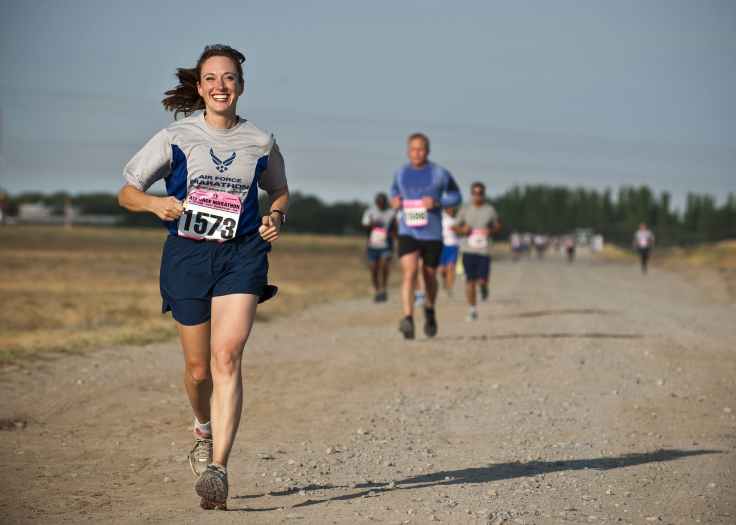
Mothers and others..

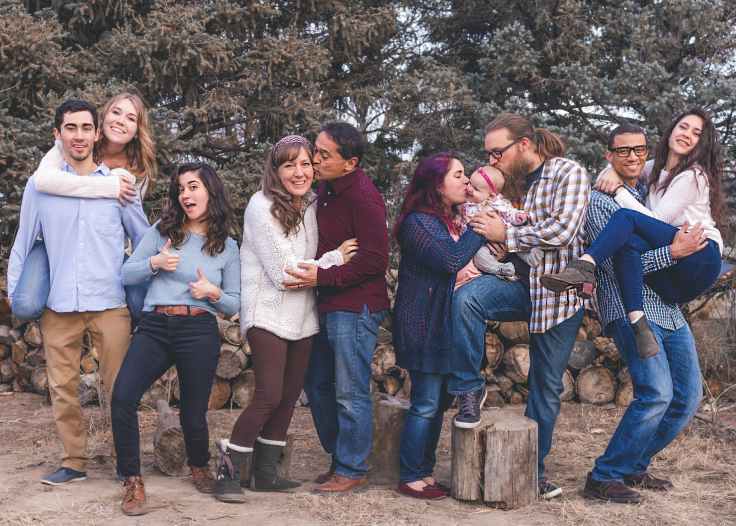
Sunday will be Mother’s Day. People are already talking about how this year will be “different” because of COVID-19. They say it will be more difficult because of the social distancing measures in place. And it will be for many families. There will be few family gatherings, few long and happy discussions around a dinner table, fewer flowers, fewer hugs…Many will still have the opportunity to see their mothers/children via skype or zoom or through a window. Many can still hear a familiar and much-loved voice over the phone, and send messages via text, email or even a letter or card. But it’s not the same. There is something about a mother’s presence– her touch, her voice, her smile, the subtle scent that belongs to no one else– that we cherish and celebrate.

Photo by kelvin octa on Pexels.com

But for many people, this Mother’s Day will be no different. Sadly, there are many who will spend Mother’s Day alone. There is a visceral, painful place– a gaping wound– where there is no “Mother” on Mother’s Day. Maybe it’s caused by death–either the death of our mother, or the death of our child/children. Maybe it’s some other wrenching separation– Alzheimer’s, a ruptured relationship, addiction, mental illness, abandonment, deployment, rejection… We miss what once was, or we miss what we never had. COVID-19 may bring this horror to some this year, and it may leave some with that horror for years to come, but the pain and loss is no different for being caused by a virus. The pain of losing (or not having) a Mother runs deep. It may be felt more keenly on this day, but it aches and gnaws every day. Mothers give life. They nurture. They are the safe arms in which babies find peaceful rest (..eventually). They are the kissers of boo-boos; the proud recipients of our first attempts at writing, and drawing; our first audience for concerts and dances; our first teachers and nurses, police officers, drill sergeants, and life coaches; often our first playmates, too.

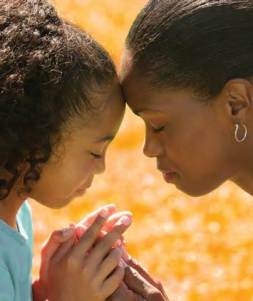
Photo by Katie E on Pexels.com

For many years, I have lived on “the other side” of motherhood. I am a daughter– blessed with an amazing, kind, strong, wise and Godly mother. I cherish the relationship we have, and look forward to the time when I can visit with her in person, instead of over the phone. She spent long nights rocking me to sleep; hours praying and crying by my hospital bed when I almost died as a toddler; listened patiently while I ranted and railed in teenage rebellion; encouraged me when I was exhausted from work and frustrated about living alone; and taught me the joy of spending time with God and loving others. And I want to honor her every day for the Godly example she has been to me and to others.

But I have spent most of my adult life outside the experience of motherhood, watching others with tiny arms wrapped around their necks, others kissing boo-boos and receiving artwork, others taking pictures of their graduating seniors and swapping stories with other moms. And, I have been reminded– sometimes in subtle ways, sometimes with contempt–that I do not “belong.” “You don’t know what I go through.” “You don’t understand.” “Who do you think you are to tell me about my daughter? You’re just her teacher. I’m her MOTHER!” “You can’t tell my children what to do.” None of these statements are wrong– but they hurt. And most of them come from someone else’s pain– their fear of failure, their frustration, their guilt, even a lack of sleep or a migraine…

Photo by Andrea Piacquadio on Pexels.com

Because of my experience, however, I have learned two things– a greater appreciation for my own excellent mother; and a new appreciation for the role I have been allowed to play as an “Other.”

Mothers are vital, but they are not perfect, and, especially where they are missing or rejected or removed, the world needs Others. Women (and men) who will stand as surrogates, substitutes, and valued helpers. Sometimes it is a thankless job; often it is temporary, even momentary, and unexpected. Throughout our lives, there are Others who inspire us, who have our backs, who cheer for us through track meets, or at dance recitals, or spelling bees. Others who may not kiss boo-boos, but patch them up in the moment. There are Others who are the first to spot our hidden potential, or warn us of dangers that no one else has spotted. Others who pray for us, cry with us, and share our smiles. Others who buy Girl Scout cookies, or magazine subscriptions, lemonade, or raffle tickets.

Photo by Cliff Booth on Pexels.com

It was not God’s will for me to be a Mother. I have been blessed in recent years to be a step-mother and -grandmother, and I adore my kids and grandkids. I am so grateful for the mothers and others who shaped their lives, and the honor of being part of their families. But God has also given me a lifetime of being an Other. I may not have the “normal” experience of Motherhood, but I’ve had my share of doubts, failures, “bad” days, and sleepless nights. And I’ve been blessed to get to know hundreds of children– through school, Bible School, Sunday School, mission trips, Story Hours, school visits, Summer Reading, camps, baby sitting, extended family, and more.
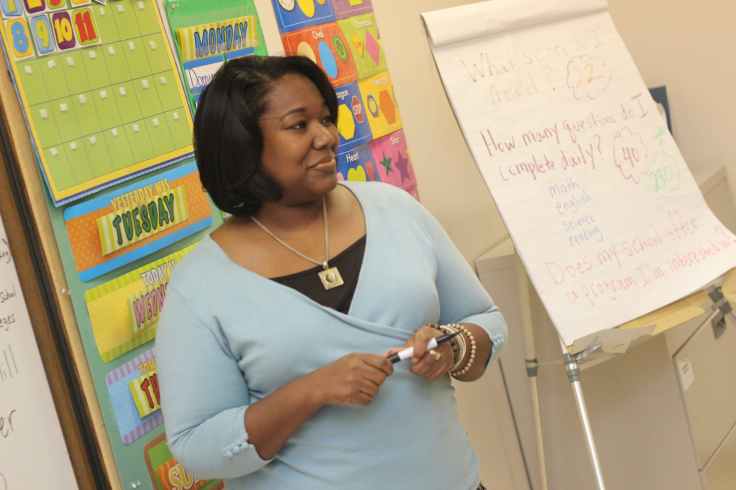
Photo by nappy on Pexels.com

If you are a mother– celebrate Mother’s Day this year. There are millions who have been denied the honor. And many who have lost the privilege.

If your Mother is still alive, but you can’t be with her– celebrate Mother’s Day this year. If you can’t be together in person, make an effort to be together in word and spirit. Flowers are nice; a fancy meal is fine, too, but your time– listening, sharing laughter and memories–it priceless. There will come another year when you won’t be able to be with her– and no phone line or video chat will be able to bring her closer. If your mother is alive, but your relationship is strained, you can still celebrate Mother’s Day. Use this day as a starting point to move forward– some relationships can be repaired if you are willing to take a first step. Others need closure. All relationships need forgiveness– for YOUR sake.

Photo by Andrea Piacquadio on Pexels.com

If you are missing your mother or have no mother–celebrate Other’s Day this year. Look for the people who have encouraged or uplifted you– aunts, neighbors, teachers, college roommates–let them know they’ve made a difference.

If you are not a mother– and even if you are– you are someone’s Other. Celebrate the opportunity to be the best Other you can be. Someone needs an Other today!

Photo by Daria Shevtsova on Pexels.com

Does Prayer “Work?”

I have a friend who is very keen to study if prayer “works.” His theory is that if someone were to measure the number of prayers said in various regions of the world during the COVID-19 pandemic, and compare those numbers to the rates of infection, numbers of deaths, etc, for the same regions, one could “prove” whether or not prayer is effective.

I don’t think my friend is being sarcastic or overly cynical– I believe he is sincere in wanting to study prayer. I accept his desire to study prayer–to quantify it, even to “prove” it, or legitimate it for those who are skeptical. Unfortunately, he wants to study it as an observer, and not a participant, and he wants to conduct a physical study of a metaphysical practice.

Photo by Ali ArapoÄŸlu on Pexels.com

Scientists are conducting several studies during this time, to see what “works.” Does social distancing “work” better than building up “herd immunity?” Is there a treatment that works better, or faster than others? Can we develop an effective vaccine? What practices– social, hygienic, medical, political– might help mitigate the spread of future viruses? Even these studies will not be definitive. The results will depend a great deal on methodology, and the conclusions will be open to interpretation.

Photo by Lukas on Pexels.com

There are additional problems in studying whether or not prayer “works” or not, because prayer is metaphysical. Here are just a few of the “measurement” problems:

  • How do you measure prayer? By length of time? Number of words used? The number of prayers prayed by each person over a certain period of time?
  • Do you count ritual prayers? Mantras? Meditation? Unspoken “thought” prayers? Recitations? Prayers spoken “in tongues” or in ecstatic states?
  • Do you count corporate prayer as a single prayer or by the number of people in the group?
  • What about social media? Do you count all the people who say they will send “thoughts and prayers?” Do you count those who say they “will pray,” or only those who are “praying,” or “praying now.”
  • If you are testing by geographical region, how do you account for people who are praying for others around the world?
  • How do you measure the efficacy of prayer (as opposed to other factors)? If a region has a higher mortality rate, even though many people prayed, does that mean that prayer “doesn’t work?” Or does it mean that the mortality rate would have been even more devastating (given other factors) without prayer?

More than just measurement problems, there are problems with the very nature of prayer that make such a study impossible:

  • Even if you could come up with a standard definition of “prayer” in order to get a count, prayer is not a physical substance or action. Prayer is not a “cause and effect” exchange. It is communication. If ten people say the same thing at the same time to the same person, it is not necessarily “more effective” than a single person-to-person exchange. If a thousand people pray to the same “god” who is not a god–“Mother Nature” or “The Force,” for example, it cannot be compared to a single person praying to a Loving and All-Powerful God.
  • God’s ways are not our ways. If we are measuring for one thing, God may be working for a different, unseen outcome. If more people contract the virus during the “study period”, we see that as “failure.” But God may be preparing that region to build up a resistance or immunity for a future outbreak. God answered prayer in a mighty way that we won’t see immediately. I have known a great many people, and prayed for a great many people who have not received physical healing in this world. They have suffered. They have died. But that doesn’t mean that prayer “didn’t work.” Their sufferings and eventual deaths have often brought about unbelievable works of God– salvation, families restored, friends discovering renewed purpose, strengthened efforts to fight disease, injustice, poverty, etc., and communities coming together in unity and hope.
  • Prayer is not about measurable results. Prayer is a heart-cry to a caring Creator. It doesn’t just involve asking for healing or miracles or “wish fulfillment.” Prayer involves thanksgiving, worship and adoration, repentance and confession, sharing burdens, asking questions, and building an eternal relationship with God Almighty.
  • In the end, any study results will be interpreted differently by different people. Some people will be convinced by numerical comparisons to re-consider their view of prayer. Others will never be convinced, no matter how much “evidence” someone else presents.

Prayer isn’t like taking an aspirin, or holding a protest rally, or doing research for a cure. Prayer isn’t about “winning the battle.” It isn’t about “what works.” It isn’t about “what” at all. It’s about WHO.

Photo by Luis Quintero on Pexels.com

God “works.” God is sovereign, loving, and wise beyond what we can imagine. His ways endure. And He has vanquished the power of death and disease. Yes, it can still touch us in the here and now, spreading havoc and pain and mourning. But it will never triumph over Hope, and Life, Truth, and Faith. And when we pray, we connect to the source of all that is Eternally victorious! Beyond ANY measure!

Yea, Though I Walk…

“Yea, though I walk through the valley of the shadow of death…” (Psalm 23:4a KJV)

Photo by Pixabay on Pexels.com

The world is waking up to a global pandemic as I write this. Over 100,000 cases worldwide have been diagnosed; thousands have died. Projections are dire, with the possibility of millions of people who will need to be quarantined or hospitalized, and several thousands more dead before the year is out. Panic has already set in– people are hoarding cleaning supplies, stealing medicines and masks from hospitals, demanding testing long before they show any symptoms, and spreading rumors and false information about how the disease is spread or ways to prevent its spread.

In the midst of chaos, fear-mongering, and panic, the Bible provides both comfort and practical wisdom to face times of struggle and crisis. Psalm 23, often used to comfort people in times of grief, actually says a lot more about life than death. We have no need to panic– even though we find ourselves in unknown, unfamiliar, and threatening situations.

Photo by Francesco Ungaro on Pexels.com

“Yea, though I walk through the valley of the shadow of death…”

  • Yea, though–Not “if”, or even “when” I walk through tough times, but “though.” Death is inevitable and unpredictable, and the shadow of death, the threat of our mortality, will fall on us, often when we least expect it. Even without a traumatic event, like a pandemic, we all must travel this valley path at some point. A crisis like COVID-19 is unsettling, but death and disease wasn’t invented last year, and whatever steps we take to prevent or treat COVID-19 will not stop death or its shadow from touching our lives. Nor will panic and fear, denial, or wishful thinking make death’s shadow dissipate. It is wise to face the reality of this crisis with truth and the proper perspective.
  • I–Not “we.” We are surrounded by others who may share much of our fear, our grief, or our confusion at a time like this. But, when we walk through this valley, it is deeply personal, and our reactions, perspectives, beliefs, and emotions will be uniquely experienced. One of the most difficult things about times of crisis is the isolation we may feel when others cannot enter into our thoughts and hearts and painful emotions. Especially when they are dealing with similar fears and pain. Not only is this valley dark and low, it is often narrow. Even so, God is still present and powerful. We can turn to others for advice, comfort, or even excuses. But no one else can walk the road beneath our feet; no one else can choose whether we will focus on the shadows we see or the light beyond the shadows.
  • Walk through— There is a great temptation to try to hurry through any crisis– to look for the shortcut– the immediate cure; the escape hatch; the high ground; the detour. God’s love doesn’t give us the promise of ease and escape. God does not ask us to sprint through this part of our life’s journey. But God gives us the grace and power to keep walking– this valley is not the destination, but part of the longer race. This leg of the journey is difficult; there will be darkness, rocks and walls closing in on us; we may feel the cold finger of death, disease, and loss. Some days our walk may feel more like a crawl–but take heart and keep moving through.
  • The Valley of the Shadow of Death–Death is stark, uncompromising, cold, and overwhelming. Its shadow looms huge and oppressive. But the valley is not death; the shadow is NOT death; and even the reality of death is not bigger or more powerful or more eternal than God. COVID-19 will bring death to many thousands or millions of people, and it will bring sickness, fear, pain, grief, and distress to many more. But it cannot kill God– it cannot dim His great love for each person who suffers; it cannot catch God off guard and unprepared. We may question God’s timing and purpose. We may face hardship, loss, and confusion in the days and months ahead. But we will not face anything– even COVID-19– that can weaken God’s sovereignty. The same hand that raised Lazarus from the dead; the same power that rolled the stone away at Easter; the same Shepherd that led David all the days of his life–the One who holds galaxies in his hand and has numbered every hair on your head–He walks through this valley with us!
Photo by Umberto Shaw on Pexels.com

As God gives us wisdom, let us seek positive ways to reach out to those in crisis. Pray! Pray often, and fervently for those who are sick, and those who work in healthcare. Pray for wisdom, that our nations, regions, and communities will respond proactively and compassionately. And pray for opportunities to demonstrate and share God’s grace and mercy.

Photo by Elina Krima on Pexels.com

G.P.S.

Psalm 23:3 English Standard Version (ESV)

3     He restores my soul.
He leads me in paths of righteousness
    for his name’s sake.

Photo by Amelie Lachapelle on Pexels.com

Many phones, tablets, even vehicles, come with a GPS– Global Positioning System–which uses satellite technology to tell you where you are. Combined with a satellite navigation system, the GPS helps tell you how to get from point A to point B– mapping out various routes, including estimated travel times, and information about road construction, detours, and traffic patterns. Applications like Google Maps or MapQuest can show you details and even images of the roads on which you are traveling. Such systems and apps can be very helpful, but they are not perfect. A GPS may be a few yards “off,” leading you close to your destination, but leaving you slightly lost and confused. If you type the wrong coordinates or address into a navigation system, you may end up far from where you expected to be!

Photo by Leonardo Gonzalez on Pexels.com

As Christians, we have a GPS– God’s Provision and Sovereignty. God promises to lead us in the paths of righteousness. God’s direction and leadership are sure and good. We still have the responsibility of listening and adjusting our course, however. We can still miss a turn, go off in the wrong direction, or set the wrong coordinates for our destination.

But, unlike a satellite navigator, God’s provision is eternal and supernatural. God knows all the roads we can take, could take, should take, (or shouldn’t take), and will take– He knows every curve, every bump in the road, every traffic jam, and every scenic lookout and rest stop along the way! God’s MapQuest sets us on a course of righteousness– paths that will not only bring us safely to our ultimate destination of eternal life with Him, but do so in a way that brings honor and glory to Him. After all, it’s His reputation at stake as our Shepherd. He is the Good Shepherd– He won’t lead us down the wrong path; He WANTS us to reach our destination. And our full potential!
Photo by Vlad Cheu021ban on Pexels.com

When we travel these paths, with our Shepherd leading the way, we will become familiar with the best roads; able to help others navigate the sharp turns and steep grades we have already traveled. We can share the glory of that sweet stretch of road beside the cool stream, or the view from the hidden rise. And we can share the blessings of being on the road with the one who owns it!

Photo by Drew Rae on Pexels.com

Sometimes, we pray for a different path– a short cut, or a road with more adventure (or less!)–God hears our prayers, and He knows where the road leads. When we look back, we may be amazed– not only at the road God laid out for us to follow, but the roads we didn’t take. We see a short-cut; God sees missed opportunities for growth. We see a detour; God sees the dangerous wash-out we were spared. But if we walk by faith, and not by sight (or intuition, or emotion), we will begin to see the goodness of the path we are on, no matter how difficult or how different from our expectation. And we will begin to pray, not for the path to change, but for wisdom to follow where our Shepherd leads.

Photo by Aleksejs Bergmanis on Pexels.com

The best part of God’s GPS is that no matter how lost we are; no matter which path we have chosen against His good will– God can get us back on course and to the right destination. He can turn our dead-end roads around, help us make the right turns, and help us reconnect with the paths of righteousness.

Photo by rawpixel.com on Pexels.com

Whatever path you and I find ourselves on today, I pray that we will turn on our GPS, and follow God’s directions for the road ahead.

…And I Am Not.

In my last post, I talked about “When God Doesn’t Answer..” Of course, there are times when God seems silent, and I spoke about a couple of times when that was true in my life. God’s timing and wisdom are reminders that He is God– and I am NOT.

I want to revisit that theme for a bit. I was reading the post and realized that I spoke of the waiting and hoping and God’s faithfulness in sending an answer in the person of David, who became my husband. I spoke of God’s ways being higher and better than our ways– and they are. But I left out one aspect of God’s character. Forgiveness.

Photo by Josh Willink on Pexels.com

It is tempting, and I gave in to the temptation, to focus on my feelings, and my positive actions during those years of waiting– taking good advice and making good use of my time as a single to volunteer and serve. But I also did plenty of wallowing in self-pity, of questioning God’s goodness and His timing. I slipped into bad habits that I had to break as a married woman– selfish habits and indulgent thought patterns. And I find myself battling new bad habits, slipping back into depression and isolation, or taking for granted the blessings of married life.

I don’t say this to negate God’s goodness in answering my longing for a husband and family, nor to suggest that God’s long silence and eventual answer were any less gracious and loving. Instead, I want to thank Him for being patient with me, for extending both mercy and grace in His good time, and in spite of my bad behavior.

Photo by u0410u043du043du0430 u0412u0430u0441u0438u043bu044cu0435u0432u0430 on Pexels.com

God’s mercy and his goodness surround us–especially when we don’t see them. When we doubt His presence, when we accuse Him of not caring, when we pout, and posture, and resent the road He has us traveling. God’s word is full of stories of people who waited– some patiently, some not so much– and people who wandered, and even rebelled. And many of them perished without ever seeing God’s answer or without repenting. But I cannot think of any instance where someone who sought God’s face or His forgiveness and was turned away– EVER. God followed the grumbling nation of Israel for forty years, His anger breaking out against them multiple times, but He remained faithful to His promise to bring them to the Promised Land. https://www.biblegateway.com/passage/?search=Deuteronomy+1&version=NCV God went so far as to remove His Spirit from King Saul, but He allowed Saul to continue to reign, even when Saul tried to kill God’s anointed one and his own son-in-law. https://www.biblegateway.com/passage/?search=1+Samuel+19-24&version=NIV God followed David from his days as a shepherd boy through his reign as Israel’s king– in spite of David’s sins, in spite of the drama and chaos of his household, in spite of betrayal by his own sons and generals.https://www.biblegateway.com/passage/?search=1+kings+2%3A1-10&version=CSB God chased down Saul on the road to Damascus– after Saul had hunted and hounded faithful followers of the Messiah.https://www.biblegateway.com/passage/?search=acts+8%3A1-3%3B+9%3A1-18&version=ESV

God is patient and faithful with us– whether we have grumbled at His timing, or turned our back on Him for a season, or actively rebelled against His sovereignty and kindness.

Photo by Artem Beliaikin on Pexels.com

When God seems silent, we often forget that He also remains silent in the face of our grumbling. He withholds His righteous judgment, giving us ample opportunities to rethink, repent, and return. His silence reminds us that He is God– and we are not. He does not owe us an answer– nor does He owe us a second chance. But He will give us both in His time. Because He is God– in His sovereignty, in His boundless Love, and in His mercy–and I am not. I am not God. I am the (sometimes) grateful recipient of all that He gives.

May I be grateful today, not just for the blessings and gifts and answered prayers, but for the patience, grace and mercy I don’t deserve.

Great Is Thy Faithfulness

I generally write on Monday, Wednesday, and Friday each week. I missed Friday of last week and Monday of this week. I got busy with holidays and housework and mundane things. I was not faithful in my writing.

God is never unfaithful. There is never a day when the sun doesn’t rise, when the ocean waves don’t roll, when gravity suddenly stops, or when God stops answering prayer.

Photo by Pixabay on Pexels.com

There may be days when we don’t “see” God, or feel His presence; days when we don’t understand the way He works or why He chooses to answer, “No,” to our heart’s desire. But there is never a time when He simply stops caring, or takes His hand away from creation or removes Himself from all contact, leaving us alone and without hope.

Jesus said, “I am the way, and the truth, and the life…” (John 14:6 a) and the writer of Hebrews said, “Jesus Christ is the same yesterday, and today, yes, and forever.” (Heb. 13:8) We never have to worry or wonder about God’s Spirit leaving us, or disappearing; we don’t have to consider that God will suddenly change His character or that His love will grow cold.

Photo by nappy on Pexels.com

People will ultimately disappoint us–in small or big ways, or at surprising moments–not always because they are vicious or unfeeling. Most of the time, they will let us down because not one of us is perfect. We get tired, cranky, sick, or forgetful. We get delayed, distracted, or depressed. But God is Love, and “Love never fails” (1 Cor. 13:8a). God is sovereign and eternally unchanging.

So even when I fall short, I can call out to God for forgiveness, and strength to begin again. I can come to Him in confidence, assurance, and hope, knowing that His Grace is boundless, His love is limitless, and His arms are always open wide to receive me. All I have to do is run to Him and accept Him for who He is– My Faithful Redeemer, My Lord, and My Heavenly Father.

Photo by Darwis Alwan on Pexels.com

And in this pursuit of Prayer, and daily walk with Him, my goal is to become more like Him– including being more faithful.

This is My Father’s World

Yesterday, in our Bible Fellowship class at church, we continued our series on a Christian view of “Hot” topics: we focused on Environmental issues.

“In the beginning, God created the heavens and the Earth.” (Genesis 1:1)
“The earth is the Lord’s, and the fullness thereof; the world, and they that dwell therein.” (Psalm 24:1) KJV

Our environment can become a politically and emotionally charged subject. How should we as Christians, view our environment, our environmental impact, and our attitudes toward dire reports about climate change, extinction rates, emissions, pollution, habitat reduction, natural resources, and energy needs?

The Bible gives us guidelines, warnings, and even hope!

  • Ultimately, the fate of the world does not rest on my shoulders, or yours, or our generation’s…This is MY FATHER’S world. He created it, He inhabits it, and He has a plan for it. That does not give me an excuse to ignore the problems facing our planet. It does not give me the right or the privilege of passing the problems along to someone else, where action can and should be taken. But it does remind me that God has not left us alone and helpless to stop an environmental apocalypse left to us by previous generations and accelerated by our own.
Photo by Brett Sayles on Pexels.com
  • GOD created the heavens and the Earth. God, who knows the end from the beginning. God designed our planet, our atmosphere, our universe. What even the best of our scientists know about our planet is infinitely smaller than what God knows, and what even the boldest plans of man propose are nothing to the power of God to heal and restore. That doesn’t mean we don’t need to be concerned about things that are happening– but we can’t let our concerns turn to despair and doubt. When the nation of Israel first entered the promised land, God gave them a list of blessings and curses. (Deuteronomy, chapter 28) If they obeyed, they would be blessed. If they were disobedient, they would be cursed. Many of these blessings and curses relate directly to the land and weather. God is still in control of nature, but this leads me to…
Photo by Pixabay on Pexels.com
  • God gave stewardship of the Earth to mankind. We are to be the daily caretakers of God’s Earth. That there are so many problems with our environment shows that mankind as a whole has failed to obey God in this matter. We are not under the direct blessings and curses that came to Israel in the promised land, but there is still a correlation–as Sin proliferates, so does death and destruction– including that of the world around us. That doesn’t give me the right to point the finger at others and justify my own disobedience because “at least I don’t…,” or “at least I do…”
    God expects me to act in ways that protect, preserve, or develop the environment to benefit those around me and give glory to Him. This includes the way I interact with the land, water, air, plants, animals, and other people. It includes the actions I take to destroy harmful plants and animals; to protect the soil and water; to dispose of waste; to eat; to build, or heat, or cool buildings; what I eat and drink and wear. It even includes being informed about second-hand resources that I buy and use, and whether or not those resources are being stewarded well by others. This doesn’t mean becoming an environmental Pharisee– publicly calling out all my neighbors who still use plastic bags or buy products from “that” company. And it doesn’t mean I must become a vegan, or a homesteader or give up my computer or cell phone. But what can I do to become a better steward?
  • Is it possible that my attitude toward the environment is coming from a lack of exposure to both the environment itself and its maker? Am I spending more time reading about climate change than I am spending in the climate itself? Have I thanked God for the world He created? Do I take the time to notice the beauty in a blade of grass, or the colors in a sunset, or the mystery of running water, and marvel at God’s handiwork? How would my view of Nature change if I developed my relationship with its maker?
Photo by Pixabay on Pexels.com
  • Lastly, I need to engage with others to find ways we all can become better stewards– not (necessarily) by bashing people over the head with statistics and mandates, but getting the facts– not just the hype or the denials–and sharing practical ideas.

I don’t have to save the world– that is God’s job; He’s the only one who can. But I CAN do my part to protect, preserve, develop, and enjoy all the beauty He created. And in doing so, I pray that I can help others see the One who loved us all enough to create such a beautiful home!

I Surrender All?

I have been revisiting old hymns lately as I write about my pursuit of prayer. This is partly because I believe that prayer is a form of worship, and is closely tied to other forms of worship– meditation, singing, etc.. Sometimes, it can be helpful to pray songs or to sing prayers– look at the entire book of Psalms!

Our church has recently been involved in revival services– two weeks of time set aside to evaluate our daily walk with Christ. We need periods of revival and refreshment, conviction and confession, repentance and reflection. Without them, we will wander; without them we will wither and grow cold, and lose sight of our first love.

Photo by Luis Quintero on Pexels.com

One of the first nights, we explored the idea of surrender. We say that we trust God; that Jesus is Lord, that we are followers of Christ…but do we really demonstrate those truths by the way we live? Have we really surrendered our will, our lives, our futures to God? We claim that He is sovereign over big things– all of creation, world affairs, and such–but is He Lord over the little things? Do I trust Him with my reputation when someone misrepresents me to others? Do I trust Him with my diet when I am tempted to overeat? Do I trust Him with my time when someone asks me to help them on my day off?

One of the keys to this hymn (and to prayer) is in the first verse– “..in His presence daily live.” There are times when I feel the need to surrender; times when I feel wholly surrendered and devoted. But there will be other days when the feeling just isn’t there. My surrender needs to happen daily– in the “good” times and in the “difficult” times. Sometimes, I just need to pray that the Holy Spirit will guide and empower me to recognize and surrender those areas that I have tried to “take back” from Him.

Photo by Creative Vix on Pexels.com

And then, I need to be intentional about letting go–one piece at a time, if necessary–each day saying, “Yes” to God instead of “Yes” to those things that pull me away. It’s not always easy to say, “I surrender all.” It’s even harder to actually follow through. We want to hang on to things that are comfortable, familiar, even “good.” We want to hang on to things that seem to promise safety, success, or fulfillment– even when God offers more.

I’m not writing this because I have mastered the discipline of surrender– I need to learn to let go, to trust God more, to risk what I cannot keep to gain what I cannot lose (paraphrasing from Jim Elliot–https://www.brainyquote.com/quotes/jim_elliot_189244.
That is my prayer today, for myself, and for others.

I Am..

There are many ways to describe who I am (or who you are). I can describe myself in terms of my appearance, my social status, my occupation, age, familial role, or any number of other labels. These labels help distinguish me from other people around me, while also grouping me in with still others. Even my name functions in this way. My surname connects me with my current family; my maiden name with my birth family–my first name distinguishes me from my siblings within the family. However, there are many others in the world with either the same first name, surname, or both!

Photo by Craig Adderley on Pexels.com

I know that I am a unique person, but I am not singular. That is to say that while I am a unique combination of genetic materials, with unique hopes and dreams, I still belong to the human race, to my family group, and to the culture and time in which I live.

Only God can say “I AM!” and not have to add any modifier. God is..God. There is no one like God–no label that can be applied to Him and to anyone or anything else. We use words like “King”, “Father”, “Lord”, “He” even “God”, but none of them convey the fullness, the enormity, the eternity of the great “I AM.” Many ancient cultures worshiped gods; supernatural beings who ate and drank, married and had families, ruled the skies or waters or land or underworld, fought, loved– some even died. But none of them could say they were “I AM”. I AM stands in the face of doubt and unbelief; I AM remains unchanged and unchanging in the face of progress and technology; I AM defeats our attempts to shrink Him into our own limited understanding and our own limited lifespan; I AM is ever present, ever aware, everlasting.

Photo by Pok Rie on Pexels.com

And this I AM created each of us to BE. Because of I AM, I can say that I am, too! And my purpose is to be, and to become more like He is, to the glory of I AM, and the fulfillment of what I am in Him.

Photo by Pixabay on Pexels.com

Lord, Father, and the great I AM– help me to see you more clearly for who you are. Help me to become more like you, and more like the person you created me to be. Help me to reflect your glory in the words I speak and the actions I take today.

Panic, Prayer, Praise, Peace!

Philippians 4:6 New International Version (NIV)

Do not be anxious about anything, but in every situation, by prayer and petition, with thanksgiving, present your requests to God.

https://www.biblegateway.com/passage/?search=Philippians+4%3A6&version=NIV

I hope that today will be filled with peace, joy, and blessing for anyone reading this. But I know that today will bring bad news for some, pain for others, and hardship for many. Life is filled with struggle, disappointment, failures, and loss. Our first reaction is often to worry, which can lead to more worry, and a sense of urgency, even panic. In many cases, we have neither the resources nor the wisdom to overcome our struggles–even sustained effort or a “lucky break” may leave us without much hope. And the more we worry, the less we accomplish. But telling ourselves (or others) to simply “stop worrying” doesn’t banish worry; sometimes it increases it! Now we worry about worrying too much, or we find new things to worry about.

Photo by bruce mars on Pexels.com

But there is a time-honored and proven pattern that can help. Jesus spoke of it in His “Sermon on the Mount.” In Matthew 6, He gives us this advice:

“So do not worry, saying ‘What shall we eat?’ or ‘What shall we drink?’ or “What shall we wear?’ For the pagans run after these things, and your heavenly Father knows that you need them. But seek first his kingdom and his righteousness, and all these things will be given to you as well. Therefore do not worry about tomorrow, for tomorrow will worry about itself. Each day has enough trouble of its own.”

Matthew 6:31-34 (NIV)
Photo by Úrsula Madariaga on Pexels.com

The Apostle Paul expanded on this in his letter to the Philippian believers. He told them to be anxious for nothing–that regardless of our situation or circumstances, we should not panic, but pray (seek God’s grace, righteousness, wisdom, and help). But more than that, we should present all of our prayers, petitions, and requests with thanksgiving and praise!

This is not the same as pretending that our struggles don’t exist, or that they are not important, or that we are glad about the pain, uncertainty, or hardship that they bring. Instead it is lifting our eyes to Heaven and finding that God is bigger than it all; that His grace, His strength, His wisdom is sufficient for the next step– for today’s worries–for today’s battles and burdens.

Photo by Pixabay on Pexels.com

This doesn’t happen naturally or automatically–we must seek, pray, pursue righteousness, ask for help, and continue to stand firm. There are some who point to the words of Jesus, or of Paul as a kind of “magic formula.” If we repeat a few promises from the Bible, or if we pray certain prayers, or convince ourselves and others that we have “enough” faith, God is obligated to change our circumstances and give us the resolution or relief we want. God is not primarily interested in our relief– He is interested in our redemption, our renewal, and our eternal reality. In following this pattern of turning our panic into prayer, and our prayer into praise, He promises that we will experience His peace. Our panic will be transformed–even if our situation stays the same; even if it gets worse before it gets better!

So how do we practice this pattern; how do we train for this transformation?

Photo by Reafon Gates on Pexels.com

Here are a couple of suggestions:

  • Start by seeking God with abandon–pursue Him with your whole heart– thank Him for who He is, and for all He has done. It can be helpful to review some of the names of God–I AM, Almighty, Creator, Lord, King of Kings.. Or read a Psalm or find a song that reminds you of God’s character and power. Think of the times when God has been faithful in your own past.
  • Find something about your situation for which you can be thankful– genuinely thankful. Years ago, when I was young and single, I was laid off from my first full-time job after nine months. Was I worried? Yes! Where would I find another job? How would I pay my bills? But I resolved to start being thankful about all I had learned on the job– I had met new people, learned new skills, purchased a car…God knew my needs for the future, and even though I had to wait another eight months before I found a full-time job, I was able to find temporary work and interview for other jobs in the meantime. And I had friends and family who offered good advice and encouragement along the way. I know some situations are more painful and perplexing than the loss of a job. When I my father died, nothing made the pain less, but I could thank God for Dad’s life and the time we had with him. This is NOT easy, nor is it meant to be…It may not happen for days, or weeks–don’t give up!
  • Cry out to God– in praise, but also in petition, pain, confusion, confession, and raw emotion. God wants a real relationship with us, and that includes walking with us in the “valley of the shadow of death.” We don’t have to fear evil, or worry about the future, not because it holds no danger or dread, but because we never have to walk alone and defenseless!
  • Remember this is a pattern to follow, not a pill to swallow–none of this comes easy, and God’s peace is not an instant “fix.” Instead, it is a growing conviction that God is who He says He is– faithful, loving, victorious, eternal, and sovereign. Such peace defies our panic and erodes our worry, leaving us ready to face the battles before us, and move forward through the struggles.
Photo by Pixabay on Pexels.com

It is not will power or a change of circumstances that brings incomprehensible peace. It is not magic– it is Majesty!

Blog at WordPress.com.

Up ↑