Spoiler Alert!

I love being “in the know”–being part of a great secret and knowing that I got the information first (or at least earlier than someone else).  But I don’t like spoilers– learning about things that I was hoping to discover for myself.  I don’t want to know the ending to that new novel from my favorite author until I read it.  I don’t want to know how the new blockbuster movie ends before I have had a chance to see it.  I don’t want to know that my favorite character in a TV show dies at the end of season three (Downton Abbey!) before watching it in all its tragic impact.

There are, however, some spoilers that should be shared, and God has given them to us in His word.

  • First and foremost– in the battle of good and evil– God Wins!  The victory has already been won, and the outcome is certain.
  • Second– Christ Messiah will return to earth.  He will come in triumph and glory.  While none of us know the hour or the day of that return, it will come quickly, like a flash.
  • Before Christ’s return, we will face chaos and trouble in this world.  That is also certain, though we have the power to face it and God has the power to turn it to good.
  • We will face death and the judgment of God–those who trust in Jesus Christ will still die; we will still be judged.  Only the blood of Christ, and our faith in his finished work will save us from the wrath our acts deserve.
  • Every knee shall bow, and every tongue confess, that Jesus Christ is Lord to the Glory of the Father (Phil. 2:10-11).

bow down

Knowing these “spoilers” doesn’t ruin our prayer life– instead, that knowledge gives us the power, the passion, and the promise to pray as if our lives depend on it!  Moreover, it should move us to pray and act on these truths in all our dealings with others.  Not to become arrogant about our knowledge, but to be compassionate and forgiving toward those who don’t have it or haven’t accepted it.


The Empty Cross

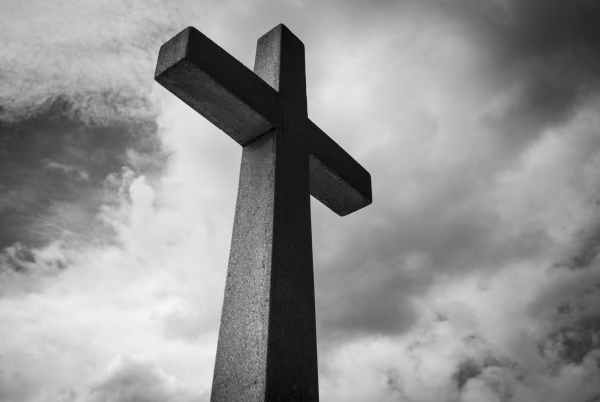
The most common symbol of the Christian religion is the cross.  And, while many statues and necklaces and artistic renderings include a dying Christ figure , the kind you most often see is the empty cross.  On this day between the crucifixion and the resurrection, I want to consider the significance of the empty cross.

  • First, the empty cross reminds us that Christ lived.  In spite of those who continue to challenge the historical evidence, there was a man named Jesus of Nazareth.  He lived in a particular time and place, and he was tried and sentenced to death by crucifixion.  His existence caused the modern Western Calendar to be split into two distinctive parts based on the estimated year of his birth, and his life, death, and resurrection gave rise to a movement that has never been stamped out, equaled, or eclipsed.

pexels-photo-51524.jpeg

  • Second, it reminds us that Christ died.  He was fully human in his capacity to feel pain, rejection, betrayal, hunger, thirst, and grief.  Yet he also experienced joy, companionship, hope, love, compassion, laughter, and growth.  He didn’t just grow old or fade into obscurity.  He didn’t leave his life’s work unfinished, he didn’t compromise or change his message; he didn’t give up or start over with a different “crew.”  Though he never staged a coup, or built up an arsenal, or rose to a seat of power or influence, this homeless, itinerant, soft-spoken rabbi was seen as enough of a threat to the leaders of his time that he was framed, tried and convicted, and sentenced to death.
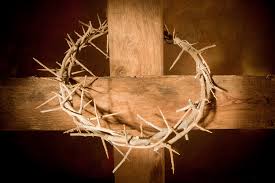
  • The empty cross also reminds us how he died.  Modern crosses often look imposing and even triumphant, as they tower over a mega church parking lot, or hang on a chain of elegant silver, or stand in rows of chiseled rock in a military cemetery.  “O death, where is your sting?  O grave, where is your victory?”  (I Cor. 15:55)  But the torture before and during the crucifixion were brutal– bones were not broken, but they were pulled out of joint and then forced to bear the full weight of a bloody, swollen and bruised body of ripped muscles and exposed flesh.  Heat caused the salty sweat mixed with blood to drip into his eyes, his open wounds, and around his nose and mouth, but he was unable to wipe any of it away.  Flies gathered; he couldn’t keep them from buzzing or biting.  Each breath was a torturous push and pull of the arms and body upon the nails holding him at an unnatural angle against a wooden bar that rubbed against his already raw back.  And all of this was public; entertainment for the masses of hecklers, and those who were rejoicing in his humiliation and failure.  There was nothing pretty or majestic about the cross on that day.

jesus-cross-summit-cross-37737.png

  • The empty cross reminds us that Jesus was buried and put under Roman guard.  His emaciated, bloody, barely recognizable remains were wrapped up and prepared with spices.  Guards, whose lives depended on this body remaining in the tomb and undisturbed, were posted, and a huge boulder rolled into place to block entry to and exit from the tomb.  Jesus didn’t spontaneously climb down off the cross, or waltz out of an air-conditioned cave.
  • Finally, the empty cross reminds us that Jesus was the Christ–death could not stop him; the grave could not hold him.  His victory was complete.  He didn’t claw his way out of that tomb; he didn’t sneak out in the dead of night; he didn’t hobble into hiding for several weeks because he was only “mostly dead” of his torturous injuries.  He arose, victorious, recognizable to those who knew him best; healed and full of power.

pexels-photo-635699.jpeg

There are hundreds of reasons why we “cherish the Old Rugged Cross.”  And, though the cross stands empty, our reasons are not.  Hallelujah!  Tomorrow, hundreds of millions of Christians will be celebrating the empty tomb.  But for today, I want to celebrate the empty cross.

Why “Good” Friday Matters

Good Friday is a stumbling block for many people who would be Christians.  Some get angered at the mere mention of “Good” Friday.  They see nothing good in it, and no reason to celebrate.  They mock Christian celebrations and practices throughout Holy Week.  They ask, “What could be good about being arrested, beaten, tried in an unfair court, mocked, and condemned to death?”  “What could be good about celebrating someone’s final meal, and following the gruesome details of his humiliating crucifixion?”  “Why remember someone being tortured by his enemies and abandoned and even betrayed by his friends?”  I know someone who uses the crucifixion of Jesus as “proof” that God is neither omnipotent, nor holy.

Yet the Bible chooses to focus time, detailed description, and several varying viewpoints to make this the pivotal event (along with the resurrection) of history.  The Crucifixion does not come as a sudden and inexplicable episode in Jesus’ ministry. He predicts it; not just once, and not just in one account–he doesn’t hint vaguely at some “future trouble,” or potential danger–he gives a detailed description of what will happen to him:

Mark 10:33-34 New American Standard Bible (NASB)

33 saying“Behold, we are going up to Jerusalem, and the Son of Man will be [a]delivered to the chief priests and the scribes; and they will condemn Him to death and will [b]hand Him over to the Gentiles. 34 They will mock Him and spit on Him, and scourge Him and kill Him, and three days later He will rise again.”

Luke 24:6-7 New American Standard Bible (NASB)

He is not here, but He has [a]risen. Remember how He spoke to you while He was still in Galilee, saying that the Son of Man must be delivered into the hands of sinful men, and be crucified, and the third day rise again.”

Why do we need Good Friday?  Why, my acquaintance posits, does a loving God make salvation contingent upon the death of himself in human form?  Is it that God is incapable, or unwilling to offer “unconditional” grace?  After all, does he not offer “unconditional” love?  Why must salvation be achieved only by the unjust death of a perfect being?  Why must reconciliation and new life be forged in suffering and death?

These are not unreasonable questions, but I think they miss the broader picture.  Before the cross, before the scourging and the betrayal, let’s look at the life of Christ.  Jesus, the second person of the Trinity, the author of creation, could have stepped out of Heaven at any moment, and arrived in all his glory, surrounded by angels, to walk in pomp and dignity through the world he created.  He could have swept the entire Roman Empire off the face of the planet, healed every disease with a whisper, and lived in the Temple in Jerusalem as the Ruler he is.   Instead, he came as a helpless child, born to a teenage mom and her fiance during a grueling tax season.  He grew up in relative obscurity, never attended college, and is lost to history until he begins his second career as an itinerant rabbi at age 30.  He never held political office, never owned a home of his own, never wrote a book, or produced a piece of art work, never led an army into battle, never married or had children, never became wealthy, never did anything to make himself famous by worldly standards.  He was not crucified because he posed an actual threat to the Roman occupation of Jerusalem, but because he was accused of blasphemy by not denying claims that he was the promised Messiah of Israel.  His only “claim to fame” was that he was a dynamic teacher and had performed miraculous healings.  By almost every worldly standard, his life was a failure and a lesson in wasted potential.

His death is in keeping with his humble life.  It strikes us as a failure– humiliating, unjust, anti-climactic.  A life of servitude, poverty, being misunderstood, and making all the “wrong” friends and enemies.  Why would God live such a ridiculous and unfulfilling life?  Except he didn’t– it wasn’t a failure; his life and death stand as examples of how to live at peace, and how to change the world!  Hundreds of people flocked to hear him teach; hundreds more to see him heal the sick and raise the dead.  But he never charged a single coin, never demanded accolades or even thanks.

church-window-church-window-stained-glass-46154.jpeg

This is the paradox of the Gospels.  God’s ways are not our ways.  His humiliating death on the cross was necessary for the ultimate triumph of the resurrection, but it was more than that– it was a vindication of justice over injustice and service over selfishness.  Good doesn’t always triumph over evil in a power play.  God has the power to obliterate every one of his enemies, but more often than not, he causes them to fall by their own arrogance and blind ambition.  The Chief Priests, the Roman Soldiers, the agony and torture of death– they were no match for God’s love.

Good Friday showed us that God can ALWAYS make even our most difficult circumstances, even the worst situations, into something VICTORIOUS.  Jesus still had to suffer and die, because we will still have to face betrayal, hatred, injustice, unanswered questions, and even taste death.  An Easter without Good Friday is a happy ending without the story.  Only an omnipotent God could have given us the triumph; only a loving God would have walked the Via Dolorosa to fight in the trenches with us.


Blog at WordPress.com.

Up ↑