What Did You Say?

Every once in a while, I like to check an app that counts the words I use on Facebook.  The end result is a cloud full of words that people see when they read my posts.  (You can see my most recent one above.)

Sometimes, I like the cloud– I love to see it filled with words like Love, People, God, Prayer, Joy, Peace, Thankful, etc.  I’d like to think that this is how I always look and sound.  Of course it isn’t.  I don’t always speak encouragement and love on people.  Sometimes, I complain and rehearse negative self-talk, or I explode and rant about bad drivers, rude customers, constant bills, and more.  Checking on my word count may not keep me from using negative words altogether, but it does show me patterns I may not be seeing or hearing on my own or from my friends.

pexels-photo-211816.jpeg

My prayer life acts in this same way–especially as I journal about my prayers.  I can look back through my prayer journal, and see patterns in prayer requests, notes, and even answers to prayer.  Sometimes, I see patterns of struggle–desperation, need, frustration.  Sometimes, the pattern is steady; other times it is a roller coaster of ups and downs.

It’s important to spend a little time periodically getting feedback like this.  Why?  Because what we actually say (and pray) may be very different from what we think we have said.  Jesus was very careful about words:

Matthew 12:35-37 English Standard Version (ESV)

35 The good person out of his good treasure brings forth good, and the evil person out of his evil treasure brings forth evil. 36 I tell you, on the day of judgment people will give account for every careless word they speak, 37 for by your words you will be justified, and by your words you will be condemned.”

Mark 10:17-18 English Standard Version (ESV)

17 And as he was setting out on his journey, a man ran up and knelt before him and asked him, “Good Teacher, what must I do to inherit eternal life?” 18 And Jesus said to him, “Why do you call me good? No one is good except God alone.

Paul is also careful to distinguish between words:

Romans 5:7-8 English Standard Version (ESV)

For one will scarcely die for a righteous person—though perhaps for a good person one would dare even to die— but God shows his love for us in that while we were still sinners, Christ died for us.

I include the last two examples because they both refer to “Good” people.  I want people to see God’s goodness in me.  But idle or careless words and habits can show up in my thought life, my prayer life, my on-line life, and my face-to-face conversations.  In attempting to show how “good” I am (self-righteousness), or how clever I am (even at someone else’s expense), or how__________________________________ (daring, popular, hard-working…you get the idea) I am, it compromises all that I want my life to say about God, and all that He is waiting to say through me.

cheaptalk

Words matter– whether in praying or blogging or commenting on someone else’s post.  I pray that I am making mine count!

Great Expectations

Earlier this week, the Duke and Duchess of Cambridge (otherwise known as Prince William  and Kate Middleton), welcomed their third child.  As with most royal births, there was a lot of fanfare and speculation well in advance of the actual delivery.  Early tabloid reports hinted at twins; bookmakers were figuring odds for delivery dates, names– even what the Duchess would be wearing as she brought the newborn outside for his first “sighting”.  As of the writing of this blog, the name has yet to be announced, which is cause for more speculation and anticipation.

pexels-photo-50632.jpeg

Preparing for a newborn is exciting, and filled with certain expectations.   We imagine what the baby will look like, what kind of personality s/he will have, all the wonderful discoveries to be made. But we need to be careful not to let our expectations become idols.  There’s nothing wrong with hoping for good outcomes, but it can be dangerous to get locked into a particular expected outcome.  Children surprise us (in good ways and other ways) be being themselves, and not who or what we expect them to be.

pexels-photo-185934.jpeg

When we pray, we sometimes come with certain expectations–that God will answer in a certain way or on a certain timeline.  This is not the same as having faith.  Faith says that God will hear our prayer; that he knows best, and that he will act in accordance with his own love and mercy.  It doesn’t mean that he will give us what we want when we want it, or that he will give us what makes us comfortable and happy.  His answers may seem difficult or even painful to accept– certainly not what we were expecting.  When he chooses to answer in ways that don’t meet our expectations, we wonder why.  When he chooses to say “wait,” or even, “no,” we may feel cheated and even resentful, instead of thankful that our prayers are heard by a loving God.  Often, we have built up such expectations of what “the best” should look like that we miss the real miracle God is giving us instead.

pexels-photo-236287.jpeg

Worse, there are times when our expectations reveal a lack of faith or a lack of understanding of God’s ways.  We pray for peace, but what we really want is ease and comfort.  Peace– real peace– is often revealed in times of stress, hardship and loss!  We don’t want stress; we don’t pray for stress, but stress and hardship are going to come into our lives at some point.  Praying for peace won’t bring stress, any more than not praying will keep it away!  We expect the peace to come without the battle; we expect the growth to come without the growth pains; we expect to win the race without having to run!

Sometimes we won’t even pray for what we really want or need because we expect that God will “test” us or give us difficult circumstances if we ask for certain things (like patience or peace).  We see God as some sort of cosmic con artist, who teases us with the promise of good things, only to laugh as we suffer.  But this is a wrong view of God.  God doesn’t play games or “trick” us by giving us hardship when we ask for healing, though it may feel like it at the time. Suffering and hardship are not the gifts of God– his amazing gift is the ability to redeem even the worst of circumstances and bring joy and rest and peace that passes any expectation, any dread, or any understanding we have.  Often, our very desire for extra patience, peace, and joy are opportunities for us to learn more about God’s grace–and more about ourselves.

Life seldom meets our expectations–God is waiting to exceed even our wildest dreams!  Don’t just pray expecting something good might happen.  Pray expecting God to SHOW UP!


Passport Prayers

I get to travel every day.  I journal my prayers in a daily notebook.  Prayer Journal  (click here to get ideas or learn more)  Each day has a heading and four sections– one for birthdays or other “memory days”; one for thematic prayers (generalized themes like “family”, “community”, “global concerns”, “culture”, etc.); one for urgent requests, and one for a region of the world–nations, major cities, local communities.  On busy days, I send a short prayer and try to remember what I know, or imagine what I’d like to know, about that area.  Some days, I have the luxury of time to look up information or history about that area– what is the language, capital city, literacy rate, average age, major religion, geography, economy, etc.

Our world is full of wonder, variety, crisis, and opportunity–I want to add all of this to my pursuit of prayer. It reminds me of several things:

  • I am not the center of the universe– my issues and problems are not unique or exceptional.
  • God has placed me here to interact with others–I can’t reach out and connect with 6 billion others, but I can become more aware of their needs and way of life.
  • The world is a big place–seeing it on the screen via the internet sometimes causes me to forget that.  And as I see how big the world is, I also need to remember that God is even bigger!
  • The world is full of variety.  Not everyone lives or thinks or worships as I do.  Not everyone faces the same circumstances, the same temptations, the same struggles.  Yet God sees and hears each one who calls on him.  He doesn’t have trouble understanding languages and dialects– he doesn’t get culture shock.  He is not an American Jesus, or a Brazilian Jesus, or a Korean Jesus.  He’s not an urban Jesus or a remote mountain village Jesus, or a gated community Jesus.  When we enter eternity, we will share it with amazing brothers and sisters from every corner of creation.  He’s got the whole world in his hands!

ank-cross-spiritual-egypt-161147.jpeg

  • Many millions of people around the globe have never heard the Gospel– or they’ve heard lies and misrepresentations.  Millions of other believers are being persecuted for believing in Jesus or for sharing the good news of Salvation in His Name. People in every nation, every community, are suffering.
  • We are commanded, as Christians, to “go into all the world” and preach the gospel.  I may not be able to travel to “all the world”, but I can “go” in prayer, sharing on-line, and  learning about needs, as well as in sending out and praying for those who can travel.
  • I am grateful for the opportunities God has given me– to learn about him and worship him in freedom; to travel and participate on short-term mission opportunities; to meet and share with missionaries, travelers, students, foreign workers, and others who share their culture and knowledge and perspectives; and for the global work of the Savior, and my privilege to share in it.

cologne-cathedral-hohenzollern-bridge-love-locks-arch-161026.jpeg

Time to pack my bags– I’m heading to Germany tomorrow!

Taxing Prayers

It’s tax time in my neck of the woods, and that means that a lot of people are praying.  Some are praying for a tax refund; others are praying that their tax bill is lower than expected, or that they can somehow find the money to pay it.

Taxes are not pleasant, but they are a constant reality of this world.  Even Jesus had to pay taxes–to an oppressive foreign empire, no less.  The people of his time wanted him to lead a rebellion against Roman occupation.  But even if he had done so, their own religious leaders collected Temple taxes.

There are a lot of other unpleasant realities in this life– injustice, bigotry, hatred, disease, natural disasters, accidents, and death.  God doesn’t remove them, no matter how hard or how earnestly we pray… he may send healing, comfort, or strength to get us through a crisis, but he never promised to end poverty, or remove the consequences of sin, or wipe out cancer–YET.

These are the taxing prayers that we continue to pray– prayers that come from our pain and longing for a new Heaven and a new Earth.  It is in our fallen nature to yearn for the perfection of God’s original creation;  a world we have never experienced, but for which our souls were designed.  In praying for things to be made “right”, we acknowledge that they are, in this present age, very wrong.  And we acknowledge that our best efforts can never be “enough” to overcome the ravages of sin.  Finally, in bringing them to God, we acknowledge that only He has the power and wisdom to “fix” them– in His time.

pexels-photo-449627.jpeg


Taxes are not pleasant, but there will come a day when they are abolished.  God’s love, his mercy, his blessings– they are tax-free, and they are in endless supply.

Even during tax season, that’s something to celebrate!

The Smallest Detail

Have you ever looked at a series of pictures that “zoom” in or out (or both)?  Something that seems “normal” in size suddenly becomes a tiny detail in a much larger picture.  Or one tiny detail grows large enough to show intricacies hitherto unseen.  It is mind-blowing to think of how many details there are in God’s universe–little things that go unnoticed and unappreciated every day.  But not by God.  God knows and cares about every single detail– from the  individual hairs on your head, to the variations and whorls of each of your fingerprints; from the gradations of colors in each moment of each sunrise, to the exact air temperature in each square foot of atmosphere around the world; from the wings of every butterfly to the fins of every fish– nothing escapes his notice or falls through the cracks.

pexels-photo-121646.jpeg

We can pray with confidence that God hears every word we say, and knows the thoughts we can’t even put into words.  I believe God loves to hear all our details.  He loves listening to us, because of his great love for us.  He wants us to hold nothing back.  This is especially true when we pour out our deepest delights and our most pressing burdens.  He wants to share them with us– to double our joy, and shoulder our pain.sea-nature-animals-fish.jpg

I was reminded about God’s attention to detail while reading His word this morning.  I was reading through one of the books of history (II Kings) in which the various kings of Israel and Judah are listed, along with short accounts of “what happened” during their reigns–some kings are given several paragraphs or a couple of chapters;  others merely a sentence or two.  In the midst of all this, there is a curious reference in II Kings 14:25.  King Jeroboam II of Israel is accounted a generally wicked king, but he did restore some of the ancient boundaries of the country, “in accordance with the word of the Lord, the God of Israel, spoken through his servant Jonah, son of Amittai, the prophet from Gath Hepher”– that’s right, THAT Jonah– the one of the giant fish and the adventure in Ninevah (see Paltry Prayer ).  How many times have I read the story of Jonah, and passed right over this reference to him in another book!  The Bible is full of such hidden hints and corroborating details.  I believe that God put them there to remind us of his great attention to detail.  The God who lists genealogies throughout his word— long lists of otherwise forgotten names;  the one who makes a point of listing palace guards and minor officials, and builders and temple workers–this God sees ME!  He sees YOU!  He hears us when we call.  He knows all of our quirks and idiosyncrasies– and loves each unique detail of our makeup.

Praying hands

Spoiler Alert!

I love being “in the know”–being part of a great secret and knowing that I got the information first (or at least earlier than someone else).  But I don’t like spoilers– learning about things that I was hoping to discover for myself.  I don’t want to know the ending to that new novel from my favorite author until I read it.  I don’t want to know how the new blockbuster movie ends before I have had a chance to see it.  I don’t want to know that my favorite character in a TV show dies at the end of season three (Downton Abbey!) before watching it in all its tragic impact.

There are, however, some spoilers that should be shared, and God has given them to us in His word.

  • First and foremost– in the battle of good and evil– God Wins!  The victory has already been won, and the outcome is certain.
  • Second– Christ Messiah will return to earth.  He will come in triumph and glory.  While none of us know the hour or the day of that return, it will come quickly, like a flash.
  • Before Christ’s return, we will face chaos and trouble in this world.  That is also certain, though we have the power to face it and God has the power to turn it to good.
  • We will face death and the judgment of God–those who trust in Jesus Christ will still die; we will still be judged.  Only the blood of Christ, and our faith in his finished work will save us from the wrath our acts deserve.
  • Every knee shall bow, and every tongue confess, that Jesus Christ is Lord to the Glory of the Father (Phil. 2:10-11).

bow down

Knowing these “spoilers” doesn’t ruin our prayer life– instead, that knowledge gives us the power, the passion, and the promise to pray as if our lives depend on it!  Moreover, it should move us to pray and act on these truths in all our dealings with others.  Not to become arrogant about our knowledge, but to be compassionate and forgiving toward those who don’t have it or haven’t accepted it.


Surprise!

The world is full of surprises– some good, some bad.  Open your mailbox on any given day, or walk down the street…you are bound to see something unexpected.  You may get a bill you forgot about, or run into an old friend.  There are surprises in the weather patterns, in traffic patterns, in relationships, in jobs, all around our houses and neighborhoods, in world events.  Some are shocking, some delightful, and any of them can change our days or even our lives.

We like pleasant surprises; we fear the unpleasant ones.  But most of us don’t pray for them.  We pray for miracles–healing and rescue and transformation–pleasant outcomes that we hope for or imagine.  We pray for ease and comfort, or wisdom and strength to face the bad times.  But we don’t ask God to surprise us.

Why don’t I ask God to awe me?  Dazzle me?  Surprise me?  Sometimes I fear that he might surprise me with what my past actions deserve.  More often, I simply want to stay in the comfort and simplicity of what I already know.  I don’t want to be delighted; I just want to be entertained.

pexels-photo-96405.jpeg

One thing I know, but I need to be reminded:  God does not give bad surprises.  He does not send ANYTHING into my life that can’t be used for my good and his glory.  The world will send tragedy and I will have to face the consequences of Sin– mine and others’.  I may be unfairly treated at work; I may be struck by a drunk driver and paralyzed.  I may face difficult losses, and inexplicable circumstances.  And the mistake is to see these as “surprises” from God.  God never promised a pain-free, problem-free life in this world, but he surprises us with the kind of gifts that overcome and even confound our tragic circumstances– the power to forgive, to be joyful, to have peace, and share love.

John 16:33 English Standard Version (ESV)

33 I have said these things to you, that in me you may have peace. In the world you will have tribulation. But take heart; I have overcome the world.”

Matthew 7:9-11 New International Version (NIV)

“Which of you, if your son asks for bread, will give him a stone? 10 Or if he asks for a fish, will give him a snake? 11 If you, then, though you are evil, know how to give good gifts to your children, how much more will your Father in heaven give good gifts to those who ask him!

The road ahead is full of surprises–that’s a great reason to pray.  God loves to surprise us with good things– that’s another great reason to pray for them!

gift-jeans-fashion-pack-157879.jpeg


The Empty Cross

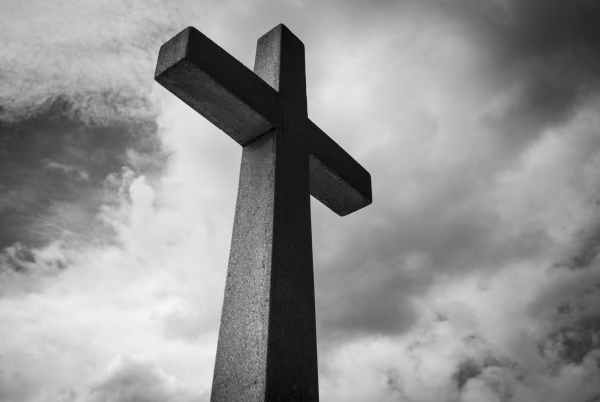
The most common symbol of the Christian religion is the cross.  And, while many statues and necklaces and artistic renderings include a dying Christ figure , the kind you most often see is the empty cross.  On this day between the crucifixion and the resurrection, I want to consider the significance of the empty cross.

  • First, the empty cross reminds us that Christ lived.  In spite of those who continue to challenge the historical evidence, there was a man named Jesus of Nazareth.  He lived in a particular time and place, and he was tried and sentenced to death by crucifixion.  His existence caused the modern Western Calendar to be split into two distinctive parts based on the estimated year of his birth, and his life, death, and resurrection gave rise to a movement that has never been stamped out, equaled, or eclipsed.

pexels-photo-51524.jpeg

  • Second, it reminds us that Christ died.  He was fully human in his capacity to feel pain, rejection, betrayal, hunger, thirst, and grief.  Yet he also experienced joy, companionship, hope, love, compassion, laughter, and growth.  He didn’t just grow old or fade into obscurity.  He didn’t leave his life’s work unfinished, he didn’t compromise or change his message; he didn’t give up or start over with a different “crew.”  Though he never staged a coup, or built up an arsenal, or rose to a seat of power or influence, this homeless, itinerant, soft-spoken rabbi was seen as enough of a threat to the leaders of his time that he was framed, tried and convicted, and sentenced to death.
  • The empty cross also reminds us how he died.  Modern crosses often look imposing and even triumphant, as they tower over a mega church parking lot, or hang on a chain of elegant silver, or stand in rows of chiseled rock in a military cemetery.  “O death, where is your sting?  O grave, where is your victory?”  (I Cor. 15:55)  But the torture before and during the crucifixion were brutal– bones were not broken, but they were pulled out of joint and then forced to bear the full weight of a bloody, swollen and bruised body of ripped muscles and exposed flesh.  Heat caused the salty sweat mixed with blood to drip into his eyes, his open wounds, and around his nose and mouth, but he was unable to wipe any of it away.  Flies gathered; he couldn’t keep them from buzzing or biting.  Each breath was a torturous push and pull of the arms and body upon the nails holding him at an unnatural angle against a wooden bar that rubbed against his already raw back.  And all of this was public; entertainment for the masses of hecklers, and those who were rejoicing in his humiliation and failure.  There was nothing pretty or majestic about the cross on that day.

jesus-cross-summit-cross-37737.png

  • The empty cross reminds us that Jesus was buried and put under Roman guard.  His emaciated, bloody, barely recognizable remains were wrapped up and prepared with spices.  Guards, whose lives depended on this body remaining in the tomb and undisturbed, were posted, and a huge boulder rolled into place to block entry to and exit from the tomb.  Jesus didn’t spontaneously climb down off the cross, or waltz out of an air-conditioned cave.
  • Finally, the empty cross reminds us that Jesus was the Christ–death could not stop him; the grave could not hold him.  His victory was complete.  He didn’t claw his way out of that tomb; he didn’t sneak out in the dead of night; he didn’t hobble into hiding for several weeks because he was only “mostly dead” of his torturous injuries.  He arose, victorious, recognizable to those who knew him best; healed and full of power.

pexels-photo-635699.jpeg

There are hundreds of reasons why we “cherish the Old Rugged Cross.”  And, though the cross stands empty, our reasons are not.  Hallelujah!  Tomorrow, hundreds of millions of Christians will be celebrating the empty tomb.  But for today, I want to celebrate the empty cross.

Why “Good” Friday Matters

Good Friday is a stumbling block for many people who would be Christians.  Some get angered at the mere mention of “Good” Friday.  They see nothing good in it, and no reason to celebrate.  They mock Christian celebrations and practices throughout Holy Week.  They ask, “What could be good about being arrested, beaten, tried in an unfair court, mocked, and condemned to death?”  “What could be good about celebrating someone’s final meal, and following the gruesome details of his humiliating crucifixion?”  “Why remember someone being tortured by his enemies and abandoned and even betrayed by his friends?”  I know someone who uses the crucifixion of Jesus as “proof” that God is neither omnipotent, nor holy.

Yet the Bible chooses to focus time, detailed description, and several varying viewpoints to make this the pivotal event (along with the resurrection) of history.  The Crucifixion does not come as a sudden and inexplicable episode in Jesus’ ministry. He predicts it; not just once, and not just in one account–he doesn’t hint vaguely at some “future trouble,” or potential danger–he gives a detailed description of what will happen to him:

Mark 10:33-34 New American Standard Bible (NASB)

33 saying“Behold, we are going up to Jerusalem, and the Son of Man will be [a]delivered to the chief priests and the scribes; and they will condemn Him to death and will [b]hand Him over to the Gentiles. 34 They will mock Him and spit on Him, and scourge Him and kill Him, and three days later He will rise again.”

Luke 24:6-7 New American Standard Bible (NASB)

He is not here, but He has [a]risen. Remember how He spoke to you while He was still in Galilee, saying that the Son of Man must be delivered into the hands of sinful men, and be crucified, and the third day rise again.”

Why do we need Good Friday?  Why, my acquaintance posits, does a loving God make salvation contingent upon the death of himself in human form?  Is it that God is incapable, or unwilling to offer “unconditional” grace?  After all, does he not offer “unconditional” love?  Why must salvation be achieved only by the unjust death of a perfect being?  Why must reconciliation and new life be forged in suffering and death?

These are not unreasonable questions, but I think they miss the broader picture.  Before the cross, before the scourging and the betrayal, let’s look at the life of Christ.  Jesus, the second person of the Trinity, the author of creation, could have stepped out of Heaven at any moment, and arrived in all his glory, surrounded by angels, to walk in pomp and dignity through the world he created.  He could have swept the entire Roman Empire off the face of the planet, healed every disease with a whisper, and lived in the Temple in Jerusalem as the Ruler he is.   Instead, he came as a helpless child, born to a teenage mom and her fiance during a grueling tax season.  He grew up in relative obscurity, never attended college, and is lost to history until he begins his second career as an itinerant rabbi at age 30.  He never held political office, never owned a home of his own, never wrote a book, or produced a piece of art work, never led an army into battle, never married or had children, never became wealthy, never did anything to make himself famous by worldly standards.  He was not crucified because he posed an actual threat to the Roman occupation of Jerusalem, but because he was accused of blasphemy by not denying claims that he was the promised Messiah of Israel.  His only “claim to fame” was that he was a dynamic teacher and had performed miraculous healings.  By almost every worldly standard, his life was a failure and a lesson in wasted potential.

His death is in keeping with his humble life.  It strikes us as a failure– humiliating, unjust, anti-climactic.  A life of servitude, poverty, being misunderstood, and making all the “wrong” friends and enemies.  Why would God live such a ridiculous and unfulfilling life?  Except he didn’t– it wasn’t a failure; his life and death stand as examples of how to live at peace, and how to change the world!  Hundreds of people flocked to hear him teach; hundreds more to see him heal the sick and raise the dead.  But he never charged a single coin, never demanded accolades or even thanks.

church-window-church-window-stained-glass-46154.jpeg

This is the paradox of the Gospels.  God’s ways are not our ways.  His humiliating death on the cross was necessary for the ultimate triumph of the resurrection, but it was more than that– it was a vindication of justice over injustice and service over selfishness.  Good doesn’t always triumph over evil in a power play.  God has the power to obliterate every one of his enemies, but more often than not, he causes them to fall by their own arrogance and blind ambition.  The Chief Priests, the Roman Soldiers, the agony and torture of death– they were no match for God’s love.

Good Friday showed us that God can ALWAYS make even our most difficult circumstances, even the worst situations, into something VICTORIOUS.  Jesus still had to suffer and die, because we will still have to face betrayal, hatred, injustice, unanswered questions, and even taste death.  An Easter without Good Friday is a happy ending without the story.  Only an omnipotent God could have given us the triumph; only a loving God would have walked the Via Dolorosa to fight in the trenches with us.


Suffering from “Prayer’s Block”

Do you ever suffer from “prayer’s block”– those times when you bow down, and your prayers seem stilted, or your mind keeps wandering, and you find yourself coming to God with…less.  Not necessarily with nothing– you can always thank God for your daily bread, or worship the fact of his majesty or holiness or search your heart for confession or praise.  But you’re left feeling like you really want to bring more…
Am I the only one who ever feels this?  I don’t think so; and I don’t feel it often, but when I do, I just wish I had something like a prayer prompt to take the conversation to another level.

That’s when I find books extremely helpful.  I recommend a personal prayer journal– one that has pages for each day, and lots of space to write requests and reminders as you pray.  I’m on my third year through a journal, and it has names of people who are celebrating birthdays or anniversaries on that day– including sad anniversaries of losses or challenges.  But even if you don’t have a journal, there are other great and creative ways to jump-start a great conversation with God.  See the page on my ideas for a Prayer Journal, or search for other wonderful ideas online to get you started.

Have you ever prayed a page from the phone book? (or your personal address list? or another list?)  It can feel awkward and impersonal to pray for people simply by name and without knowing anything about them, but it can also be instructive.  How so?  It reminds you that:

  • You are one person in a larger community of people you may not even know.  We live in a world that is more connected than ever before; yet we can be more isolated than ever before.  Neighbors come and go, communities grow (or shrink) without our awareness, unless we make ourselves look around.
  • Your problems are part of a larger reality.  Sometimes, our prayer life becomes narrow as we focus on our own struggles and needs.  Looking around doesn’t mean that our struggles are any less painful, important, or real; it does remind us, though, that we live in a big world– and that we have an even bigger God!
  • You may be the only Jesus another person will ever know… your prayers for a stranger may have unexpected consequences for them, as well as for you.

pexels-photo-205414.jpeg

Similarly, you can pray through an old yearbook, or your friends list on Facebook or LinkedIn, the members of your favorite band or the cast of your favorite movie or TV show, the members of your local government..the list goes on.  Rummage through your closet or look at old photos– are you finding anything to be thankful for, or reminded of times when God or others blessed you?  Pray the newspaper (or your news feed)–there’s plenty of fodder there!

pexels-photo-177557.jpeg

There are days when my heart is just too full (or maybe too empty) to concentrate.  And it’s not that God doesn’t know or understand such times.  But in this pursuit, I want to bring my best, and if “prayer’s block” comes, I don’t want it to be an excuse for missing out on the best that God has for me.

Blog at WordPress.com.

Up ↑